
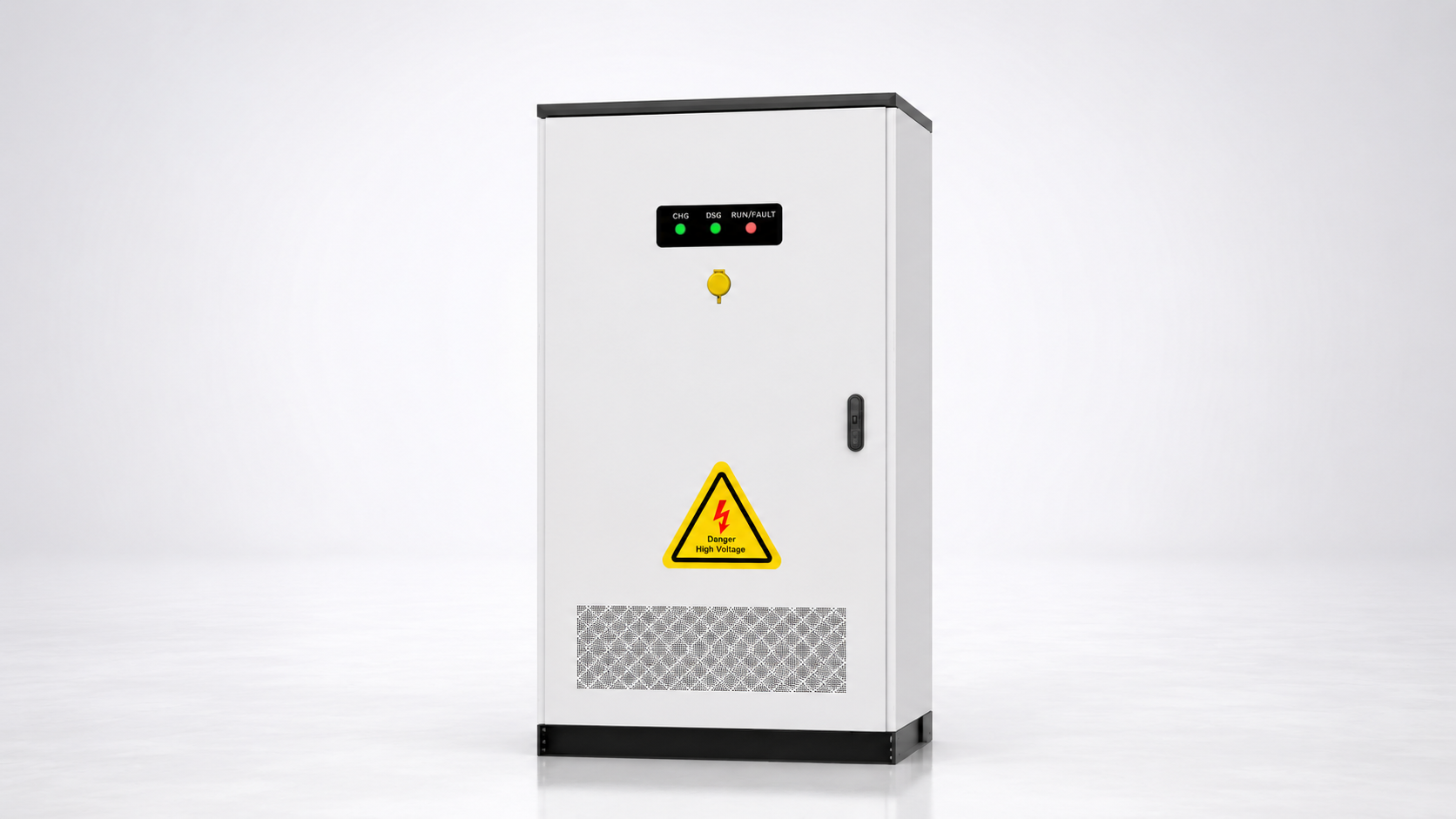
AINEGY 64V314Ah Air-Cooled LiFePO4 Battery Cabinet / IP54
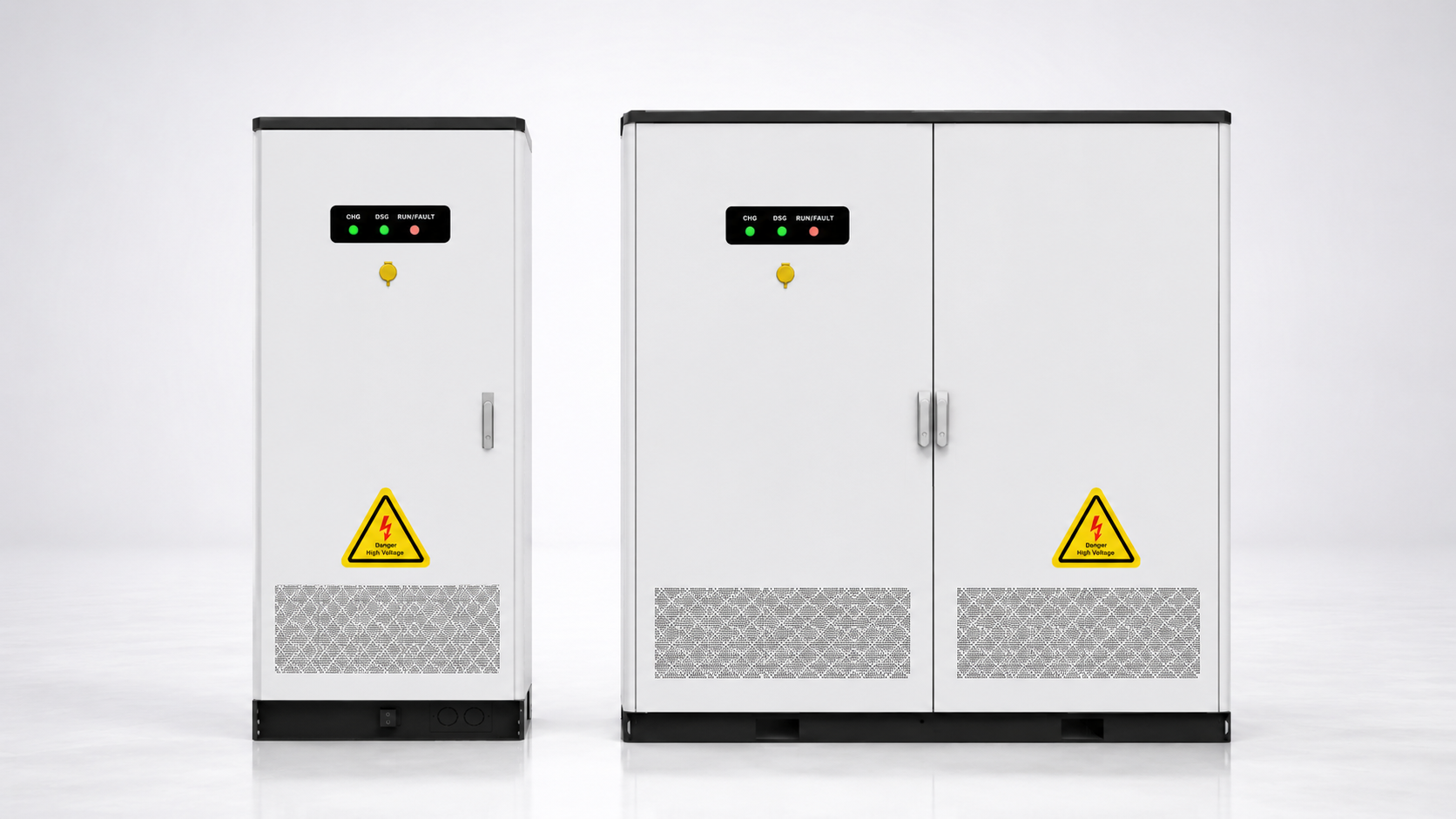
The AINEGY 64V314Ah Air-Cooled LiFePO4 Battery Cabinet / IP54 is a high-voltage battery cabinet platform using 64V314Ah cabinet modules, available in 120kWh, 201kWh and 241kWh configurations, with integrated BMS & EMS platform and integrated HVAC air-duct thermal design for PCS-based C&I energy storage projects.
About AINEGY 64V314Ah C&I ESS Battery Cabinet
AINEGY provides lithium battery energy storage solutions for commercial and industrial applications. This AINEGY 64V314Ah air-cooled LiFePO4 battery cabinet is designed for C&I ESS projects that require high-voltage battery integration, PCS matching, IP54 cabinet protection, integrated BMS & EMS monitoring and HVAC air-duct thermal management.
The product belongs to the AINEGY C&I energy storage battery cabinet portfolio and can be reviewed for commercial solar storage, factory power supply, supermarket backup power, gas station backup, weak-grid sites, island projects and PV power generation sites where capacity, PCS compatibility, thermal design and installation environment must be evaluated together.
Technical Specifications
| Parameter | 120kWh | 201kWh | 241kWh |
|---|---|---|---|
| Model | IYP-CB384314A-HX1 | IYP-CB640314A-HX1 | IYP-CB7684314A-HX1 |
| Battery Type | LiFePO4 Battery | LiFePO4 Battery | LiFePO4 Battery |
| Rated Energy | 120kWh | 201kWh | 241kWh |
| Nominal Voltage | 384V | 640V | 768V |
| Module Specification | 64V314Ah | 64V314Ah | 64V314Ah |
| Module Quantity | 6 | 10 | 12 |
| End-of-Charge Voltage | 432V | 720V | 864V |
| End-of-Discharge Voltage | 336V | 560V | 672V |
| Standard Charge Current | 100A | 100A | 100A |
| Max. Charge Current | 150A | 150A | 150A |
| Standard Discharge Current | 100A | 100A | 100A |
| Max. Discharge Current | 200A | 200A | 200A |
| Max. Peak Current | 250A | 250A | 250A |
| IP Grade | IP54 | IP54 | IP54 |
| Work Temperature Range | Charge: 0°C–50°C Discharge: -15°C–60°C | Charge: 0°C–50°C Discharge: -15°C–60°C | Charge: 0°C–50°C Discharge: -15°C–60°C |
| Charge / Discharge Interface | Waterproof quick-plug terminal | Waterproof quick-plug terminal | Waterproof quick-plug terminal |
| Communication Interface | RS485 / CAN | RS485 / CAN | RS485 / CAN |
| Shell Material / Color | Metal / White optional | Metal / White optional | Metal / White optional |
| Size | 660 × 1200 × 1260mm | 1160 × 1220 × 1385mm | 1160 × 1200 × 1620mm |
| Weight | About 1250kg | About 1950kg | About 2250kg |
Selection Notes
- Match 384V / 640V / 768V nominal voltage with the PCS DC input range.
- Check the full battery voltage window: 336–432V, 560–720V or 672–864V.
- Review PCS charging power using 100A standard charge and 150A maximum charge current.
- Review discharge design using 100A standard discharge, 200A maximum discharge and 250A peak current.
- Use cabinet size and weight to confirm foundation, lifting plan, delivery path and installation clearance.
Product Boundary
- Battery cabinet on the DC battery side.
- PCS, transformer, PV inverter, outdoor enclosure and AC distribution are not included by default.
- IP54 is for protected indoor or sheltered outdoor environments; direct exposure conditions should be reviewed.
Configuration Logic
- Each 64V314Ah cabinet module is about 20.1kWh at nominal voltage.
- 6 / 10 / 12 modules build the 120kWh, 201kWh and 241kWh configurations.
- The 640V and 768V options are better suited to projects requiring higher DC voltage than 384V systems.
- RS485 / CAN communication should be checked with the selected PCS before order confirmation.
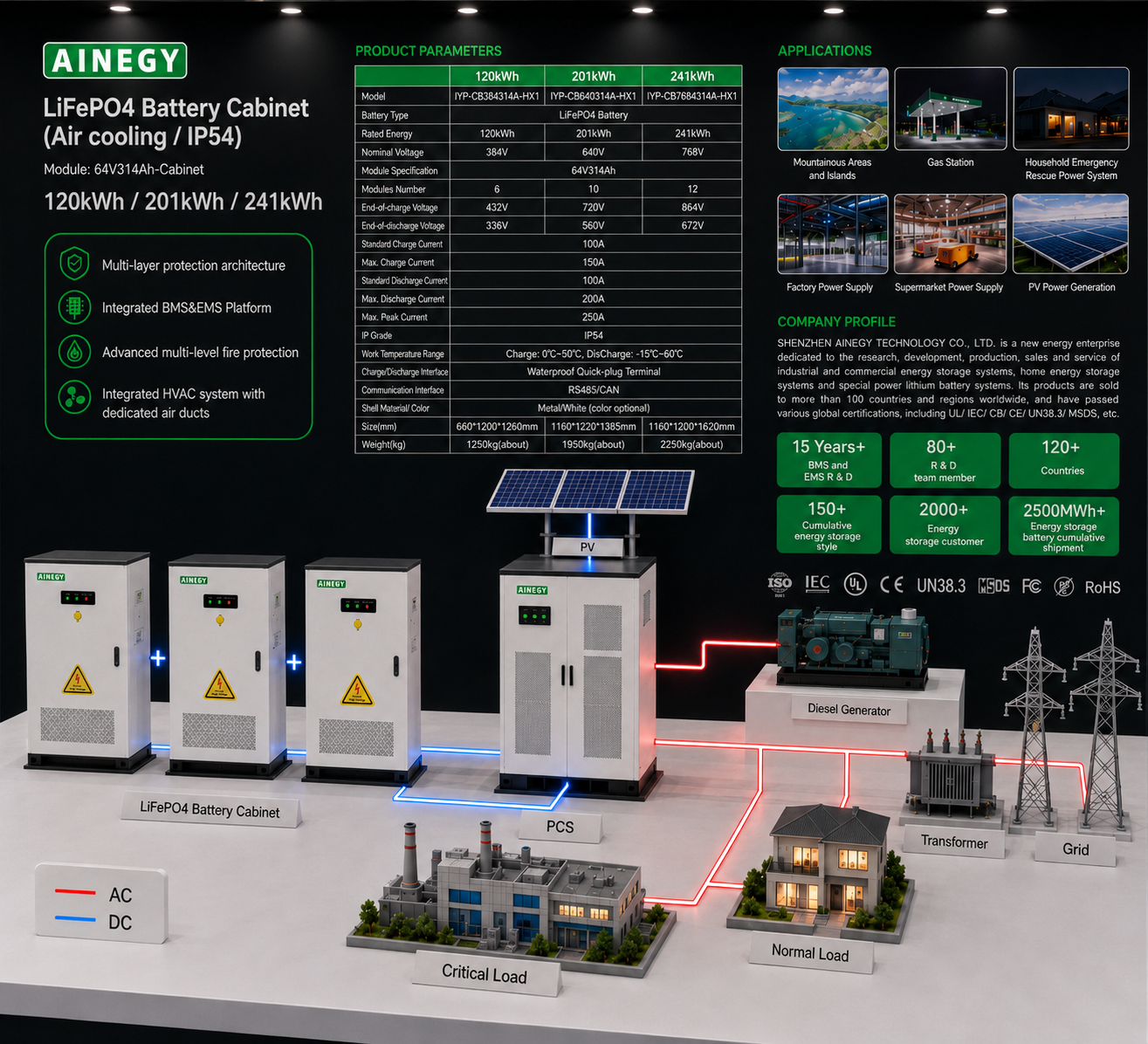
System Design & Energy Storage Integration
This battery cabinet is the DC-side battery section of a C&I energy storage system. It is typically matched with a compatible PCS, while PV input, grid connection, generator backup and site loads are designed at system level.
Why This Battery Cabinet Is Selected
IP54 Cabinet Platform for Protected C&I ESS Sites
Compared with IP20 indoor battery racks or cabinets, this IP54 cabinet is better suited for protected installation rooms or sheltered site conditions where dust and water-splash exposure must be considered.
Higher-Capacity 120kWh to 241kWh Range
The 64V314Ah platform covers 120kWh, 201kWh and 241kWh cabinet configurations, making it suitable for C&I projects requiring larger battery capacity than compact 60–100kWh cabinet classes.
Integrated BMS & EMS Platform
The integrated BMS & EMS platform supports cabinet-level monitoring and project-level coordination, which is important when battery cabinets, PCS, grid connection and loads must operate as one ESS architecture.
Integrated HVAC with Dedicated Air Ducts
The cabinet uses integrated HVAC with dedicated air ducts. This makes thermal design part of the cabinet architecture, instead of relying only on external room airflow for battery thermal management.
High-Voltage PCS Matching Range
The 384V, 640V and 768V nominal voltage options provide a practical matching range for high-voltage PCS-based commercial and industrial energy storage systems.
20.1kWh-Class Module Building Block
A 64V314Ah module stores about 20.1kWh at nominal voltage. Using 6, 10 or 12 modules keeps the cabinet configuration logic clear during PCS selection and capacity planning.
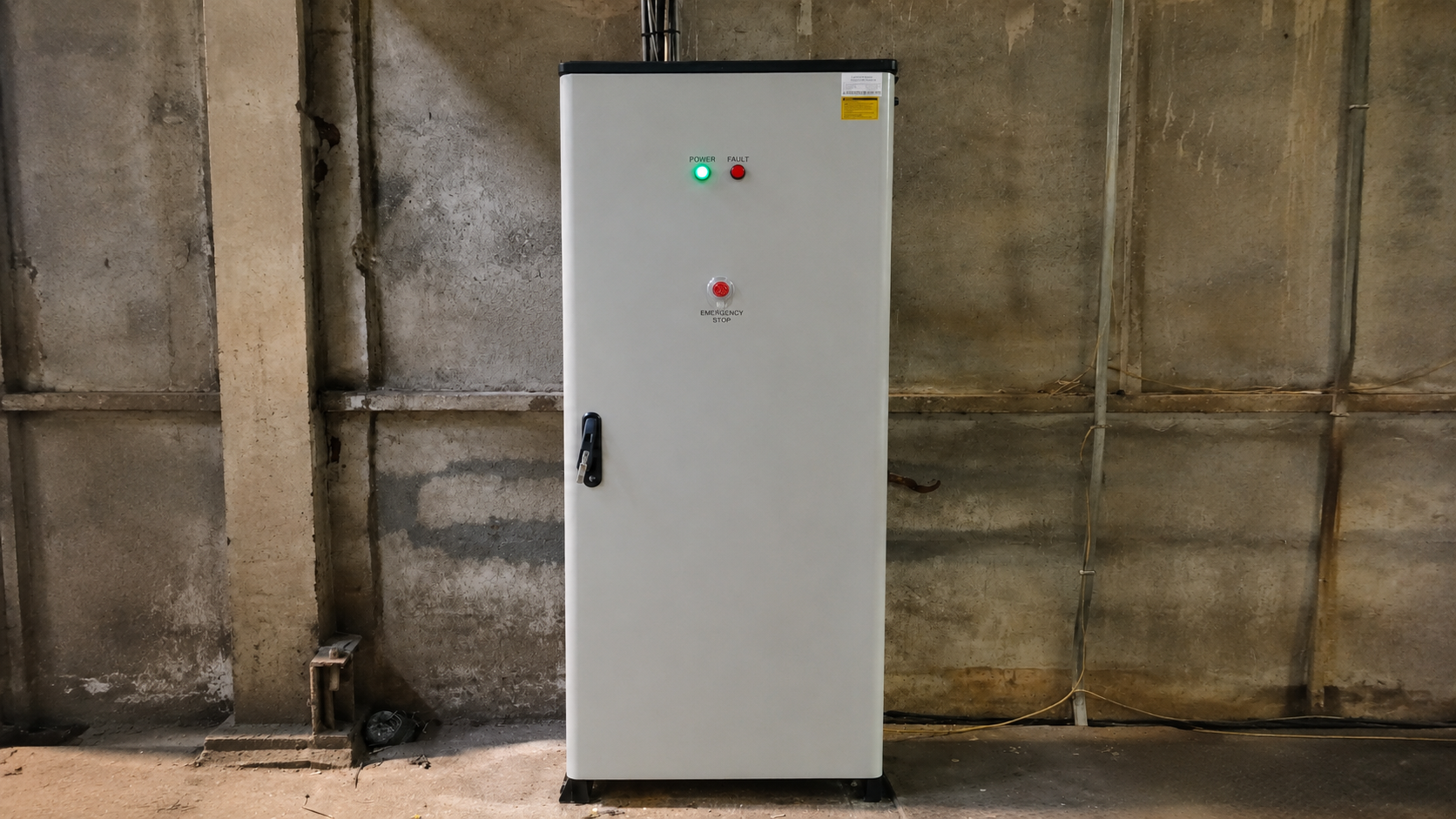
Typical Applications
This 120kWh–241kWh IP54 battery cabinet is mainly selected for C&I ESS projects where higher battery capacity, cabinet protection level, integrated HVAC and PCS matching must be reviewed together.
Certification and Documentation Support
AINEGY products are designed and manufactured with reference to relevant international safety, transport, electrical and material standards. Certification documents are available for certified models, and project-specific certification requirements can be reviewed according to the selected model, configuration and target market.












FAQ
Related C&I ESS Cabinet Products
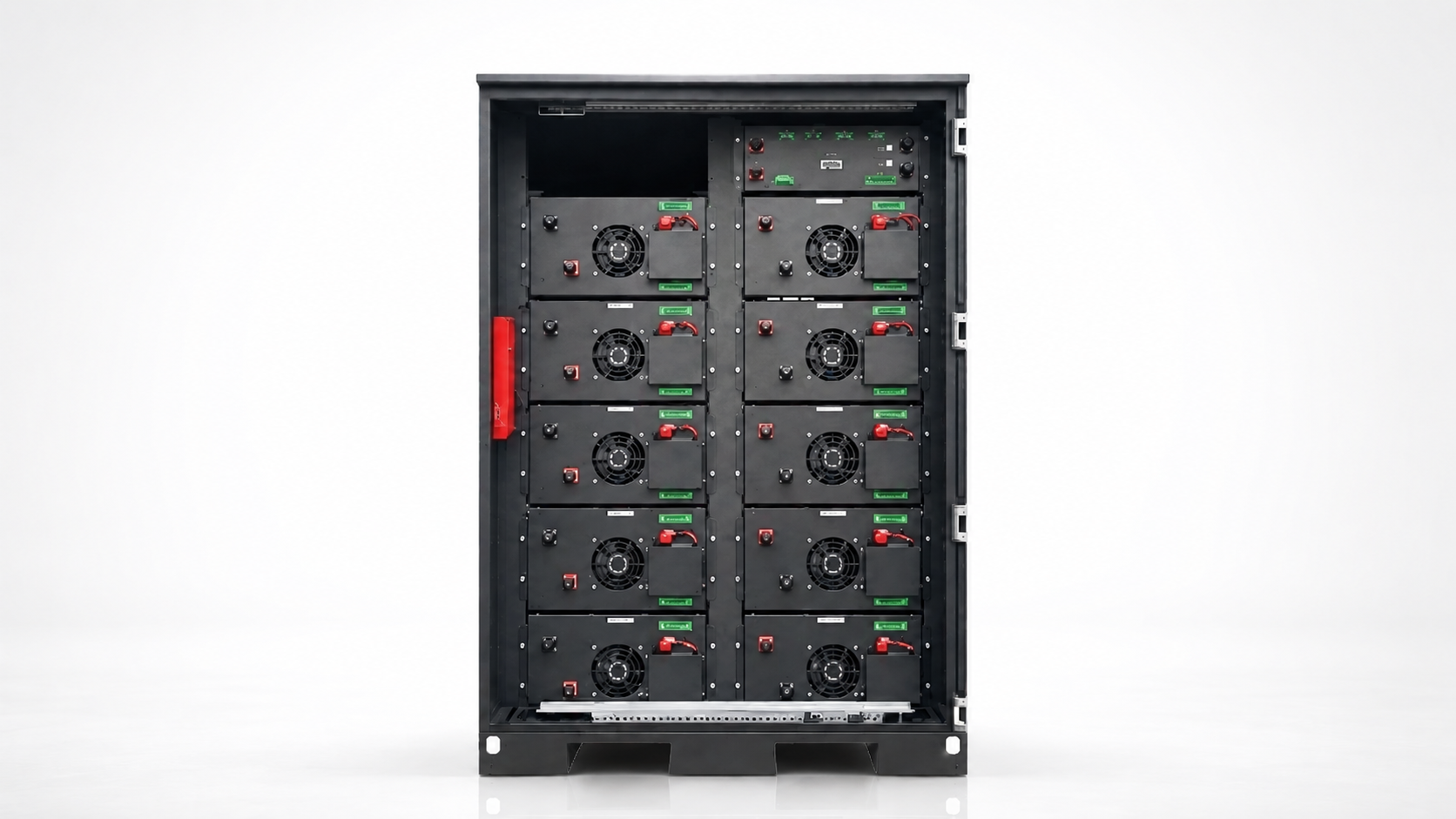

Confirm the Right IP54 Battery Cabinet for Your C&I ESS Project
Send your required capacity, PCS model, DC voltage range, communication protocol, installation environment, water exposure level, HVAC / ventilation condition, backup load and target market. AINEGY will help review whether the 120kWh, 201kWh or 241kWh IP54 configuration is suitable.