
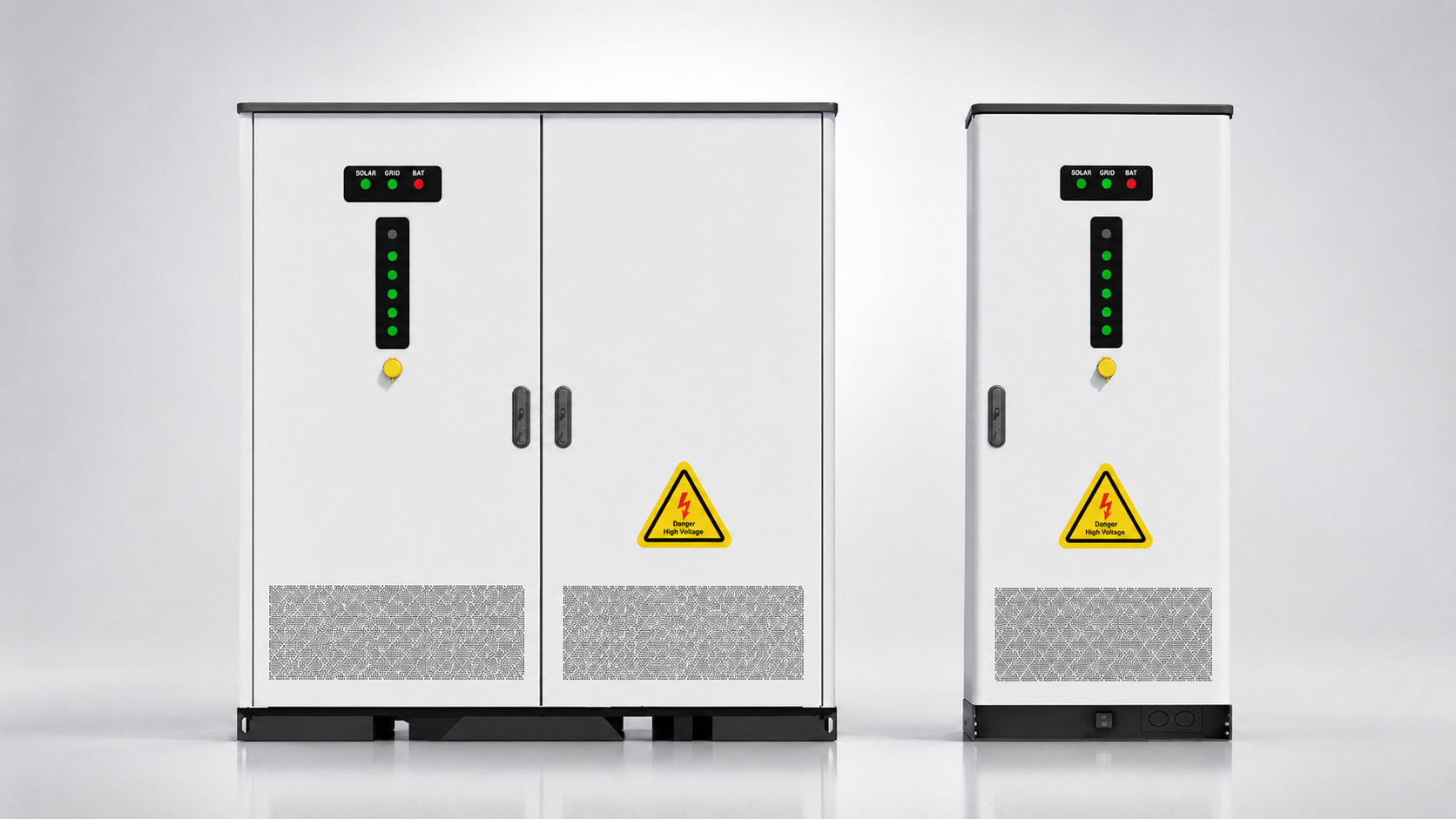
AINEGY On-grid Solar BESS Cabinet / Liquid Cooling
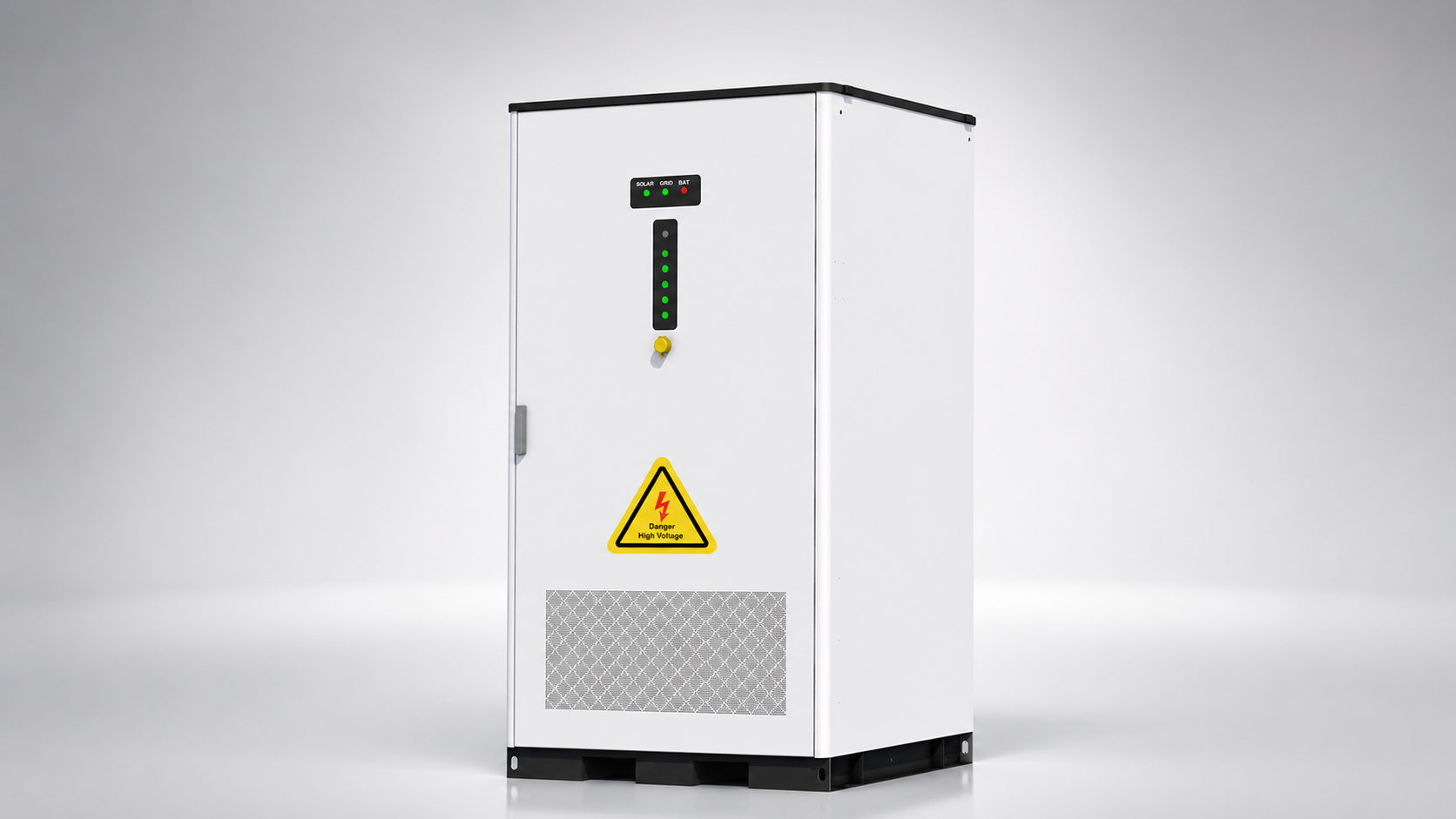
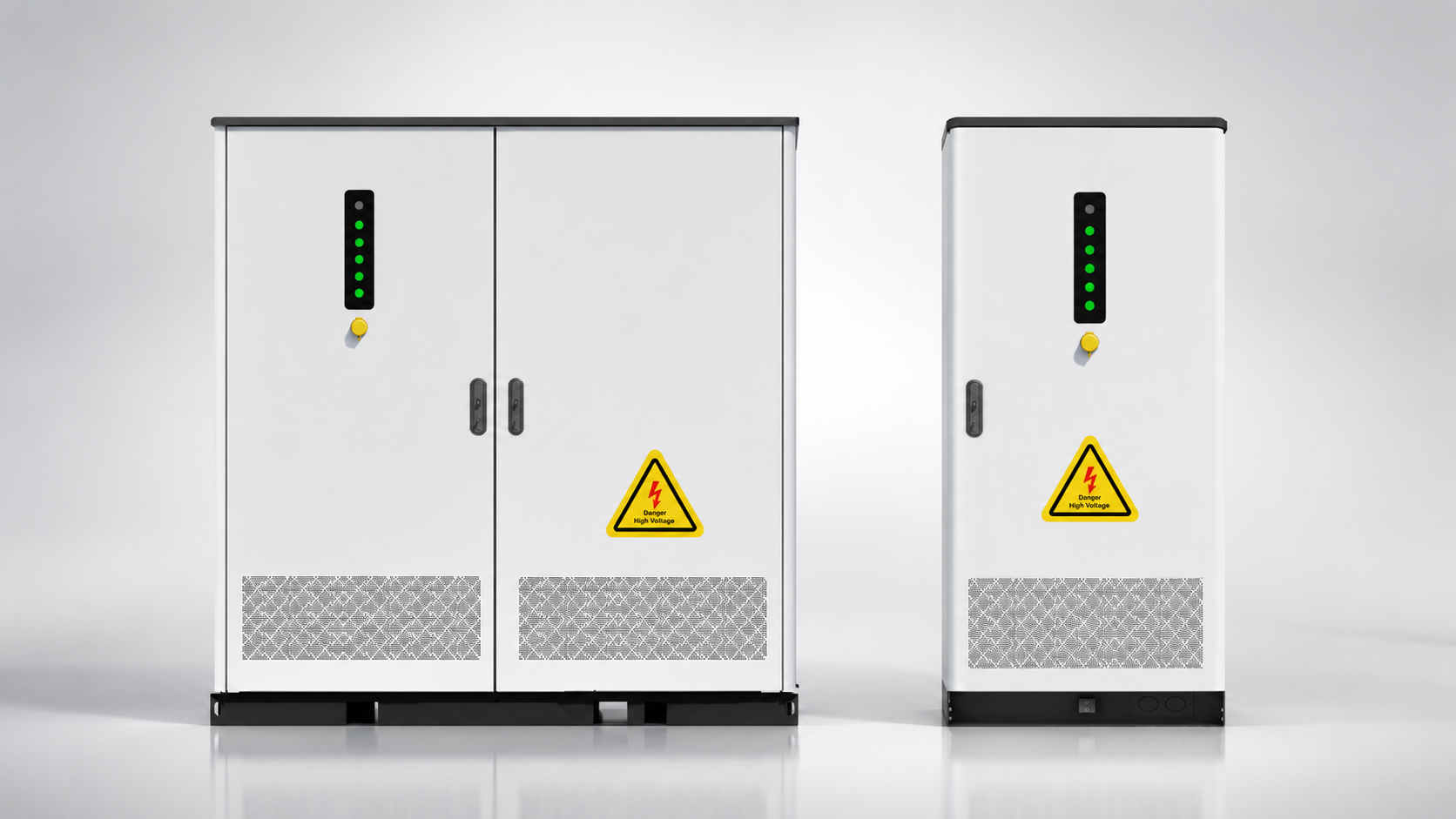
The AINEGY On-grid Solar BESS Cabinet / Liquid Cooling is a grid-connected solar battery energy storage cabinet with PV MPPT input, LiFePO4 battery system, PCS, BMS and EMS integrated into one cabinet platform. Available in 125kW/261kWh and 250kW/522kWh configurations for C&I solar energy storage, PV self-consumption, peak shaving and time-of-use energy shifting.
This AINEGY cabinet is not a battery-only cabinet. It includes PV-side input capability and grid-connected power conversion, allowing solar energy, battery storage, grid power and site load to be managed together. Under standard on-grid operation, it should be treated as a grid-connected solar BESS cabinet; backup or islanding operation requires separate project-level design confirmation.
About AINEGY On-grid Solar BESS Cabinet / Liquid Cooling
AINEGY develops commercial and industrial lithium battery energy storage solutions for solar, grid-connected and hybrid energy projects. The AINEGY On-grid Solar BESS Cabinet / Liquid Cooling is designed for C&I projects that need PV MPPT input, battery storage, grid-connected power conversion and EMS dispatch in one cabinet platform.
This AINEGY solar BESS cabinet is intended for project teams evaluating PV self-consumption, peak shaving, time-of-use energy shifting, demand management and multi-cabinet solar storage deployment. Selection should be based on PV string design, site load curve, AC distribution capacity, grid-connection rules, installation environment and required certification scope.
What Makes It a Solar BESS Cabinet
The main difference between this product and a standard on-grid battery cabinet is the PV input boundary. This cabinet is designed to receive solar PV energy through its MPPT input side, store energy in the LiFePO4 battery system, and exchange power with the AC side through the integrated PCS.
What It Solves for C&I Solar Storage Projects
This cabinet is designed for commercial and industrial solar energy storage projects where PV generation, grid power, load demand and battery dispatch need to be managed as one system.
PV Self-Consumption
Many C&I solar sites generate more power during midday than the site can immediately consume. The cabinet stores part of that solar energy and releases it later when load demand increases or tariff conditions are more favorable.
Peak Shaving
Factories, supermarkets, gas stations and commercial buildings often experience short high-load periods. The BESS can discharge during those periods to reduce peak demand drawn from the grid.
Time-of-Use Energy Shifting
The system can charge from solar energy or lower-cost grid periods and discharge during higher-cost periods. Actual savings depend on tariff structure, PV generation curve, load profile and dispatch strategy.
Solar Project Integration
PV input, battery storage, PCS, BMS and EMS are integrated in one cabinet platform, reducing the number of separate system blocks that need to be matched during project design.
Grid Capacity Relief
For sites where transformer capacity or grid connection capacity is limited, the cabinet can support load during peak periods and reduce pressure on the grid connection under normal on-grid operation.
Scalable Cabinet Deployment
Projects that require more power or energy can use multiple cabinets in parallel. Parallel design should confirm EMS coordination, communication, AC protection and grid connection capacity.
Liquid Cooling for High-Capacity Solar BESS
In solar battery energy storage projects, the battery may charge during high PV generation and discharge during peak-load or high-tariff periods. Repeated cycling creates heat, and uneven temperature distribution can make some cells age faster than others.
Better Temperature Uniformity
Liquid cooling transfers heat through a coolant-based thermal path. This helps reduce temperature differences between battery modules compared with layouts that depend only on cabinet airflow.
Reduced Local Heat Accumulation
High PV charging power and high-load discharge can create repeated thermal stress. Liquid cooling helps move heat away from battery modules more evenly during daily operation.
More Suitable for Dense Cabinets
The 261kWh and 522kWh configurations place large battery capacity into cabinet form. Liquid cooling supports this compact high-capacity layout by improving heat transfer.
Daily Cycling Stability
C&I solar storage systems often cycle daily for PV self-consumption, peak shaving or tariff shifting. Stable thermal conditions support more predictable battery operation.
Lower Dependence on Room Airflow
Outdoor and semi-outdoor C&I sites may have variable ambient conditions. Liquid cooling gives the battery modules a more direct heat-transfer route than airflow alone.
PCS Intelligent Cooling
The battery system uses liquid cooling, while the PCS uses intelligent cooling. Thermal design should still consider cabinet spacing, service access and ambient temperature at project level.
Model Selection
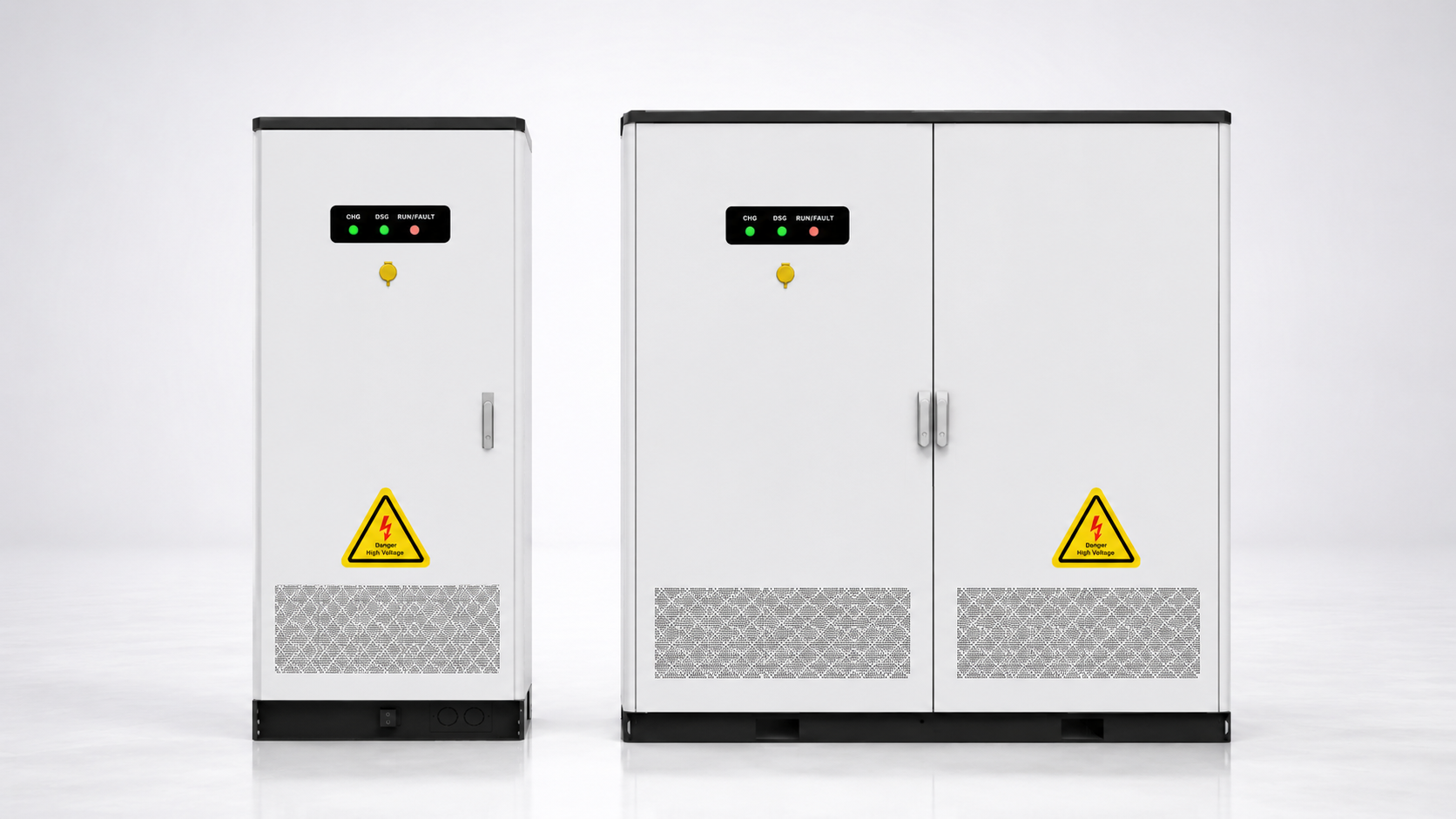
The two configurations serve different project sizes. Selection should consider PV input power, MPPT channels, AC power, battery capacity, installation footprint, foundation load and the site’s real load curve.
125kW / 261kWh
Select this model for small and medium C&I solar storage projects with moderate load demand, compact installation space and around 120kW PV input design. It offers higher parallel quantity flexibility for distributed cabinet deployment.
250kW / 522kWh
Select this model for larger C&I solar storage projects with higher PV input power, higher AC-side power demand and longer energy-shifting requirements. The larger cabinet requires stronger foundation planning and higher AC distribution capacity.
Technical Specifications
| Parameter | 125kW / 261kWh | 250kW / 522kWh |
|---|---|---|
| Model | IYP-B261L-125G3-120M1-HX1 | IYP-B522L-250G3-240M2-HX1 |
| Product Type | On-grid Solar BESS Cabinet / Liquid Cooling | On-grid Solar BESS Cabinet / Liquid Cooling |
| Integrated Platform | PV MPPT / BMS / PCS / EMS | PV MPPT / BMS / PCS / EMS |
| Battery | ||
| Battery Type | LiFePO4 Battery | LiFePO4 Battery |
| Rated Energy | 261kWh | 522kWh |
| PV | ||
| Max. Power | 120kW (1 channel) | 240kW (2 channels) |
| Max. PV Voltage | 950Vdc | 950Vdc |
| MPPT Voltage Range | 250–850Vdc | 250–850Vdc |
| Max. PV Input Current | 200A | 200A + 200A |
| MPPT Channels | 1 | 2 |
| AC Input | ||
| Rated Power | 125kW | 250kW |
| AC Voltage | 400Vac/230Vac (L1/L2/L3/N/PE) | 400Vac/230Vac (L1/L2/L3/N/PE) |
| Rated Frequency | 50Hz/60Hz | 50Hz/60Hz |
| Max. AC Current | 189A | 375A |
| AC Output | ||
| Rated Power | 125kW | 250kW |
| AC Voltage | 400Vac/230Vac (L1/L2/L3/N/PE) | 400Vac/230Vac (L1/L2/L3/N/PE) |
| Rated Frequency | 50Hz/60Hz | 50Hz/60Hz |
| Max. AC Current | 189A | 375A |
| Parallel Number | 12 | 6 |
| General Parameter | ||
| Communication Type | RS485 / WiFi | RS485 / WiFi |
| IP Grade | IP65 (Battery) | IP65 (Battery) |
| Fire Protection System | Yes | Yes |
| Operating Temperature | -10°C–55°C | -10°C–55°C |
| Humidity Range | 5%–95% | 5%–95% |
| Altitude | <2000m | <2000m |
| Battery Cooling Method | Liquid cooling | Liquid cooling |
| PCS Cooling Method | Intelligent cooling | Intelligent cooling |
| Size | 980 × 1300 × 2350mm | 2000 × 1350 × 2300mm |
| Weight | About 2500kg | About 4700kg |
PV Design Checks
- PV open-circuit voltage must stay within the cabinet’s PV voltage limit.
- PV operating voltage should match the 250–850Vdc MPPT range.
- PV input current must match the cabinet channel limit.
- Use 125kW/261kWh for 120kW PV input and one MPPT channel.
- Use 250kW/522kWh for 240kW PV input and two MPPT channels.
AC-Side Checks
- Confirm 400Vac / 230Vac three-phase system compatibility.
- Check breaker, cable, switchgear and transformer capacity.
- Confirm export limitation, anti-islanding logic and local grid code requirements.
- Parallel deployment requires EMS, communication and AC protection coordination.
Project Data Needed
- PV capacity and string design.
- 15-minute or hourly load profile.
- Peak-demand threshold and tariff periods.
- Installation location, ambient temperature and altitude.
- Foundation load and cabinet service access requirements.
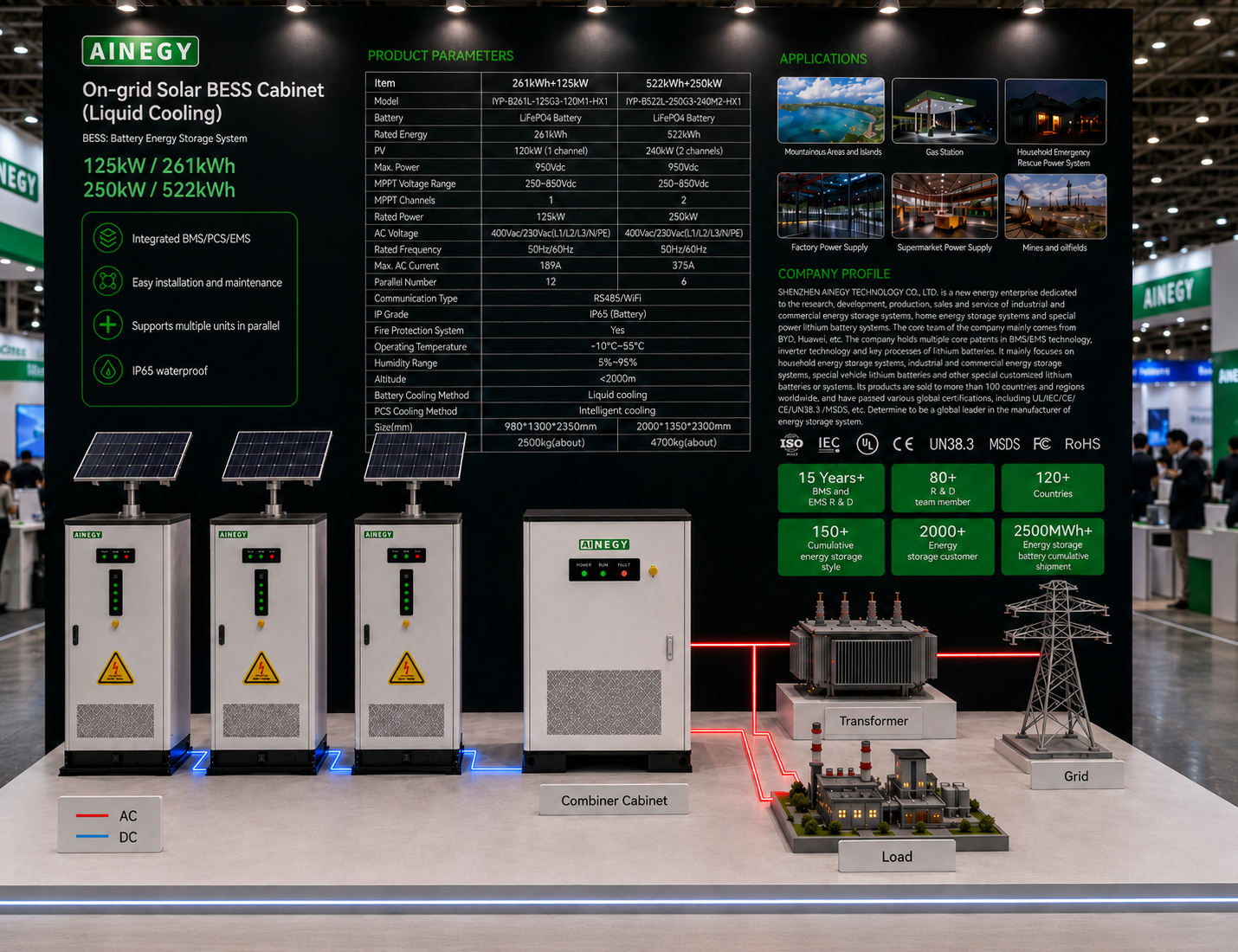
System Design & Grid Integration
This cabinet works as a solar battery energy storage unit in a grid-connected commercial or industrial electrical system. The PV side brings solar energy into the cabinet, the battery stores energy, the PCS manages AC/DC conversion, and the EMS controls when to charge or discharge according to project logic.
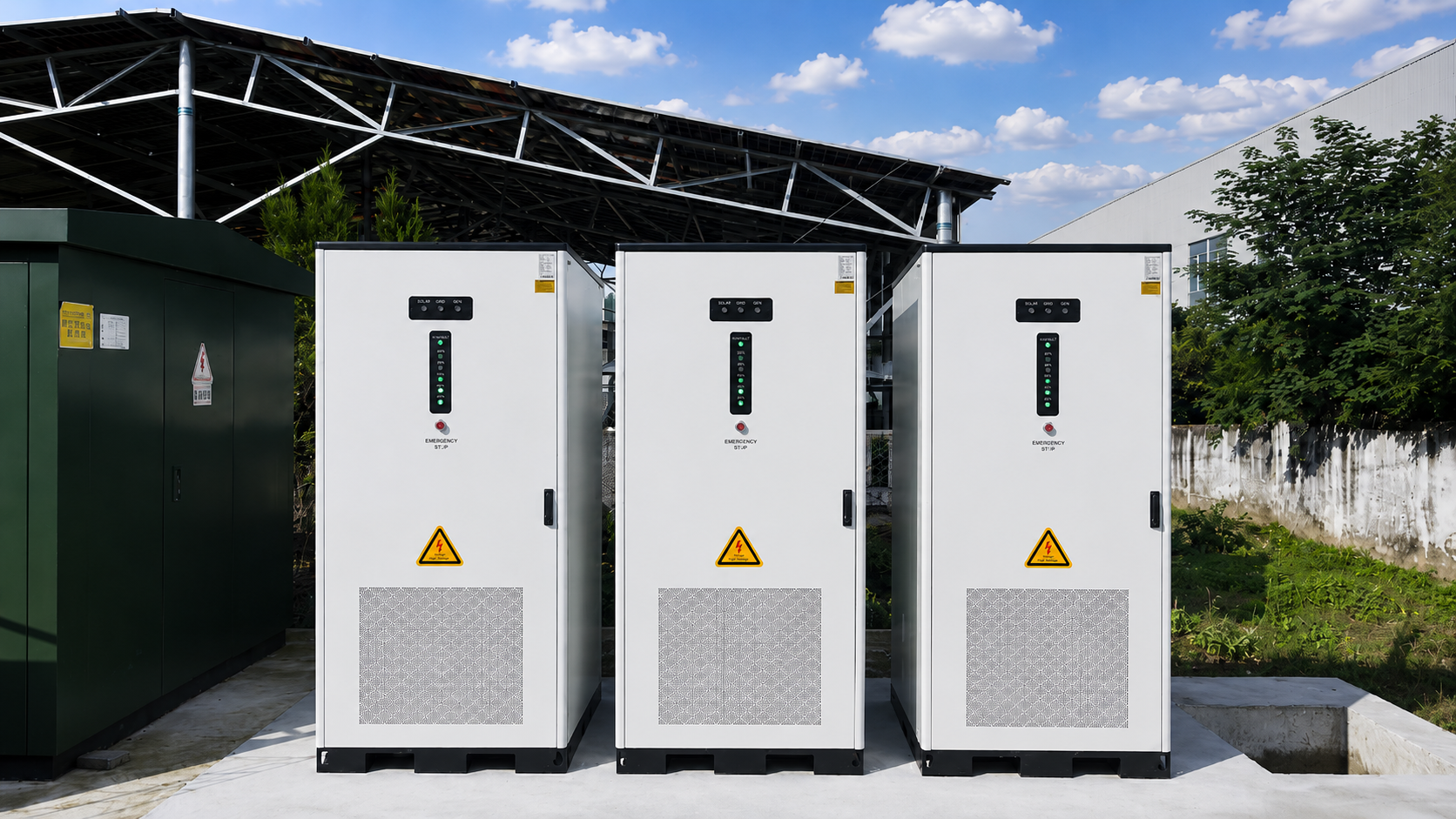
Typical Applications
This liquid-cooled on-grid solar BESS cabinet is mainly selected for commercial and industrial sites where solar generation, grid-connected storage and electricity cost optimization need to work together.
Difference From Other AINEGY Cabinets
Similar cabinet names can create confusion. This product should be selected when PV input and solar storage integration are part of the cabinet-level requirement.
Compared With On-grid BESS Cabinet / Liquid Cooling
The On-grid BESS Cabinet / Liquid Cooling is mainly a grid-tied battery energy storage cabinet. The On-grid Solar BESS Cabinet / Liquid Cooling adds PV input and MPPT parameters, making it more suitable when solar PV needs to connect directly into the cabinet-level system design.
Compared With Solar BESS Cabinet / On-grid / Air Cooling
The air-cooled solar BESS cabinet is suitable for projects where lower cost and simpler thermal structure are more important. The liquid-cooled version is better suited for higher-capacity C&I projects with daily cycling and stronger thermal consistency requirements.
Certification and Documentation Support
AINEGY can provide documentation support for applicable models and project requirements, including battery transport, material safety, electrical compliance, grid connection and fire-safety-related documentation. Final document scope depends on the selected configuration, target market and certificate availability for the exact model.












FAQ
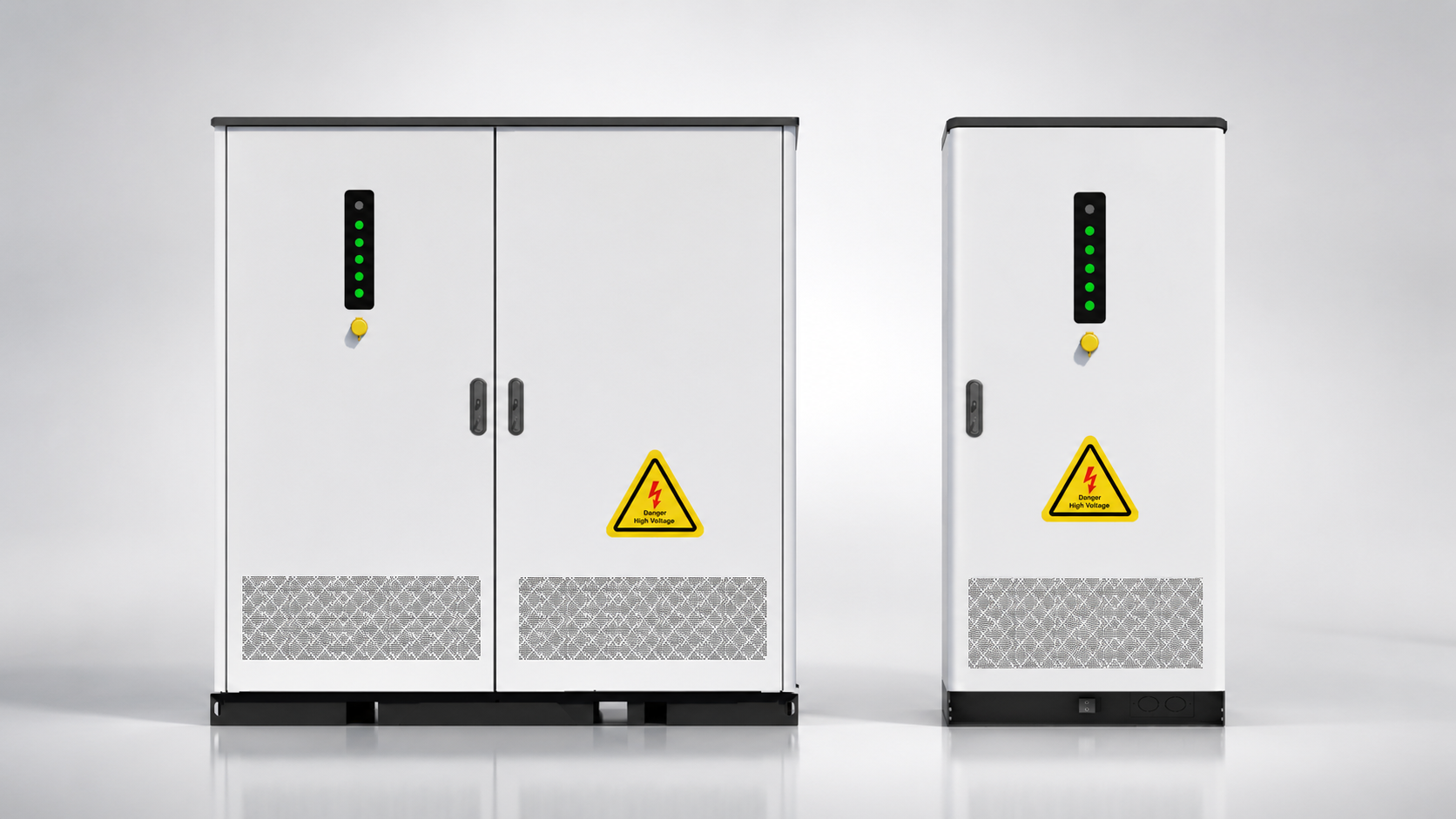
Send Your Solar Storage Project Requirements to AINEGY
Share your PV capacity, PV string design, site load curve, grid voltage, tariff structure, transformer capacity, installation location and target operation strategy. AINEGY can help review whether the 125kW/261kWh or 250kW/522kWh on-grid solar BESS cabinet configuration is suitable for your commercial or industrial solar energy storage project.