
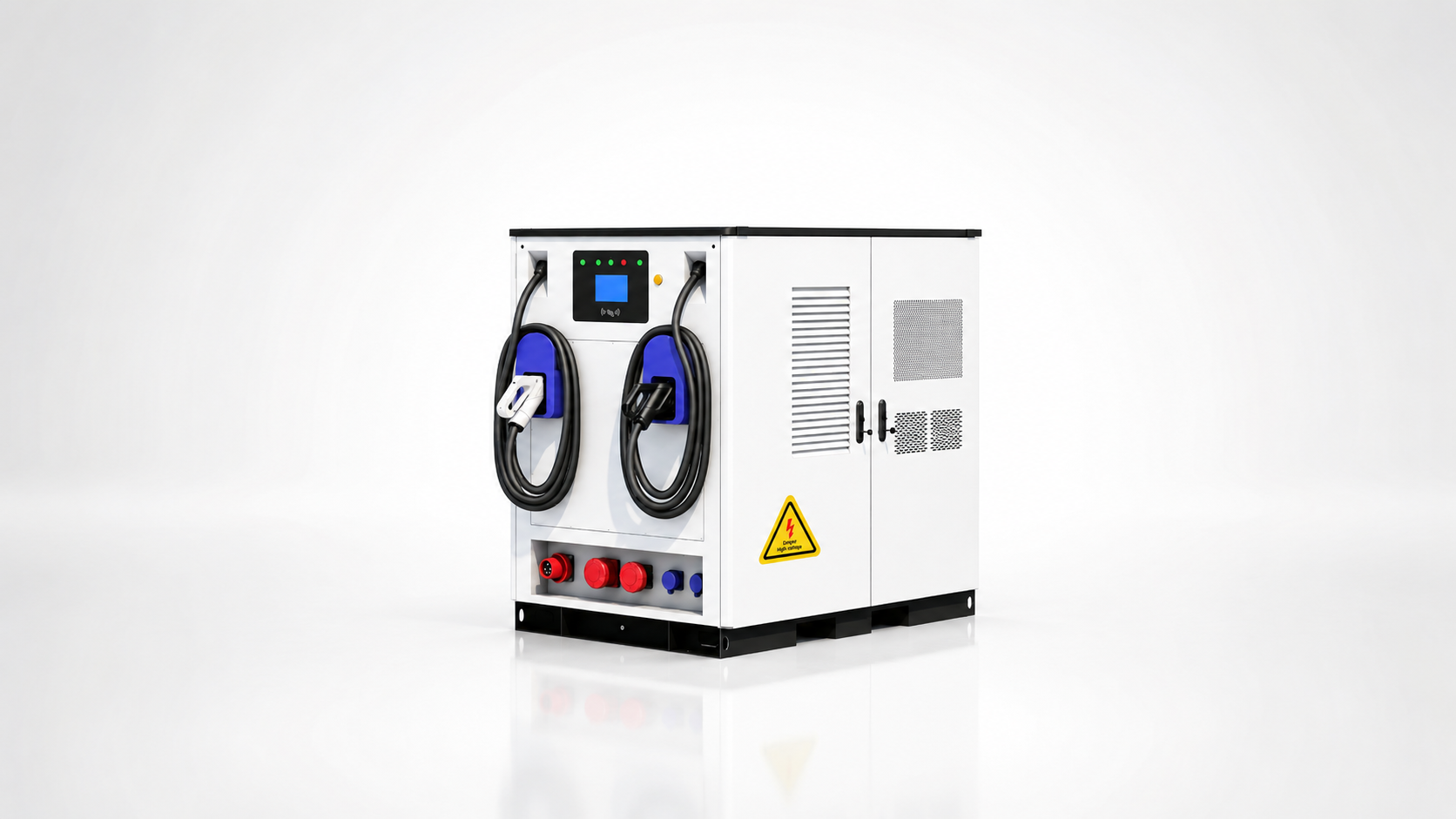
AINEGY Battery-Integrated Fast Charging System
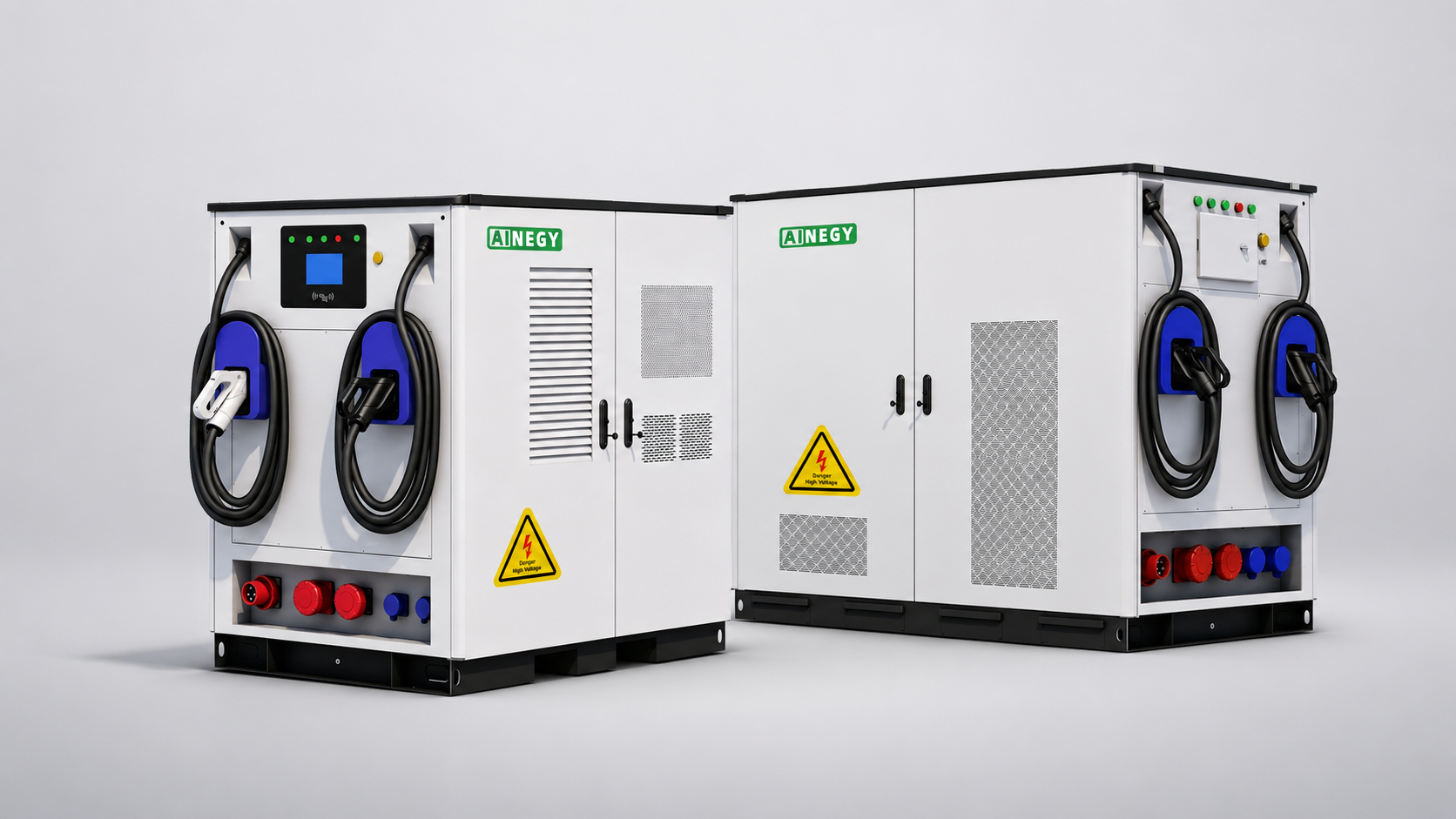
A battery buffered EV charger engineered around high-power charging demand, combining local 1C energy storage and dual-gun DC fast charging in one integrated cabinet.
The AINEGY battery-integrated fast charging system combines 87–265kWh LiFePO4 battery storage with 80–240kW DC fast charging. Two charging guns support simultaneous EV charging, while the integrated EMS manages battery operation, recharge interfaces, charging demand and additional connected load output inside the cabinet.
Why Integrate Battery Storage Directly with EV Fast Charging?
High-power EV charging creates a very different power profile from conventional battery storage. Charging demand can rise quickly, while the available grid, DC recharge source or renewable input may operate under different power and time conditions.
This product belongs to the wider AINEGY PV Storage EV Charging Systems product group. For projects specifically focused on a DC-coupled PV-storage-charging architecture, review the DC-Coupled PV Storage Charging System.
Battery Storage Designed Around High-Power EV Charging
The 87–265kWh battery range is paired with 80–240kW DC charging classes and 1C battery charge and discharge capability.
Charge Two Vehicles at the Same Time
Two charging guns support simultaneous EV charging within the configured charger power capacity.
AC, DC and Optional PV Energy Paths
Recharge the stationary battery through AC input, the DC recharge port or optional PV input according to the selected configuration.
EV Charging First, with AC Load Supply Capability
EV fast charging is the main product application, while the cabinet can also provide AC output for additional connected loads.
AINEGY Engineering and Quality Support
A battery-integrated fast charging system must coordinate high-rate battery operation, charger modules, dual-gun charging demand, recharge interfaces, thermal management and communication as one connected product.
Years of BMS / EMS Technology Accumulation
Long-term development of battery management and energy management technologies for lithium battery systems.
R&D Team Members
Engineering support across BMS, EMS, inverter technology, battery integration and customized energy storage systems.
Countries and Regions
International project experience across different charging interfaces, communication and operating environments.
Cumulative Battery Shipment
Battery manufacturing and integration experience supporting international energy storage project execution.
Battery, EMS and Fast Charging in One Cabinet
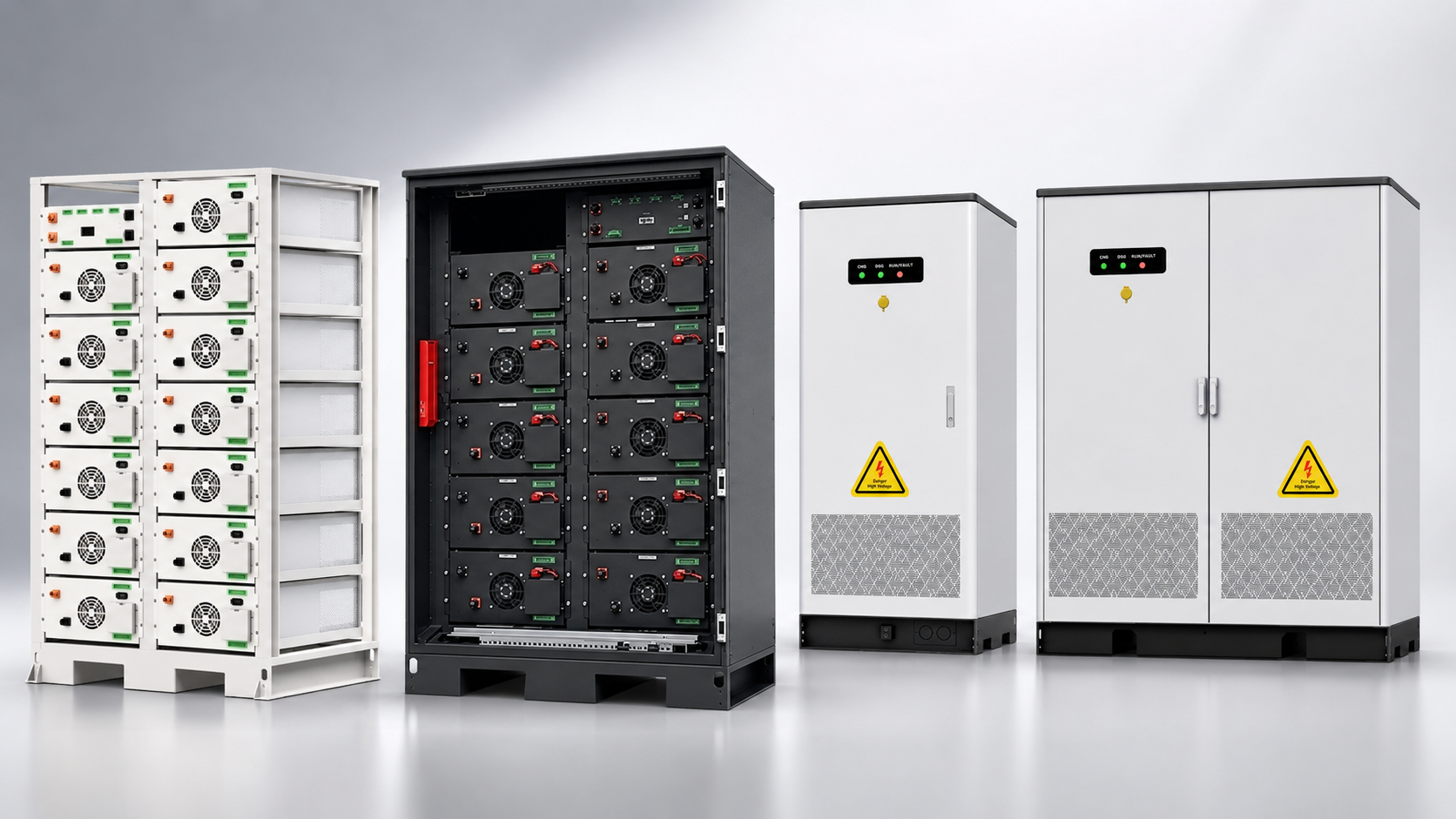
LiFePO4 battery storage, BMS, integrated EMS, charger modules, recharge interfaces and load output are engineered as one product platform.
Check More Than the EV Charging Connector
System validation focuses on battery operation, EMS communication, charger response, recharge interfaces and connected power paths.
Match Charger Power to the Real Site Energy Architecture
EV demand, grid conditions, recharge source, connector requirement, charging strategy and additional loads should be reviewed before configuration.
80–240kW Battery-Integrated Fast Charging System Technical Specifications
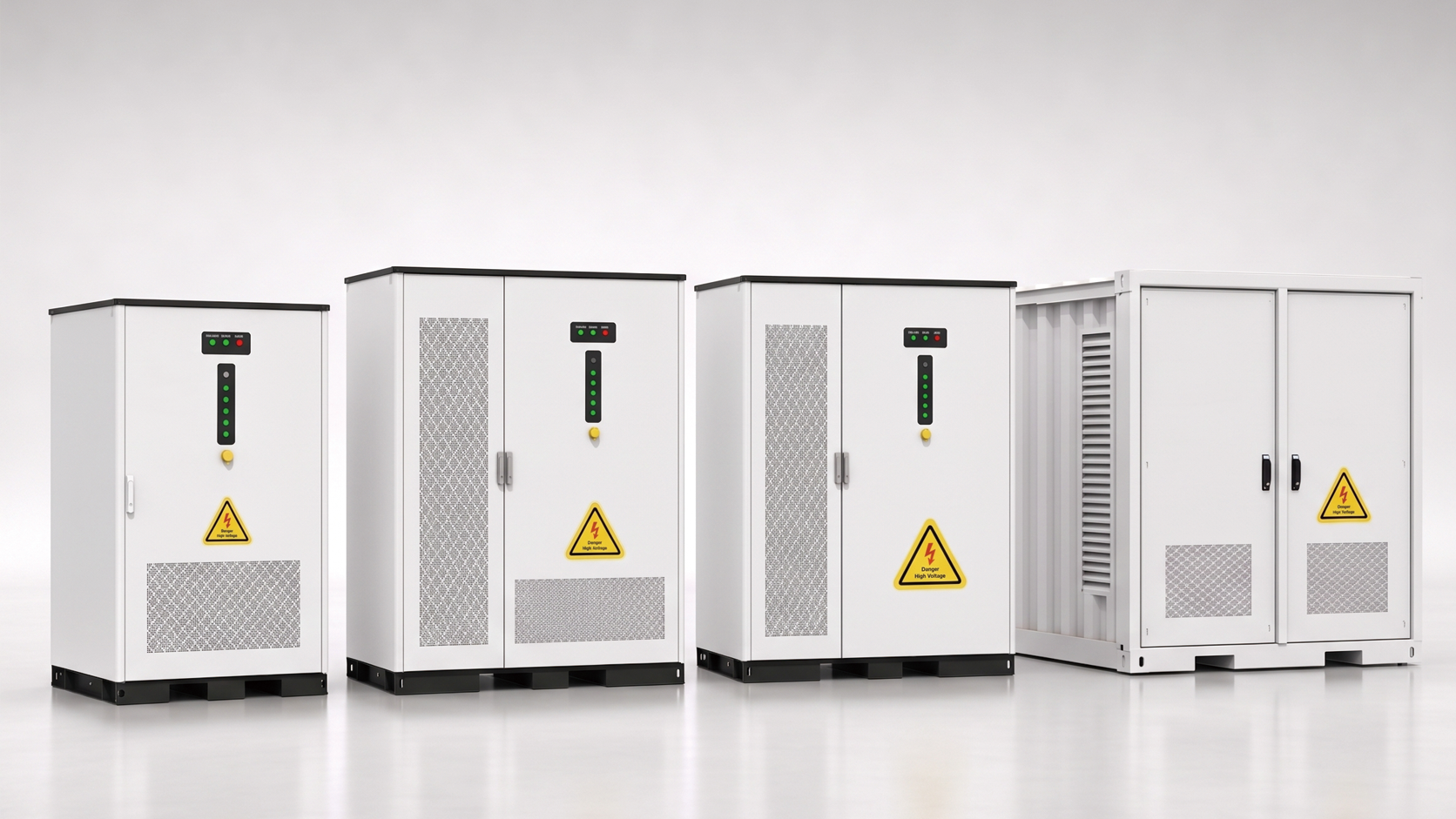
The four configurations combine 1C LiFePO4 battery storage, dual-gun simultaneous EV charging, a 200–1000Vdc charging range, integrated EMS, flexible battery recharge paths and additional AC output capability.
| Item | 80kW / 87kWh | 120kW / 122kWh | 160kW / 162kWh | 240kW / 265kWh |
|---|---|---|---|---|
| Model | IYP-B87-80C2-30H3-38M2-HX1 | IYP-B122L-120C2-30H3-38M2-HX1 | IYP-B162L-160C2-30H3-38M2-HX1 | IYP-B265L-240C2-125H3-120M1-HX1 |
| Battery System | ||||
| Battery Type | LiFePO4 | LiFePO4 | LiFePO4 | LiFePO4 |
| Rated Battery Energy | 87kWh | 122kWh | 162kWh | 265kWh |
| Battery Charge / Discharge Capability | 1C | 1C | 1C | 1C |
| Battery Cooling | Air Cooling | Liquid Cooling | Liquid Cooling | Liquid Cooling |
| EV Fast DC Charger | ||||
| Maximum Charger Power | 80kW | 120kW | 160kW | 240kW |
| Charger Voltage Range | 200–1000Vdc | 200–1000Vdc | 200–1000Vdc | 200–1000Vdc |
| Maximum Charger Current | 80A | 120A | 160A | 240A |
| Charging Guns | 2 | 2 | 2 | 2 |
| Simultaneous EV Charging | Supported | Supported | Supported | Supported |
| Gun Type | GBT; CCS1 / CCS2 / CHAdeMO Optional | GBT; CCS1 / CCS2 / CHAdeMO Optional | GBT; CCS1 / CCS2 / CHAdeMO Optional | GBT; CCS1 / CCS2 / CHAdeMO Optional |
| Gun Wire Length | 7m | 7m | 7m | 7m |
| Operation Mode | Standalone; OCPP 1.6J Optional | Standalone; OCPP 1.6J Optional | Standalone; OCPP 1.6J Optional | Standalone; OCPP 1.6J Optional |
| DC Recharge Port | ||||
| Maximum DC Recharge Power | 40kW | 60kW | 80kW | 130kW |
| DC Recharge Interface | DC Recharge Port | DC Recharge Port | DC Recharge Port | DC Recharge Port |
| AC Recharge | ||||
| Maximum AC Recharge Power | 30kW | 30kW | 30kW / 60kW Optional | 125kW / 250kW Optional |
| AC Type | 3-Phase 400Vac | 3-Phase 400Vac | 3-Phase 400Vac | 3-Phase 400Vac |
| PV Recharge — Optional | ||||
| Maximum PV Power | 38kW Optional | 38kW Optional | 38kW Optional | 120kW / 240kW Optional |
| Maximum PV Voltage | 820Vdc | 820Vdc | 820Vdc | 900Vdc |
| MPPT Voltage Range | 200–800Vdc | 200–800Vdc | 200–800Vdc | 250–850Vdc |
| MPPT Channels | 2 | 2 | 2 | 1 |
| AC Output for Additional Loads | ||||
| Maximum Off-Grid AC Output | 30kW | 30kW | 30kW | 125kW / 250kW Optional |
| AC Voltage | 400Vac / 230Vac, 3-Phase | 400Vac / 230Vac, 3-Phase | 400Vac / 230Vac, 3-Phase | 400Vac / 230Vac, 3-Phase |
| Frequency | 50Hz / 60Hz | 50Hz / 60Hz | 50Hz / 60Hz | 50Hz / 60Hz |
| Maximum AC Current | 45A | 45A | 45A | 189A |
| General Parameters | ||||
| Integrated EMS | Yes | Yes | Yes | Yes |
| Communication | RS485; WiFi / 4G Optional | RS485; WiFi / 4G Optional | RS485; WiFi / 4G Optional | RS485; WiFi / 4G Optional |
| Protection Rating | IP54 | IP65 Battery | IP65 Battery | IP65 Battery |
| Fire Protection System | Aerosol | Aerosol | Aerosol | Aerosol |
| Operating Temperature | -15°C to 50°C | -15°C to 50°C | -15°C to 50°C | -15°C to 50°C |
| Humidity | 5%–95% | 5%–95% | 5%–95% | 5%–95% |
| Altitude | <2000m | <2000m | <2000m | <2000m |
| Size | 1650 × 1200 × 1600mm | 1880 × 1380 × 1700mm | 1880 × 1380 × 1700mm | 1940 × 1300 × 1950mm |
| Approximate Weight | About 1000kg | About 2250kg | About 2400kg | About 2650kg |
Charging Demand
- Required DC charging power
- Expected vehicles per day
- Vehicle charging voltage range
- Dual-gun simultaneous charging demand
Site Power Data
- Available AC input power
- Grid voltage and site distribution
- DC recharge source information
- Existing connected load demand
Optional PV Input
- PV array capacity
- String voltage
- MPPT operating range
- Expected solar production profile
Charging Operation
- GBT / CCS1 / CCS2 / CHAdeMO requirement
- Standalone or OCPP 1.6J option
- Communication requirements
- Site operating strategy
1C Battery Storage as a Local Power Buffer for Fast Charging Duty
The battery is not simply installed beside the EV charger. Its 1C charging and discharging capability forms part of the fast charging power architecture, creating a local stored-energy buffer between available recharge sources and changing EV charging demand.
200–1000Vdc Fast Charging Platform for Project and Vehicle Requirements
All four charger configurations use a 200–1000Vdc charging voltage range. This gives project engineers a broad DC voltage platform for selecting charging interfaces and evaluating vehicle charging requirements.
200–1000Vdc Across the Product Series
One stated charger voltage range is used across the 80kW, 120kW, 160kW and 240kW configurations.
Simultaneous Charging for Two EVs
Two electric vehicles can charge at the same time within the total configured charger power capacity.
Charging Gun Cable Length
The product specification states a 7m charging gun wire length for the fast charging system.
Review Vehicle and Connector Requirements Before Configuration
Actual EV charging power also depends on vehicle charging capability and project charging conditions.
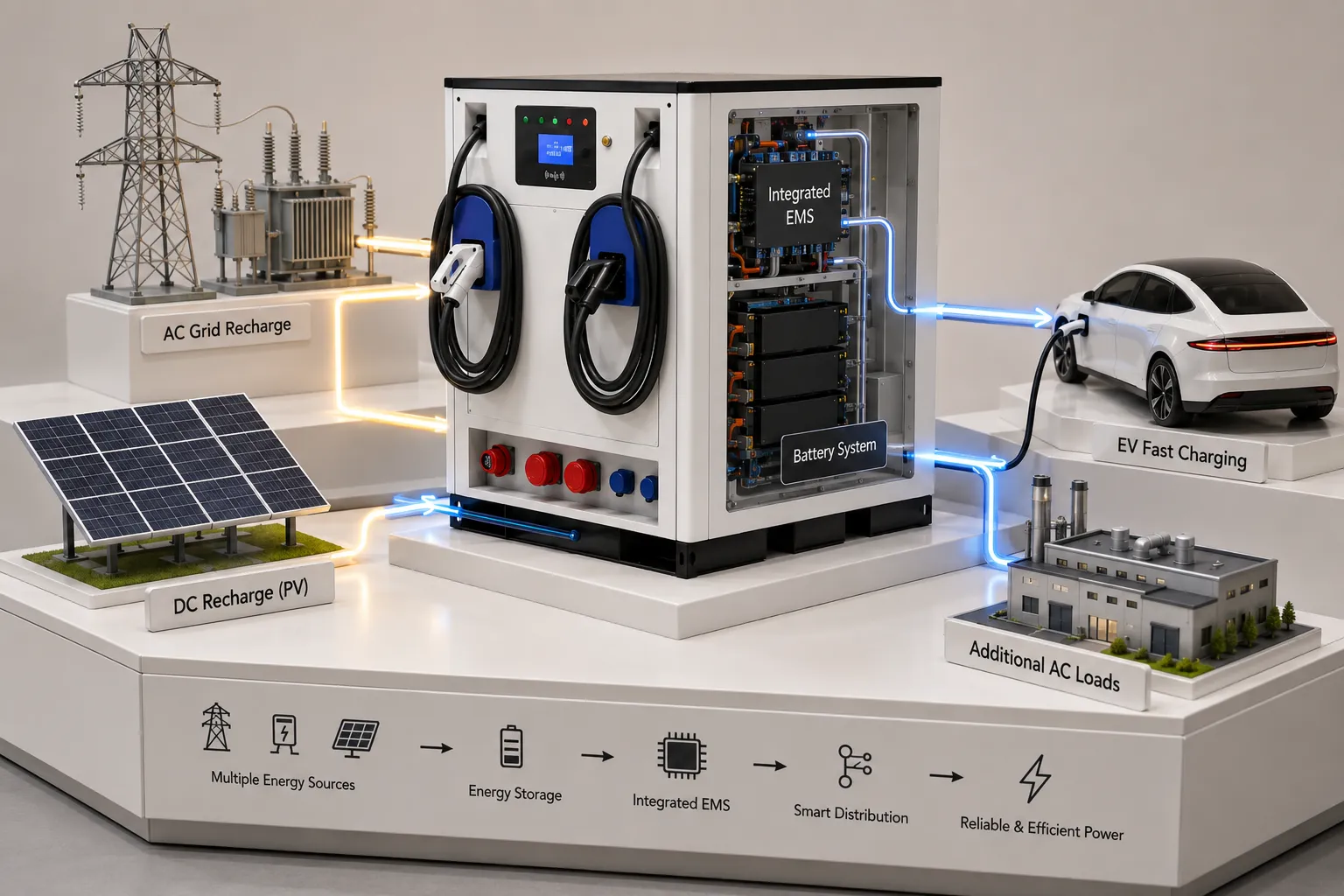
AC, DC and Optional PV Recharge Coordinated Inside One Fast Charging Cabinet
The integrated EMS manages the connected battery, recharge interfaces, EV charging demand and additional AC load output inside the product. EV fast charging remains the primary application, while the cabinet maintains several energy paths around the stationary battery system.
Integrated AINEGY EMS for Battery, Recharge and Charging Demand Coordination
EMS is integrated inside the cabinet. It observes the real-time operating status of the connected energy interfaces and dynamically coordinates system operation according to current conditions and the configured operating strategy.
Real-Time Energy Management Inside the Product
The AINEGY EMS is not a separate external box. It is part of the integrated cabinet architecture and coordinates the battery storage system with available recharge paths, EV charging demand and additional connected loads.
Charging Connector Options and Optional OCPP 1.6J Backend Integration
Charging interface selection should follow regional standards, vehicle requirements and project operation. The system supports standalone operation, with OCPP 1.6J available as an option for compatible charging management backend integration.
GBT Charging Gun Configuration
GBT is listed as the standard charging gun type in the product specification.
Optional CCS Charging Interfaces
CCS1 or CCS2 can be selected according to project and regional charging requirements.
Optional CHAdeMO Configuration
CHAdeMO is available as an optional charging interface for applicable project requirements.
Optional Charging Backend Integration
Standalone operation is supported, with optional OCPP 1.6J for compatible charging management system communication.
EV Fast Charging First, with Additional AC Load Power Output
The product is primarily designed around battery-integrated EV fast charging. Its energy storage architecture can also provide three-phase AC output for additional connected loads according to the selected configuration and project design.
30kW AC Output
Three-phase 400Vac / 230Vac output for additional connected loads within the engineered site configuration.
30kW AC Output
Supports additional AC load power alongside the main EV fast charging application.
30kW AC Output
Additional load demand should be coordinated with battery status and EV charging requirements.
125kW / 250kW Optional
Higher AC output capability for projects requiring more substantial additional load support.
Factory Integration and Charging System Interface Validation
A high-power battery-integrated EV charger should be evaluated as a connected energy and charging system. AINEGY focuses on the interfaces between the battery, BMS, integrated EMS, charging modules, recharge paths and connected power outputs.
High-Rate Battery Operating Checks
Review battery-system operation and BMS communication within the 1C energy storage platform.
Charging Module and Output Interface Review
Check the EV charging power path and charger operating response within the selected 80–240kW configuration.
Energy Interface Communication
Verify communication paths used by the EMS to observe the connected battery, recharge and output interfaces.
Simultaneous Charging Operating Checks
Review dual-gun charging operation within the configured charger power capacity.
AC, DC and Optional PV Input Review
Confirm the selected recharge architecture and its interfaces within the configured project system.
Connected Load Interface Review
Additional AC load demand should be reviewed together with EV charging demand and battery operating strategy.
Quality Built Around the Complete Charging Energy Path
AINEGY does not treat the charger and battery as unrelated devices placed in the same enclosure. The system is integrated around the energy path from recharge interfaces and stationary battery storage to EV charging demand and additional AC output.
Applications for AINEGY Battery-Integrated Fast Charging Systems
Designed for EV charging projects where high-power DC charging, local battery storage and several energy input paths need to operate inside one integrated cabinet.
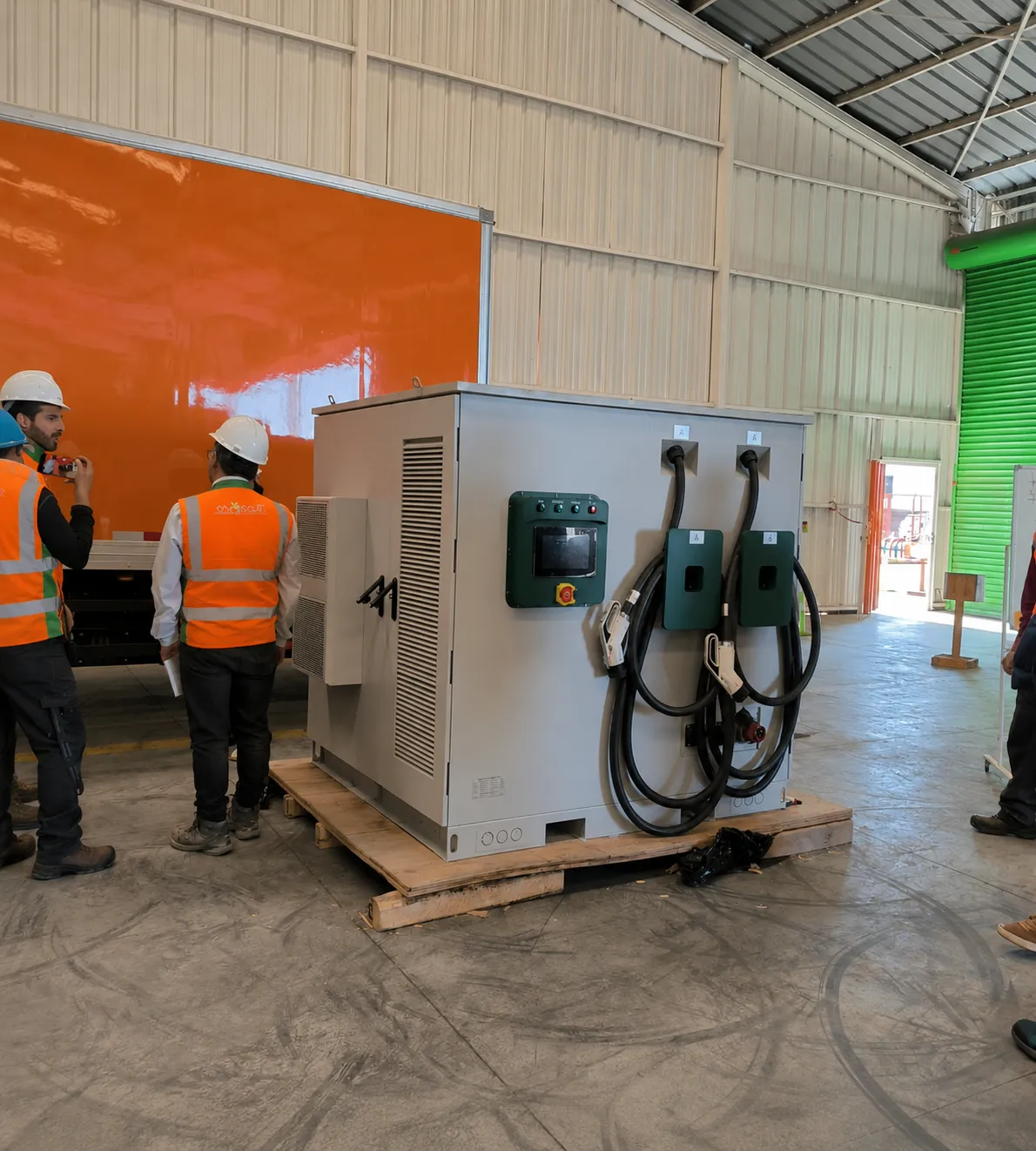
Combine Fast Charging and Local Battery Storage
Commercial charging sites may experience rapidly changing EV charging demand across different operating periods.
AINEGY combines 87–265kWh stationary storage with 80–240kW dual-gun DC fast charging in one cabinet.
Dual-Gun Charging for Operational Vehicle Fleets
Fleet charging projects may require two vehicles to charge at the same time and need the charging system to coordinate with site power conditions.
Dual charging guns support simultaneous EV charging within the selected charger power capacity.
Battery-Integrated Charging with Additional Load Output
Service areas and charging facilities can combine EV charging with lighting, communication and other local electrical loads.
EV charging remains the primary function, while configured AC output can supply additional connected loads.
Fast Charging Inside a Wider Site Energy System
Industrial charging projects may need to consider vehicle charging demand together with existing facility loads.
The integrated EMS coordinates battery operation, charging demand, recharge interfaces and connected load output according to the configured strategy.
Multiple Recharge Paths for Different Site Conditions
Some charging projects may use AC supply, a DC recharge source or optional PV input according to the available local energy architecture.
The stationary battery creates a local energy buffer between recharge availability and EV charging demand.
Add Optional PV Recharge to the Battery System
Projects with local solar generation can configure the optional PV recharge interface according to the selected model.
For projects where DC-coupled PV-storage-charging architecture is the primary design focus, use the dedicated AINEGY DC-coupled product range.
Battery Buffered EV Charger Engineering FAQ
Clear answers for charging station developers, EPC teams, fleet operators and energy-system engineers evaluating an EV charger with battery storage.
It combines stationary battery energy storage and DC fast charging inside one integrated product architecture. In the AINEGY system, 87–265kWh of LiFePO4 storage works with 80–240kW EV fast charging, dual charging guns and integrated EMS.
A battery buffered EV charger includes local stationary energy storage as part of the charging power architecture. The battery creates an energy buffer between available recharge sources and high-power EV charging demand.
Yes. The product uses two charging guns and supports simultaneous EV charging. Charging operates within the total power capacity of the selected 80kW, 120kW, 160kW or 240kW configuration.
The stationary battery platform supports 1C charging and discharging capability. This high-rate battery characteristic is suited to the rapid power profile of EV fast charging applications.
The cabinet supports AC recharge and includes a DC recharge port. Optional PV recharge can also be configured according to the selected model and project requirements.
Yes. AINEGY EMS is integrated inside the product. It monitors the connected operating interfaces and dynamically coordinates battery operation, recharge paths, EV charging demand and additional connected load output according to the configured strategy.
Yes. EV fast charging is the primary application, but the system also supports three-phase AC output for additional connected loads. Available output power depends on the selected configuration.
GBT is listed as the standard charging gun type, with CCS1, CCS2 and CHAdeMO available as options. The system supports standalone operation, with optional OCPP 1.6J for compatible charging management backend integration.
No. The 87kWh/80kW model uses air cooling. The 122kWh/120kW, 162kWh/160kW and 265kWh/240kW battery configurations use liquid cooling.
Send the required charger power, expected vehicles and charging pattern, connector standard, available AC power, DC recharge source data, optional PV design, additional load demand, communication requirements, ambient conditions and site layout.
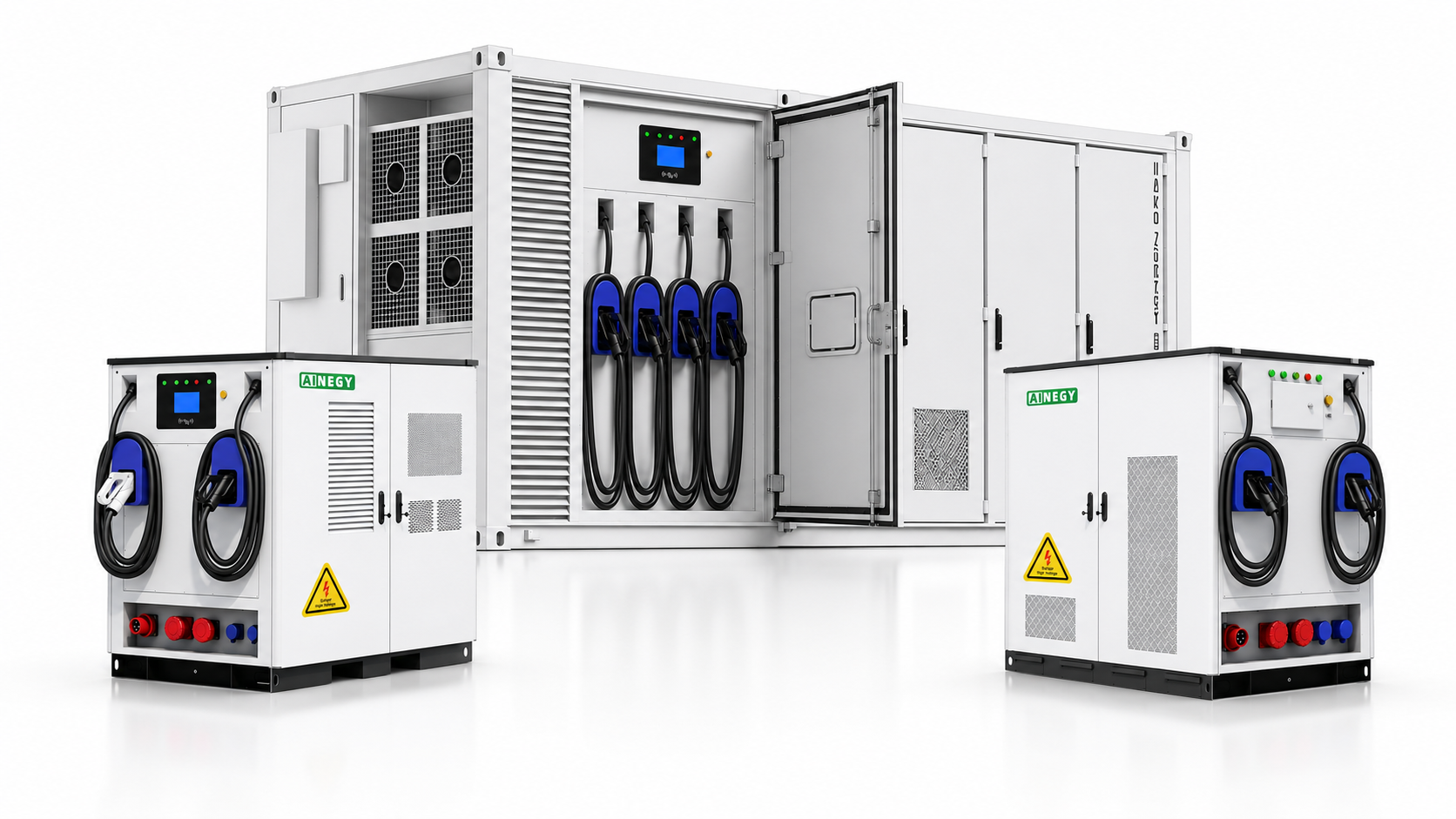
Configure Your Battery-Integrated EV Fast Charging System with AINEGY
Send your required 80–240kW charging power, expected EV charging demand, connector standard, available AC power, DC recharge source, optional PV data, additional AC load requirements and site conditions. AINEGY will review the 87–265kWh 1C battery configuration, dual-gun charging requirement, integrated EMS strategy and recharge interface configuration.