
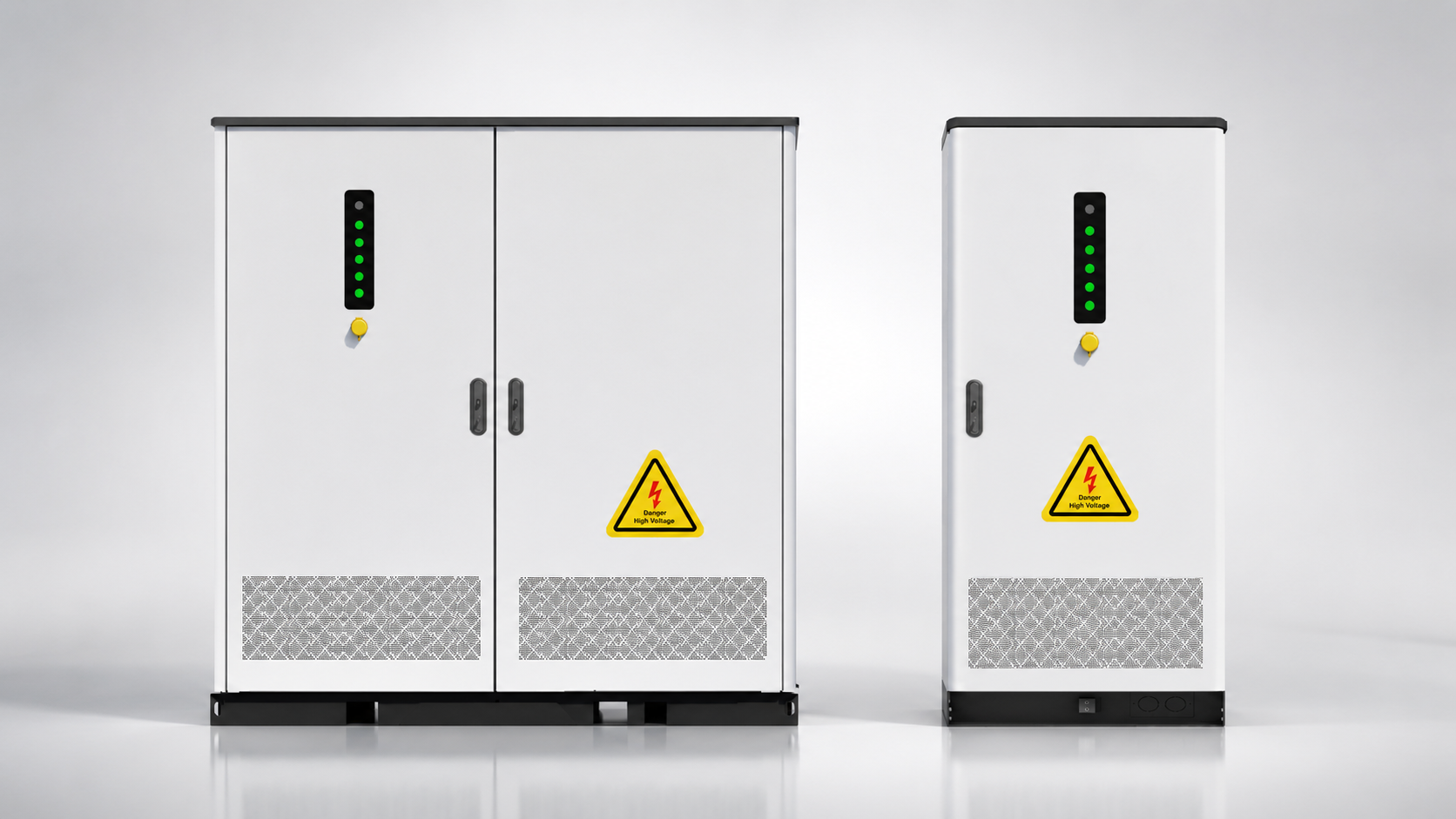
AINEGY PCS-integrated Off-grid BESS Cabinet / Liquid Cooling
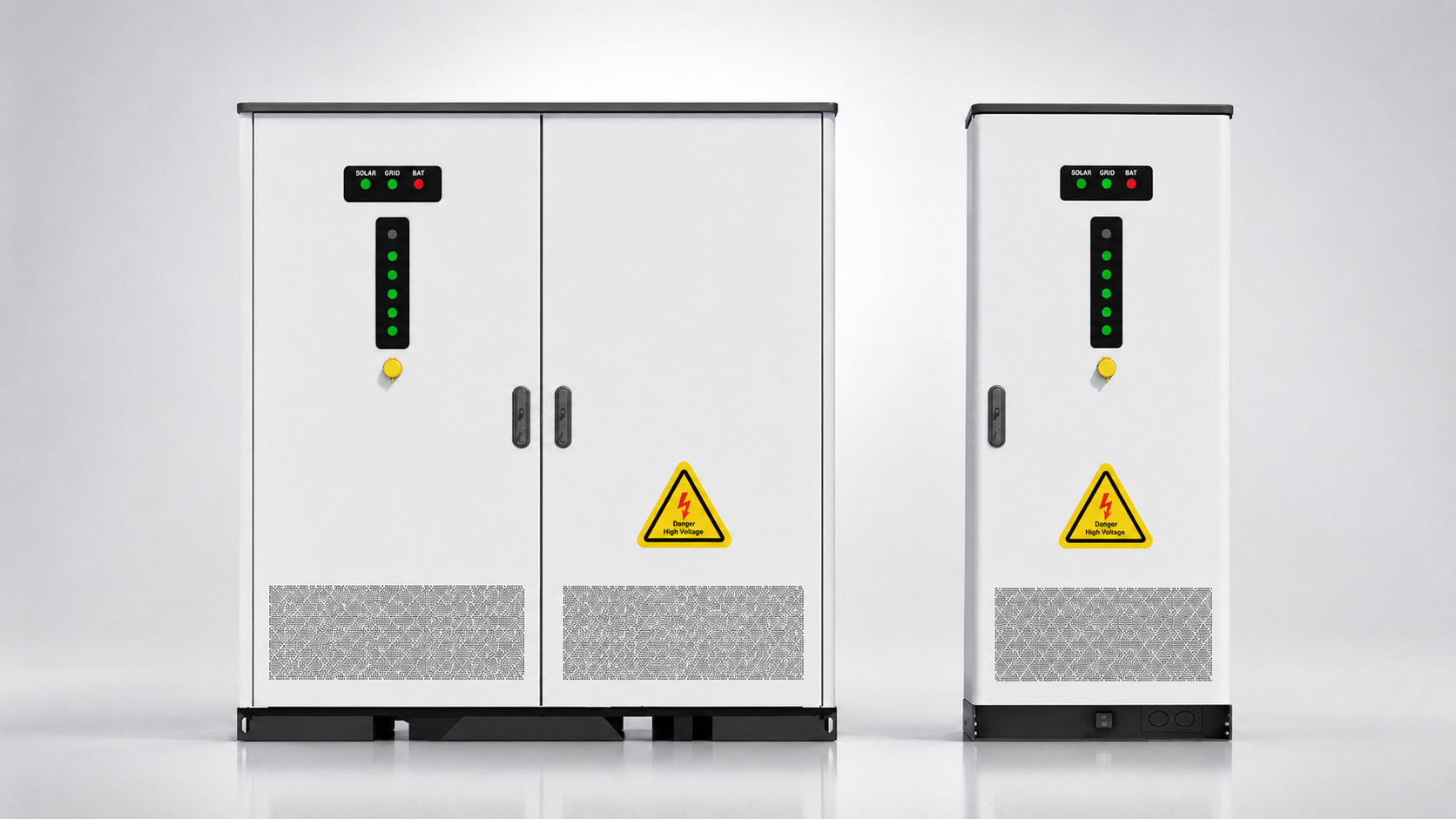
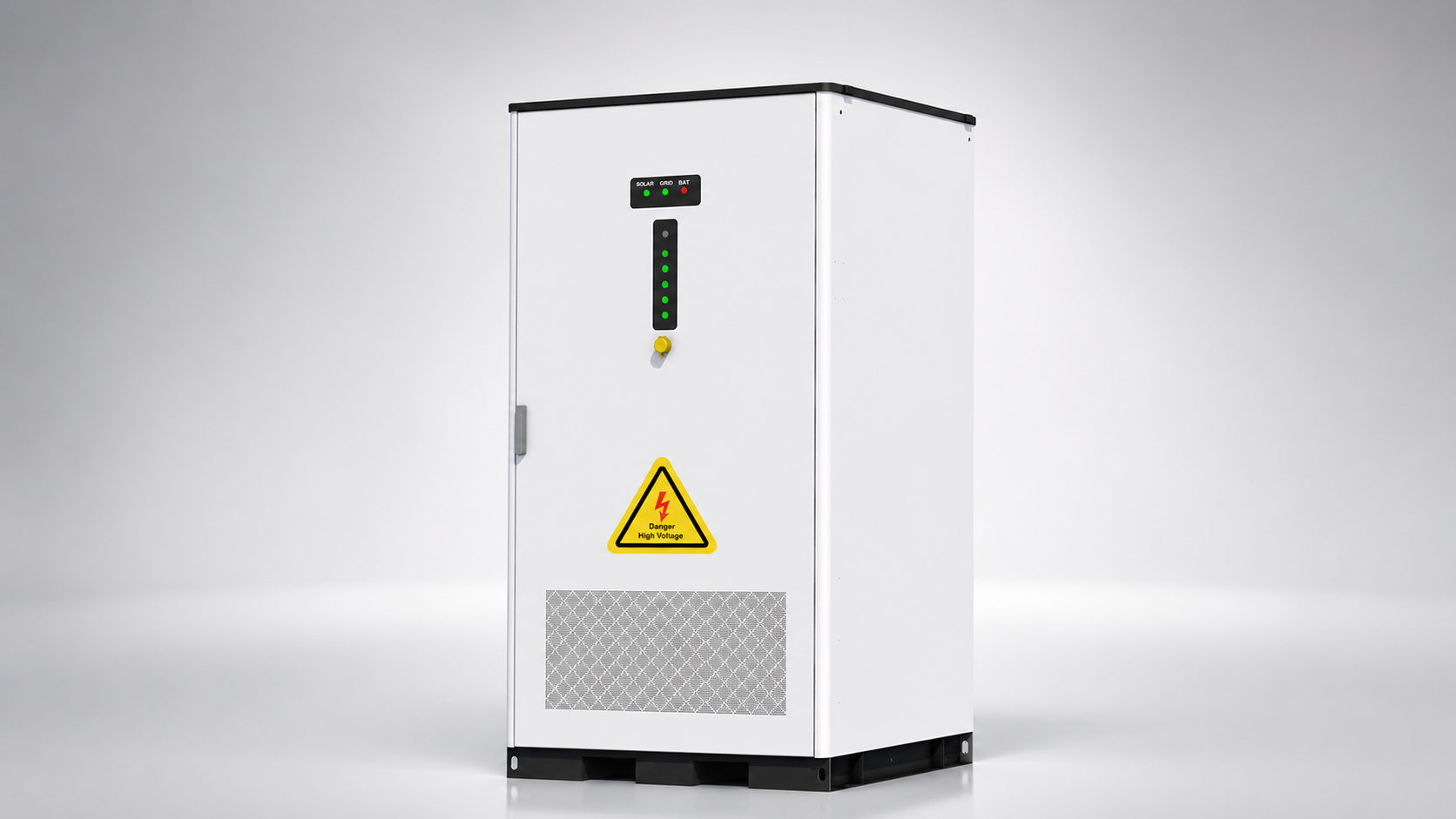
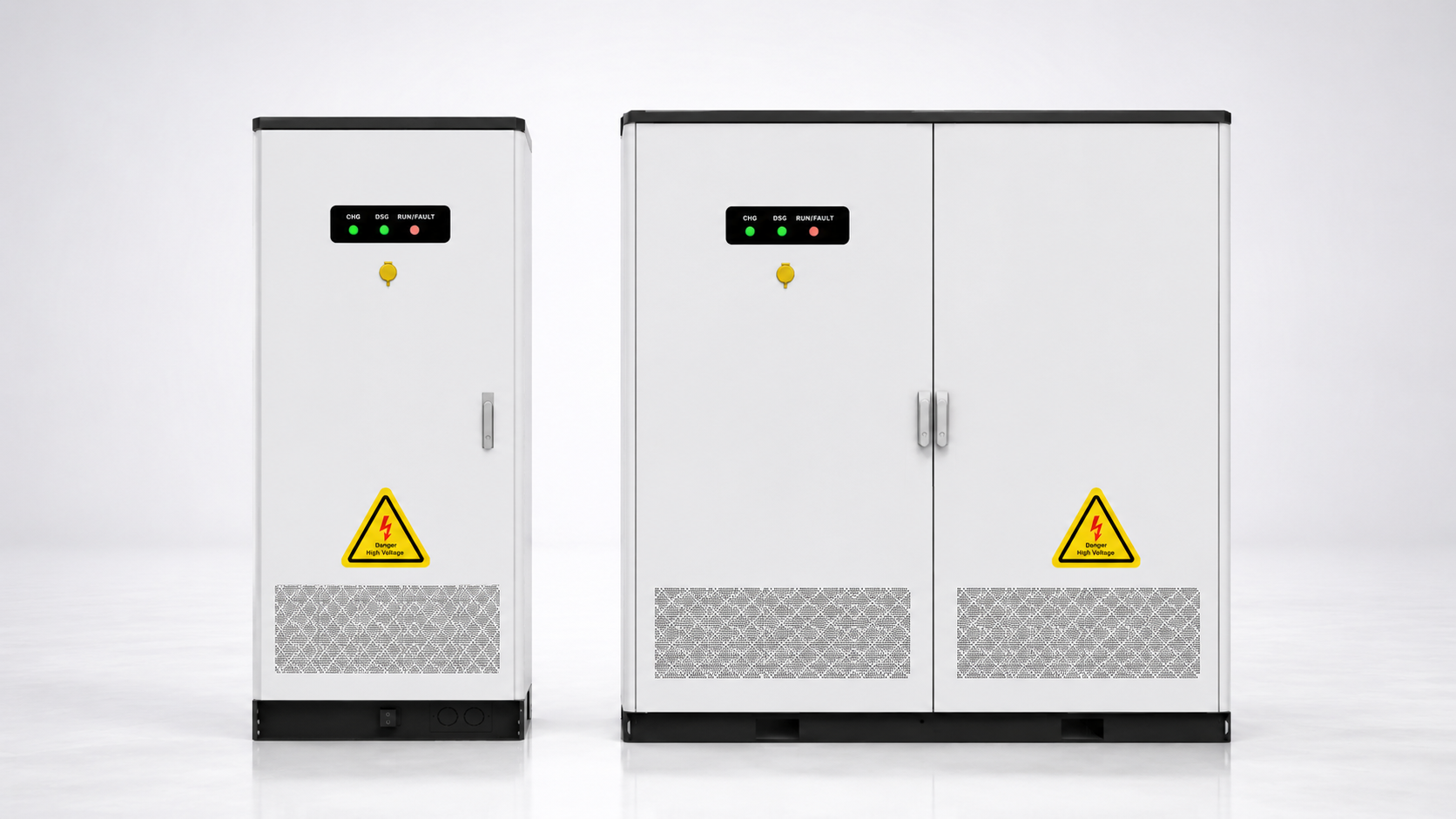
The AINEGY PCS-integrated Off-grid BESS Cabinet / Liquid Cooling is a liquid-cooled battery energy storage cabinet that combines LiFePO4 battery system, BMS and built-in PCS in one cabinet platform. It is designed as the core storage and power conversion block for off-grid, weak-grid, microgrid and backup power system integration.
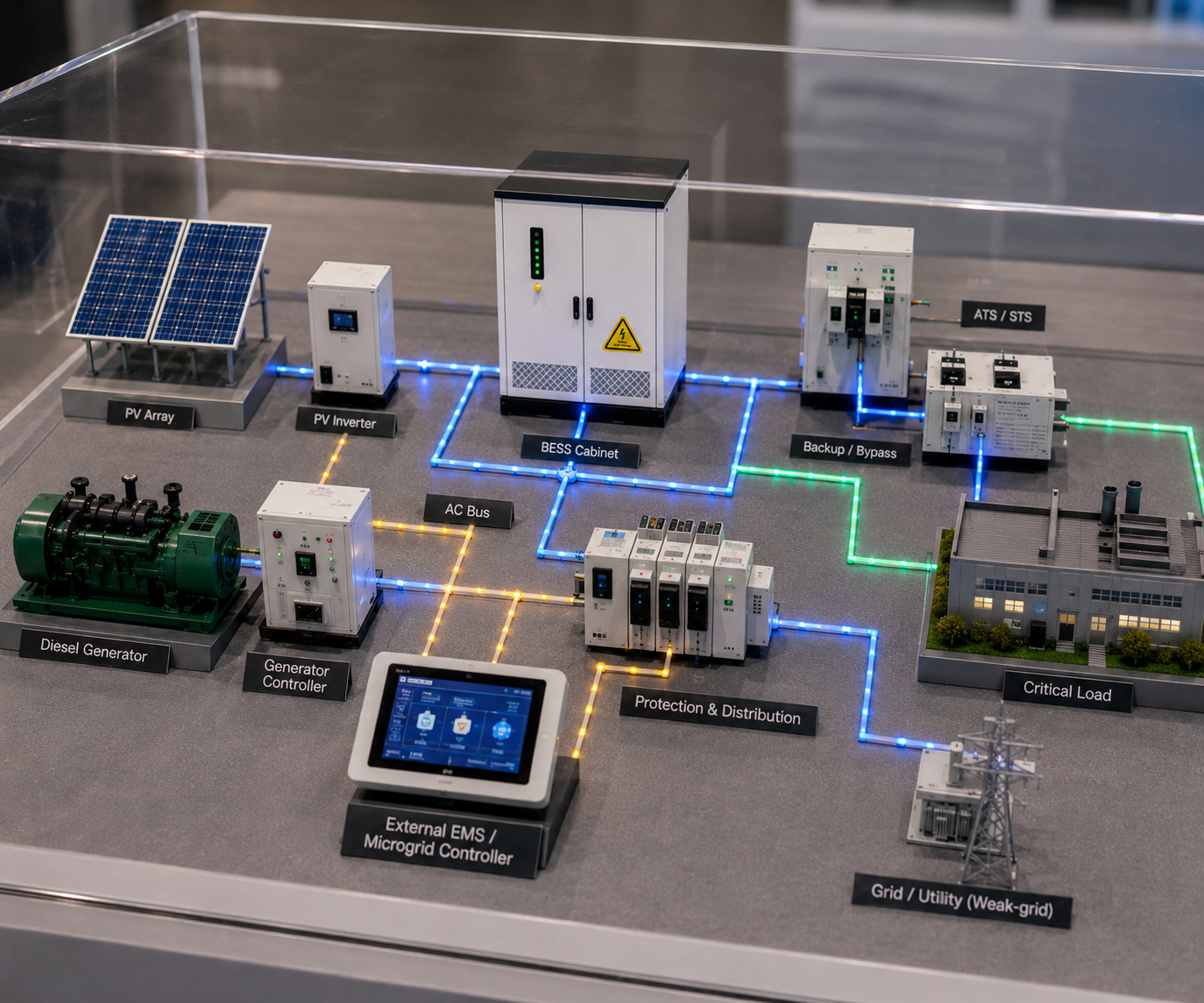
Unlike a battery-only cabinet, this product includes built-in PCS for bidirectional AC/DC power conversion. It can be integrated into PV-diesel-battery microgrids, remote-site power systems, weak-grid C&I facilities and critical-load backup projects. External EMS, microgrid controller, ATS/STS, PV inverter, diesel generator controller and load distribution should be configured at system level according to the project architecture.
About AINEGY PCS-integrated Off-grid BESS Cabinet
AINEGY provides commercial and industrial energy storage solutions for grid-connected, solar storage, off-grid, weak-grid and microgrid applications. This AINEGY PCS-integrated off-grid BESS cabinet is designed for projects that need battery storage, BMS protection and built-in PCS power conversion in one liquid-cooled cabinet platform.
The product belongs to the AINEGY C&I energy storage cabinet portfolio and is positioned as the core battery-plus-PCS block for EPCs, system integrators and project developers. External EMS, microgrid controller, ATS/STS, PV inverter, diesel generator controller and load distribution should still be configured according to the final project architecture.
Battery Storage and PCS Power Conversion in One Cabinet
This product is best understood as a PCS-integrated BESS cabinet, not a complete off-grid power station by itself. The cabinet integrates the battery system, BMS and PCS, so it can store energy and convert power between the DC battery side and the AC side of the project.
Clear System Boundary for Off-grid and Microgrid Projects
This boundary prevents overpromising. The cabinet includes battery, BMS and PCS. Other components required for a complete off-grid or backup power system should be configured at project level.
LiFePO4 Battery System
Main energy storage unit for discharge, reserve power and project-level energy dispatch.
BMS
Battery-side monitoring and protection for voltage, current, temperature, SOC and fault status.
Built-in PCS
Bidirectional AC/DC power conversion inside the cabinet for AC-side BESS integration.
Liquid Cooling
Battery thermal management for high-capacity cabinet operation and repeated cycling.
EMS / Microgrid Controller
Coordinates PV, diesel generator, grid input, load priority and reserve SOC at project level.
PV Inverter
PV-side conversion and control should be configured separately when solar is included.
ATS / STS / Bypass
Required for transfer switching, backup operation and grid/off-grid system architecture.
Load Distribution
Critical and non-critical loads should be separated by project-level distribution design.
What It Solves for System Integrators and EPCs
This cabinet is most suitable for integrators building off-grid, weak-grid, backup power and PV-diesel-battery systems where a compact battery-plus-PCS power block is preferred over separate battery and PCS cabinets.
Reduces Separate PCS Integration Work
Compared with a battery-only cabinet, this PCS-integrated BESS cabinet reduces the need to select, install and wire a separate PCS cabinet. It gives system integrators a compact storage and power conversion block for AC-side deployment.
Supports Weak-grid Energy Storage
Remote factories, mountain sites, islands, mines, oilfields and weak-grid commercial facilities often need storage that can work with PV, diesel generator or unstable grid input through project-level controls.
Fits PV-diesel-battery Projects
In a PV-diesel-battery project, the cabinet can store surplus energy, discharge during load peaks, reduce diesel generator runtime and support local power supply when coordinated by external EMS.
Supports Critical Load Backup
For facilities with critical loads, the cabinet can be used as the storage and PCS unit in a backup power system. Backup result depends on load priority, usable capacity, PCS power and switching design.
Improves Microgrid Flexibility
The cabinet can be deployed as a modular BESS building block. Integrators can combine it with PV, diesel generator, external EMS and AC distribution equipment according to project requirements.
Liquid-cooled Cabinet Architecture
Liquid cooling supports battery thermal uniformity during repeated charge and discharge cycles, which is useful for higher-capacity C&I storage and backup applications.
Model Selection
Both models use an 832V LiFePO4 battery platform and liquid-cooling architecture. Selection should be based on AC power demand, load type, required backup duration, available installation space, foundation load and system-level control design.
125kW / 261kWh
Choose this model for moderate C&I loads, smaller weak-grid systems, compact backup projects and selected critical-load applications where 125kW AC power is sufficient.
250kW / 522kWh
Choose this model for larger microgrid projects, higher peak loads, longer discharge requirements and larger weak-grid or backup power systems. Load profile must be checked against the AC output duration windows.
Technical Specifications
| Parameter | 125kW / 261kWh | 250kW / 522kWh |
|---|---|---|
| Model | IYP-B261L-125G3-HX1 | IYP-B522L-250G3-HX1 |
| Product Type | PCS-integrated Off-grid BESS Cabinet / Liquid Cooling | PCS-integrated Off-grid BESS Cabinet / Liquid Cooling |
| Integrated Platform | Battery System / BMS / PCS | Battery System / BMS / PCS |
| Battery | ||
| Battery Type | LiFePO4 Battery | LiFePO4 Battery |
| Rated Energy | 261kWh | 522kWh |
| Nominal Voltage | 832V | 832V |
| Rated Capacity | 314Ah | 628Ah |
| AC Input | ||
| Rated Power | 125kW | 250kW |
| AC Voltage | 400Vac/230Vac (L1/L2/L3/N/PE) | 400Vac/230Vac (L1/L2/L3/N/PE) |
| Rated Frequency | 50Hz/60Hz | 50Hz/60Hz |
| Max. AC Current | 189A | 375A |
| AC Output | ||
| Rated Power | 125kW | 250kW/1min 200kW/3min 175kW/5min |
| AC Voltage | 400Vac/230Vac (L1/L2/L3/N/PE) | 400Vac/230Vac (L1/L2/L3/N/PE) |
| Rated Frequency | 50Hz/60Hz | 50Hz/60Hz |
| Max. AC Current | 189A | 375A/1min 300A/3min 265A/5min |
| General Parameter | ||
| Communication Type | RS485 / WiFi | RS485 / WiFi |
| IP Grade | IP65 (Battery) | IP65 (Battery) |
| Fire Protection System | Yes | Yes |
| Operating Temperature | -10°C–50°C | -10°C–50°C |
| Humidity Range | 5%–95% | 5%–95% |
| Altitude | <3000m | <3000m |
| Battery Cooling Method | Liquid cooling | Liquid cooling |
| PCS Cooling Method | Intelligent cooling | Intelligent cooling |
| Size | 980 × 1300 × 2250mm | 2000 × 1350 × 2300mm |
| Weight | About 2400kg | About 4700kg |
Load Checks
- Total load power and peak load.
- Motor, pump and compressor starting current.
- Power factor and three-phase balance.
- Critical and non-critical load list.
System Checks
- External EMS or microgrid controller requirements.
- ATS / STS / bypass design for backup projects.
- PV inverter and diesel generator controller compatibility.
- Grounding, protection and local electrical code requirements.
Runtime Checks
- Usable battery capacity and SOC window.
- Average and peak load profile.
- Reserve SOC for emergency operation.
- PV or diesel generator recharge strategy.
How It Fits Into an Off-grid or Weak-grid System
In an off-grid or weak-grid project, the cabinet connects to the AC bus through its built-in PCS. The battery stores energy, the BMS monitors battery operation, and the PCS manages power conversion between the battery and the AC side. External EMS or a microgrid controller decides when the cabinet should charge, discharge, hold reserve capacity or coordinate with PV, diesel generator, grid input and loads.
Liquid Cooling for High-capacity BESS Operation
In off-grid and backup power projects, the battery may experience repeated charge and discharge cycles caused by PV fluctuation, load peaks, diesel generator dispatch and grid interruptions. Liquid cooling helps manage battery heat more evenly and reduces module-to-module temperature differences during operation.
Temperature Uniformity
Liquid cooling supports more even heat transfer across battery modules, which is useful for high-capacity cabinet systems.
Repeated Cycling
Off-grid and backup systems may charge and discharge frequently due to PV fluctuation, load peaks or generator dispatch.
Dense Cabinet Layout
The 261kWh and 522kWh configurations place large battery capacity into cabinet form, requiring reliable thermal design.
Service Life Support
More stable thermal conditions can support more predictable battery operation and reduce uneven thermal stress.
PCS Intelligent Cooling
The battery side uses liquid cooling, while the PCS side uses intelligent cooling according to the product specification.
Project Layout
Cabinet spacing, service access, ambient temperature and maintenance route should still be confirmed at project level.
Typical Applications
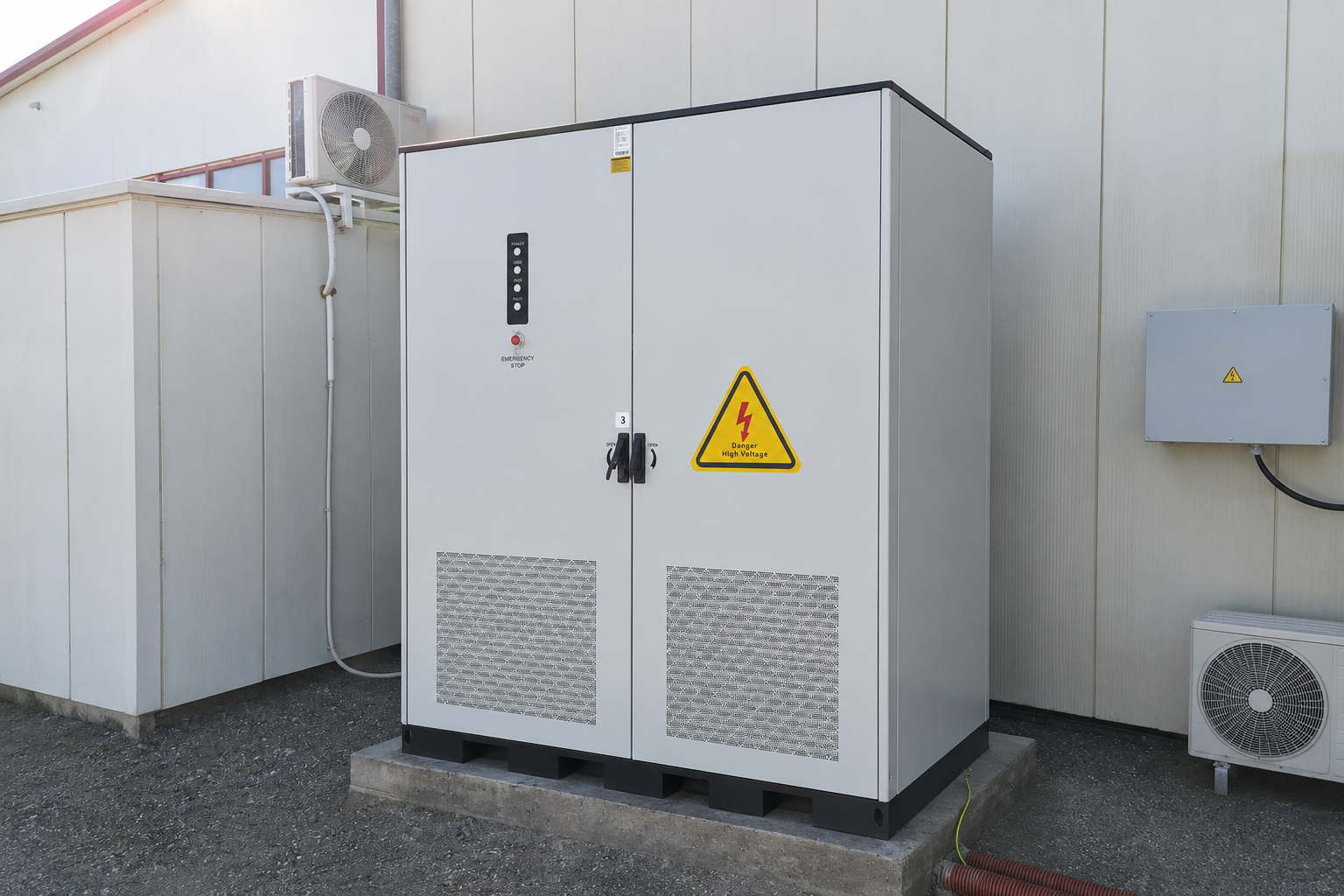
This PCS-integrated BESS cabinet is mainly selected for projects where system integrators need a compact battery-plus-PCS module for weak-grid, off-grid, backup or microgrid architectures.
Certification and Documentation Support
Documentation support can be provided for applicable models and project requirements, including battery transport, material safety, electrical compliance, grid connection and fire-safety-related documentation. Final document scope depends on the selected configuration, target market and certificate availability for the exact model.












FAQ
Confirm the Right AINEGY PCS-integrated BESS Cabinet for Your Off-grid or Weak-grid Project
Share your load list, peak power, motor starting current, required backup time, PV capacity, diesel generator configuration, external EMS requirement, ATS/STS design, grid condition, installation location and target operating mode. AINEGY can help review whether the 125kW/261kWh or 250kW/522kWh PCS-integrated BESS cabinet is suitable for your off-grid, weak-grid, backup power or microgrid project.