
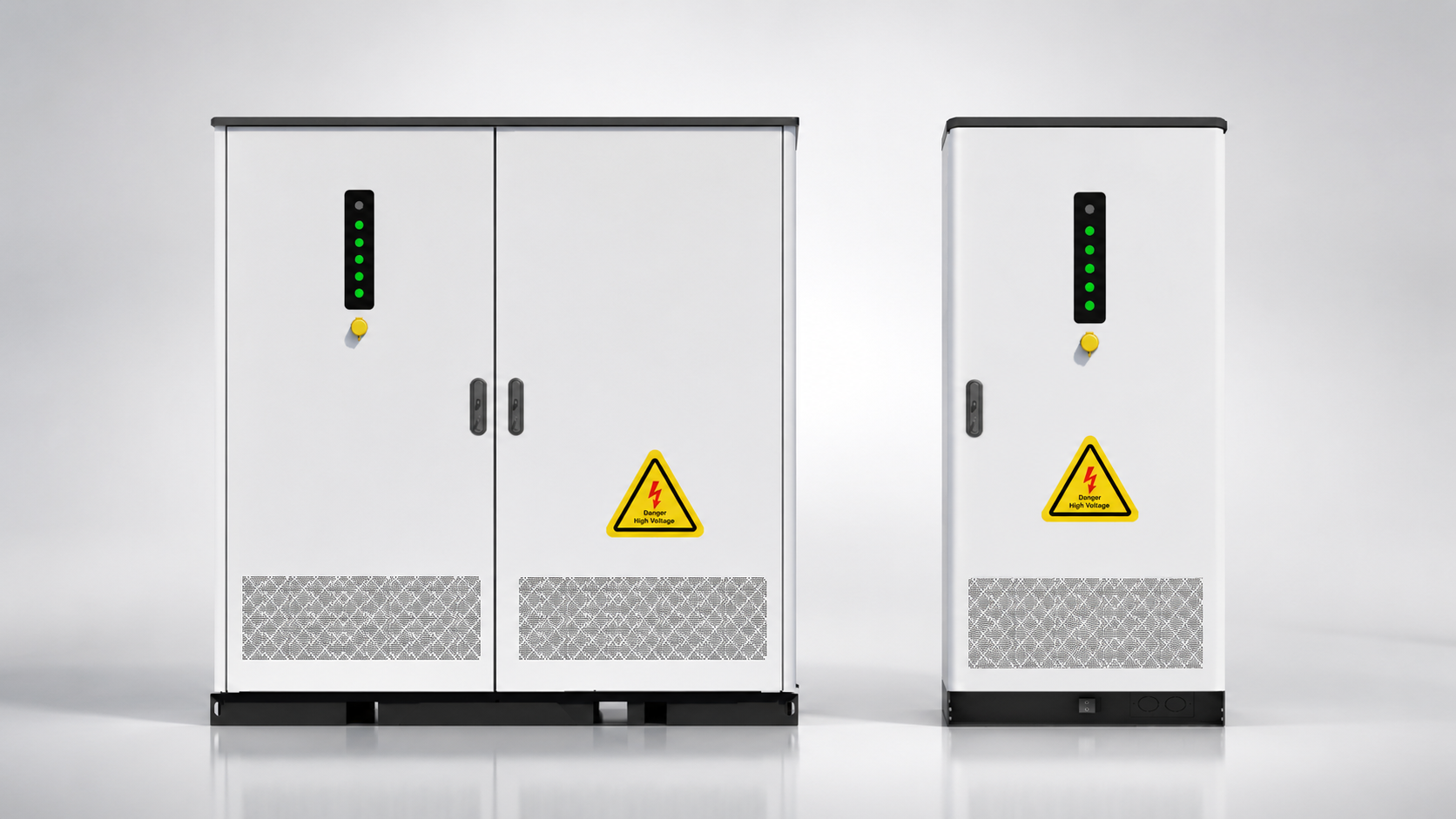
AINEGY On-grid BESS Cabinet / Liquid Cooling
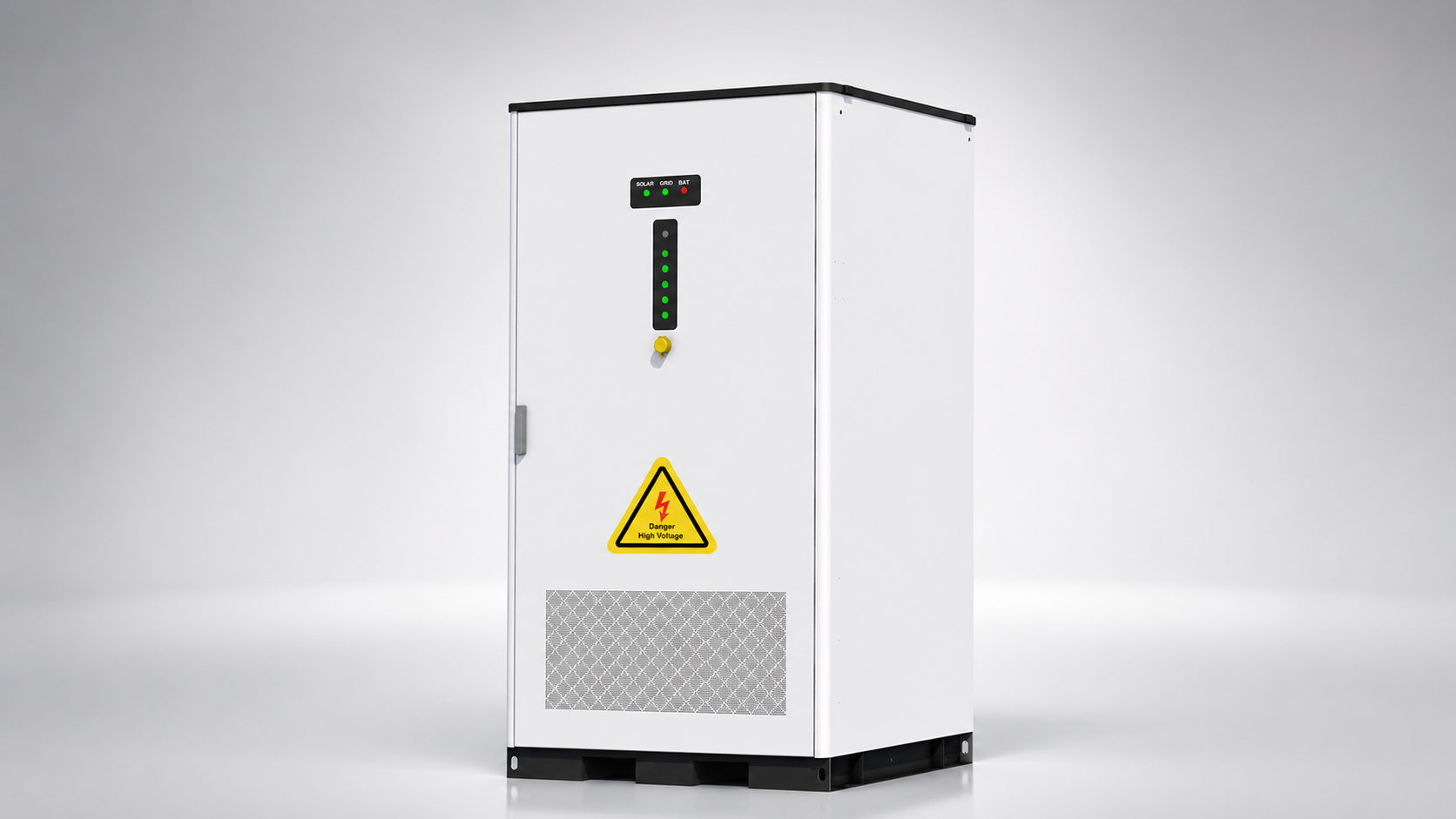
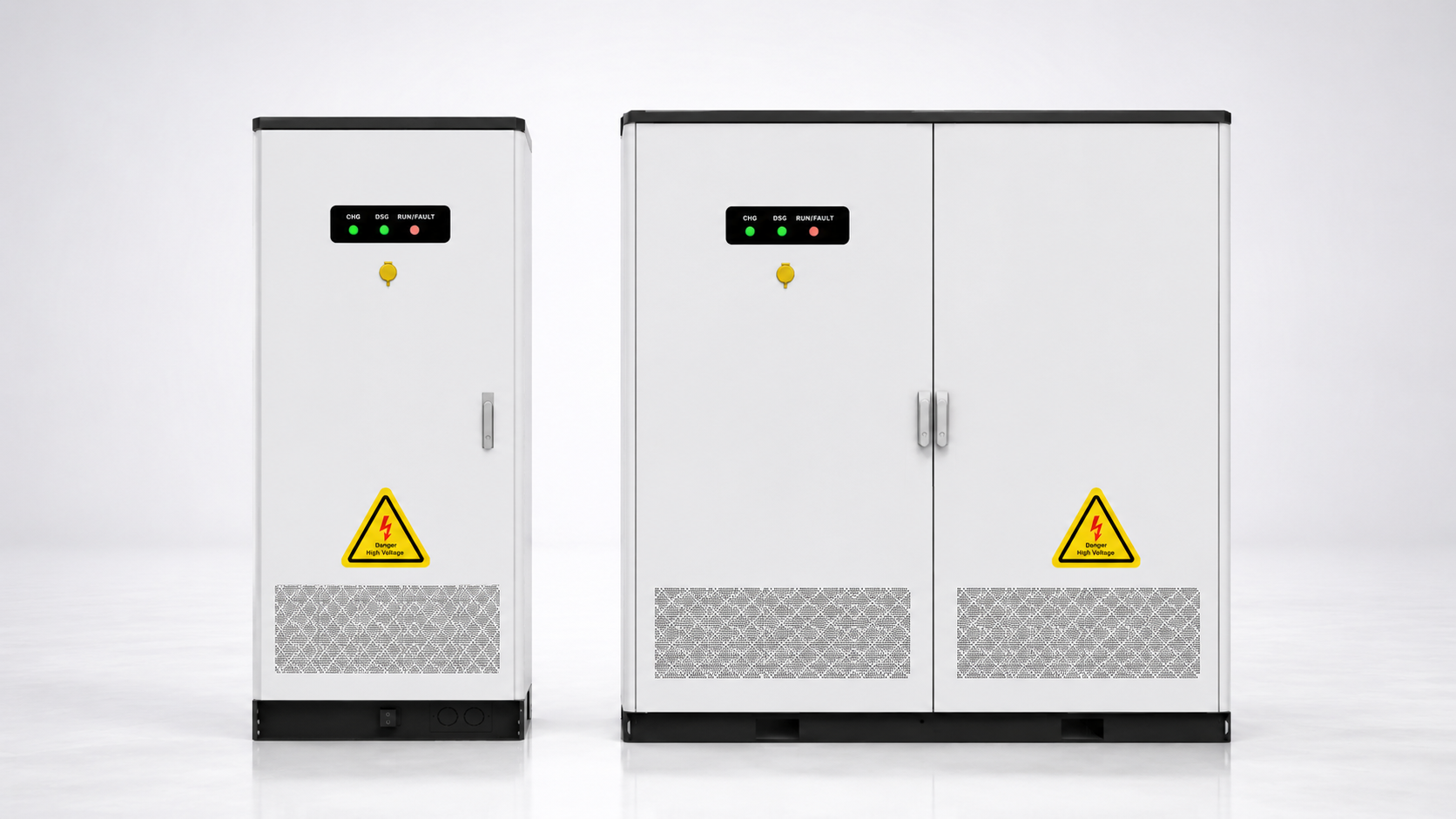
The AINEGY On-grid BESS Cabinet / Liquid Cooling is a grid-tied liquid-cooled BESS cabinet with integrated battery system, PCS, BMS and EMS. Available in 125kW/261kWh and 250kW/522kWh configurations for C&I peak shaving, time-of-use energy shifting, demand management and load smoothing.
This AINEGY product is not a battery-only DC cabinet. The integrated PCS connects the battery system to the AC side of the site, while the EMS manages charge and discharge strategy according to grid availability, load demand and electricity tariff logic. Under standard on-grid operation, the cabinet follows the utility grid and does not provide standalone output during a grid outage.
About AINEGY On-grid BESS Cabinet / Liquid Cooling
AINEGY provides commercial and industrial lithium battery energy storage solutions for grid-tied, solar-plus-storage and site energy management projects. The AINEGY On-grid BESS Cabinet / Liquid Cooling is designed for C&I customers who need an integrated AC-side energy storage cabinet rather than a battery-only DC cabinet.
This product belongs to the AINEGY grid-tied ESS cabinet portfolio and combines LiFePO4 batteries, liquid cooling, BMS, PCS and EMS in one cabinet platform. It is mainly used for peak shaving, time-of-use energy shifting, demand management, load smoothing and scalable multi-cabinet grid-tied deployments.
How Grid-Tied Operation Works
The cabinet connects to the AC side of a commercial or industrial electrical system. When the utility grid is available, the PCS converts AC power into DC power to charge the battery, or converts stored DC energy back into AC power for grid-tied site load support. The BMS protects the battery system, and the EMS decides when to charge, discharge or limit operation according to the project strategy.
What It Solves for C&I Grid-Tied Sites
This cabinet is used for grid-connected energy management, not off-grid power supply. Its value comes from storing energy when grid conditions or tariffs are favorable, and discharging when site load or electricity cost is higher.
Peak Shaving
For factories and commercial buildings with peak-demand pressure, the cabinet discharges during high-load periods to reduce the highest power drawn from the grid. This supports demand management where local tariffs include demand-based charges.
Time-of-Use Energy Shifting
The system can charge during lower-price electricity periods and discharge during higher-price periods. Actual savings depend on tariff structure, cycle strategy, load profile and local grid rules.
Load Smoothing
Motors, pumps, compressors, refrigeration and production equipment can create short-term load changes. A grid-tied BESS cabinet can smooth part of these fluctuations and reduce stress on the grid connection.
AC-Side Energy Management
If the site also has grid-connected PV or other AC-side energy sources, the cabinet can be included in the site-level EMS strategy. PV connection is handled at system level; this model is not defined as a direct PV-input cabinet.
Grid Capacity Relief
At sites where transformer or grid connection capacity is tight, discharging during peak periods can reduce instantaneous grid demand. This is useful when load growth is faster than grid capacity expansion.
Scalable Cabinet Deployment
Projects that require more energy or power can use multiple cabinets. Parallel deployment allows capacity growth by cabinet quantity, while AC protection, communication and EMS coordination are designed as one system.
Liquid Cooling and Battery Life
In high-capacity C&I BESS cabinets, the key thermal issue is not only average temperature. The more important issue is temperature difference between cells and modules. When some cells stay hotter than others during daily cycling, they age faster and can reduce the usable capacity of the whole battery system.
Better Temperature Uniformity
Liquid cooling transfers heat through coolant circulation instead of relying only on cabinet airflow. This helps reduce temperature spread between battery modules and supports more consistent aging behavior.
Reduced Local Hot Spots
Hot spots accelerate thermal stress and may make individual cells degrade faster. Liquid-cooled battery modules are designed to move heat away more evenly during charge and discharge cycles.
Longer Usable Service Life
Compared with conventional air-cooled cabinet layouts, liquid cooling is selected to support longer usable battery life under comparable operating conditions by reducing heat accumulation and cell-to-cell temperature differences.
Higher-Capacity Cabinet Layout
The 261kWh and 522kWh configurations place large battery capacity into cabinet form. Liquid cooling makes this high-capacity layout more practical by improving heat transfer from battery modules.
Daily Cycling Stability
C&I systems often charge and discharge daily for peak shaving or tariff shifting. More stable thermal conditions help the battery system maintain predictable operation over repeated cycles.
Lower Dependence on Room Airflow
Air-cooled cabinets rely more heavily on ambient air and ventilation path design. Liquid cooling gives the battery modules a more direct heat-transfer route, which is valuable in dense cabinet installations.
Model Selection
The two configurations share the same 832V LiFePO4 battery platform and liquid-cooling architecture. Selection mainly depends on required AC power, usable energy capacity, installation footprint, foundation load and site demand profile.
125kW / 261kWh
Select this model for sites with moderate peak demand, smaller installation space and lower AC current requirements. It is suitable for grid-tied peak shaving, tariff shifting and load smoothing where 125kW AC power is sufficient.
250kW / 522kWh
Select this model for larger load sites, longer energy-shifting needs and higher AC-side power requirements. The larger cabinet doubles the battery energy, but requires more installation space, higher AC current capacity and stronger foundation planning.
Technical Specifications
| Parameter | 125kW / 261kWh | 250kW / 522kWh |
|---|---|---|
| Model | IYP-B261L-125G3-HX1 | IYP-B522L-250G3-HX1 |
| Product Type | On-grid BESS Cabinet / Liquid Cooling | On-grid BESS Cabinet / Liquid Cooling |
| Integrated Platform | BMS / PCS / EMS | BMS / PCS / EMS |
| Battery | ||
| Battery Type | LiFePO4 Battery | LiFePO4 Battery |
| Rated Energy | 261kWh | 522kWh |
| Nominal Voltage | 832V | 832V |
| Rated Capacity | 314Ah | 628Ah |
| AC Input | ||
| Rated Power | 125kW | 250kW |
| AC Voltage | 400Vac/230Vac (L1/L2/L3/N/PE) | 400Vac/230Vac (L1/L2/L3/N/PE) |
| Rated Frequency | 50Hz/60Hz | 50Hz/60Hz |
| Max. AC Current | 189A | 375A |
| AC Output | ||
| Rated Power | 125kW | 250kW/1min 200kW/3min 175kW/5min |
| AC Voltage | 400Vac/230Vac (L1/L2/L3/N/PE) | 400Vac/230Vac (L1/L2/L3/N/PE) |
| Rated Frequency | 50Hz/60Hz | 50Hz/60Hz |
| Max. AC Current | 189A | 375A/1min 300A/3min 265A/5min |
| General Parameter | ||
| Communication Type | RS485 / WiFi | RS485 / WiFi |
| IP Grade | IP65 (Battery) | IP65 (Battery) |
| Fire Protection System | Yes | Yes |
| Operating Temperature | -10°C–50°C | -10°C–50°C |
| Humidity Range | 5%–95% | 5%–95% |
| Altitude | <3000m | <3000m |
| Battery Cooling Method | Liquid cooling | Liquid cooling |
| PCS Cooling Method | Intelligent cooling | Intelligent cooling |
| Size | 980 × 1300 × 2250mm | 2000 × 1350 × 2300mm |
| Weight | About 2400kg | About 4700kg |
Selection Notes
- Use 125kW/261kWh for compact grid-tied storage projects requiring smaller footprint and lower AC current.
- Use 250kW/522kWh when higher energy capacity and higher AC-side power are required.
- Both models use 832V nominal LiFePO4 battery voltage, but rated capacity differs: 314Ah vs 628Ah.
- The 250kW/522kWh model has short-duration AC output windows and should be matched with the real load profile.
Grid-Tied Boundary
- Designed for on-grid operation with utility grid voltage and frequency reference.
- Standard grid-tied output stops when the utility grid is unavailable.
- Standalone island operation requires separate grid-forming control, switching and protection design.
Project Checks
- Grid voltage, AC protection and switchgear capacity.
- Transformer capacity, cable size and cabinet foundation load.
- EMS strategy for peak shaving, tariff shifting and multi-cabinet operation.
- Certification document scope for the target market.
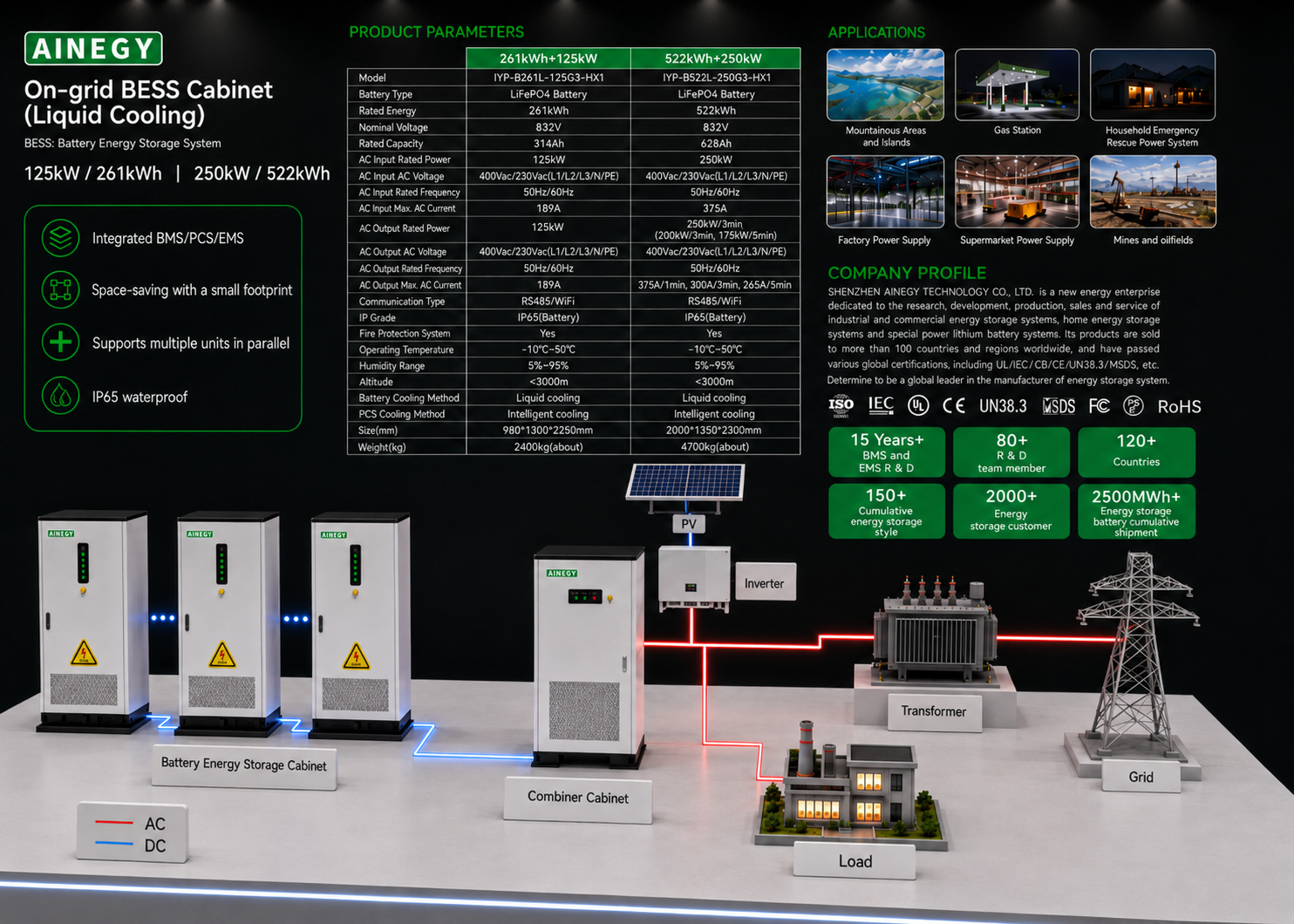
System Design & Grid Integration
The cabinet is an AC-side grid-tied energy storage unit. The integrated PCS handles bidirectional AC/DC conversion, the BMS protects battery operation, and the EMS controls charge/discharge timing according to site load, tariff strategy and grid-tied operating logic.
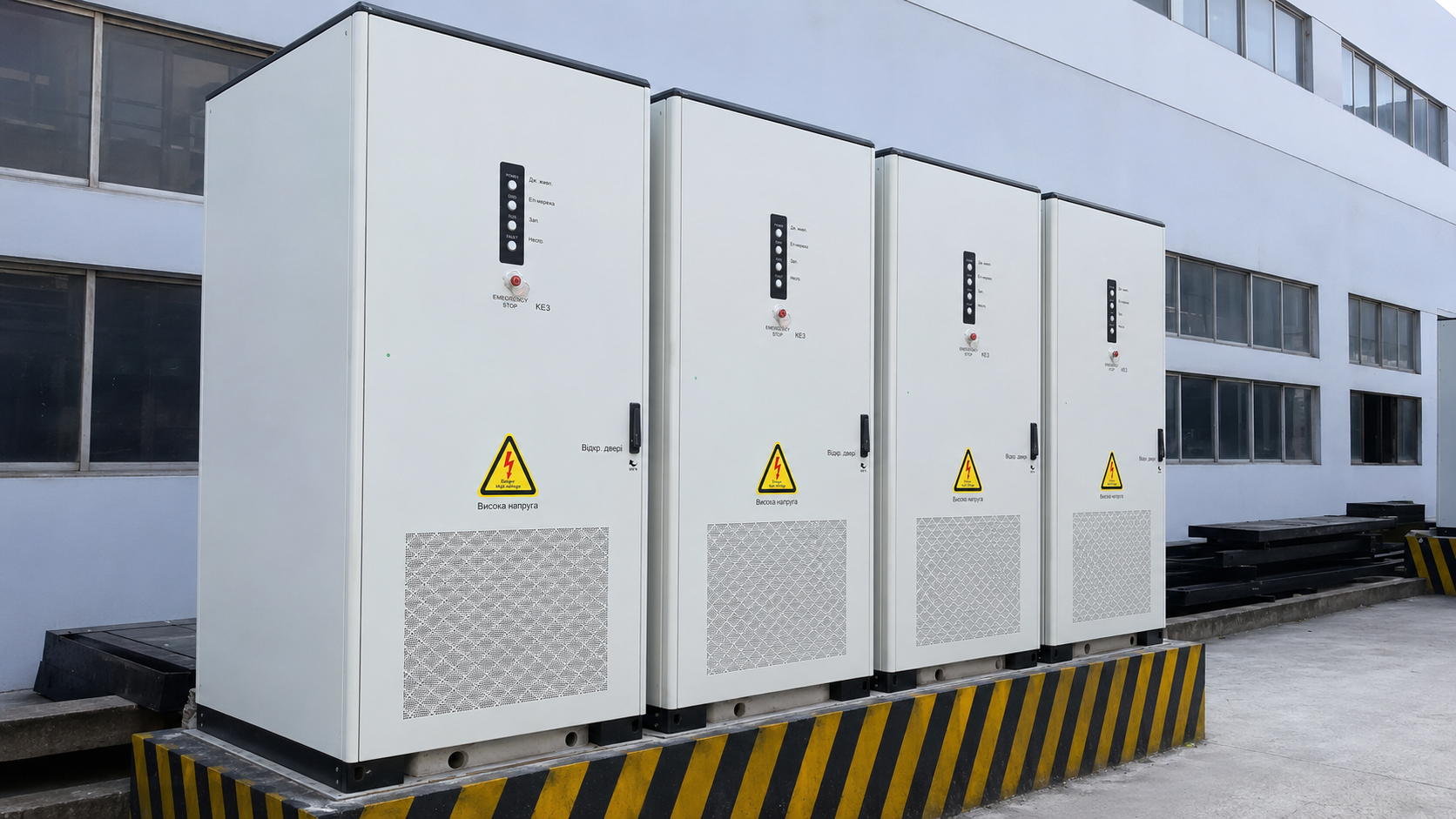
Typical Applications
This liquid-cooled on-grid BESS cabinet is mainly selected for commercial and industrial sites where grid-tied storage, peak-load reduction and electricity cost optimization are more important than standalone power supply.
Certification and Documentation Support
AINEGY products are designed and manufactured with reference to relevant international safety, transport, electrical, grid-connection and material standards. Documentation support can be provided for applicable models and project requirements, including battery transport, material safety, electrical compliance, grid connection and fire-safety-related documentation. Final document scope depends on the selected configuration and target market.












FAQ
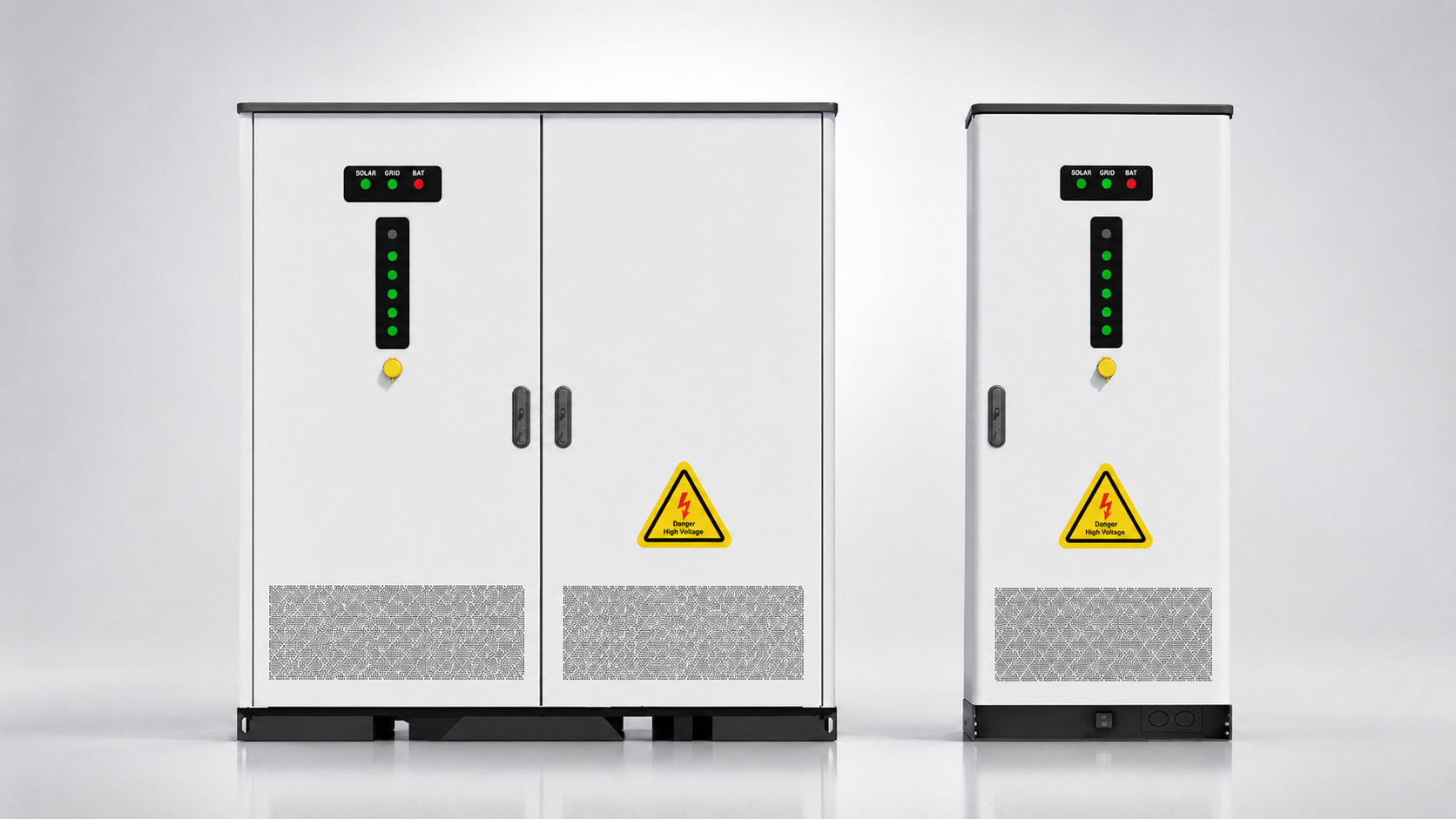
Confirm the Right AINEGY Grid-Tied BESS Cabinet for Your Project
Send your load profile, required power, required energy capacity, grid voltage, electricity tariff structure, installation environment, cabinet quantity, communication requirements and target market. AINEGY will help review whether the 125kW/261kWh or 250kW/522kWh AINEGY On-grid BESS Cabinet / Liquid Cooling configuration is suitable.