AINEGY Logo
AINEGY DC-Coupled EV Charger Cabinet

DC-Coupled PV Storage Charging System

DC-coupled EV charger cabinets integrating LiFePO4 battery, PV input and charger module for commercial charging stations, parking lots and fleet charging projects.

AINEGY DC-Coupled PV Storage Charging System includes 1C and 0.5C EV Fast Charger BESS Cabinets. The cabinet integrates LiFePO4 battery, PV and charger module, supports two charging guns, and can be configured with GBT, CCS1, CCS2 or CHAdeMO charging interface options according to destination market requirements.
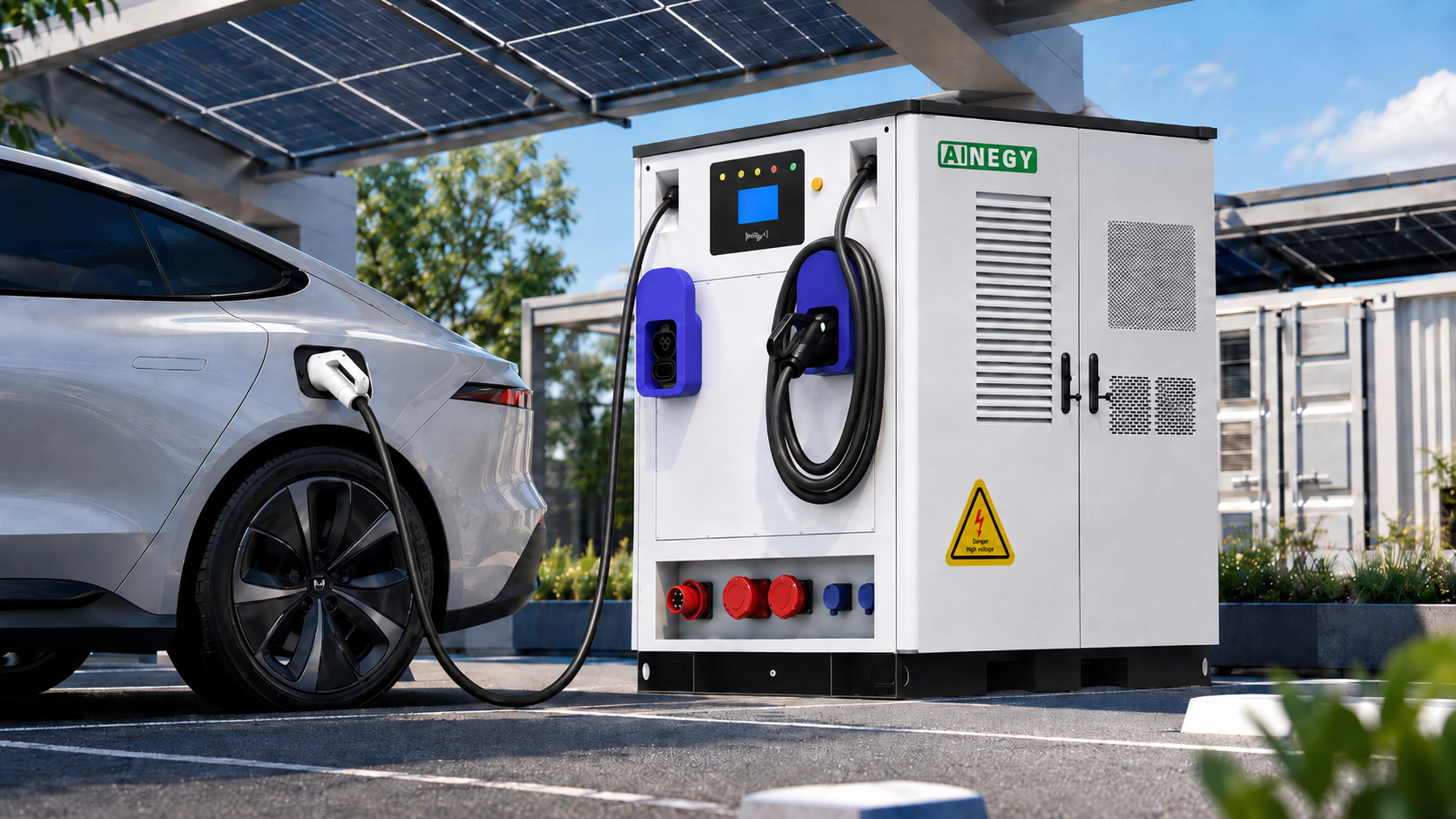
AINEGY DC-Coupled PV Storage Charging System with 1C and 0.5C EV charger BESS cabinets
1C / 0.5CTwo cabinet product types for different power and energy buffering needs.
2 GunsCabinet products are positioned for two-gun EV charging configuration.
DC CouplingIntegrated LiFePO4 battery, PV and charger module architecture.

Built for DC-Coupled PV Storage EV Charging

This page focuses on cabinet-type DC-coupled EV chargers. It explains the product scope, DC-coupled architecture, 1C and 0.5C selection logic, charging interface options and configuration factors for PV storage charging projects.

DC-Coupled Architecture

PV + Battery + Charger

PV input, LiFePO4 battery storage and EV charger modules are integrated in a cabinet-based DC-coupled system.

Cabinet Product Scope

1C and 0.5C Only

The page includes only 1C and 0.5C EV Fast Charger BESS Cabinets, avoiding overlap with cabin-type fast charging products.

Charging Interface

GBT / CCS / CHAdeMO

Charging interface options can be selected according to regional vehicle and charging protocol requirements.

DC-Coupled PV Storage Charging Cabinet Products

Choose 1C or 0.5C according to charging power, battery capacity, C-rate, site grid capacity, charging frequency and PV storage charging requirements.
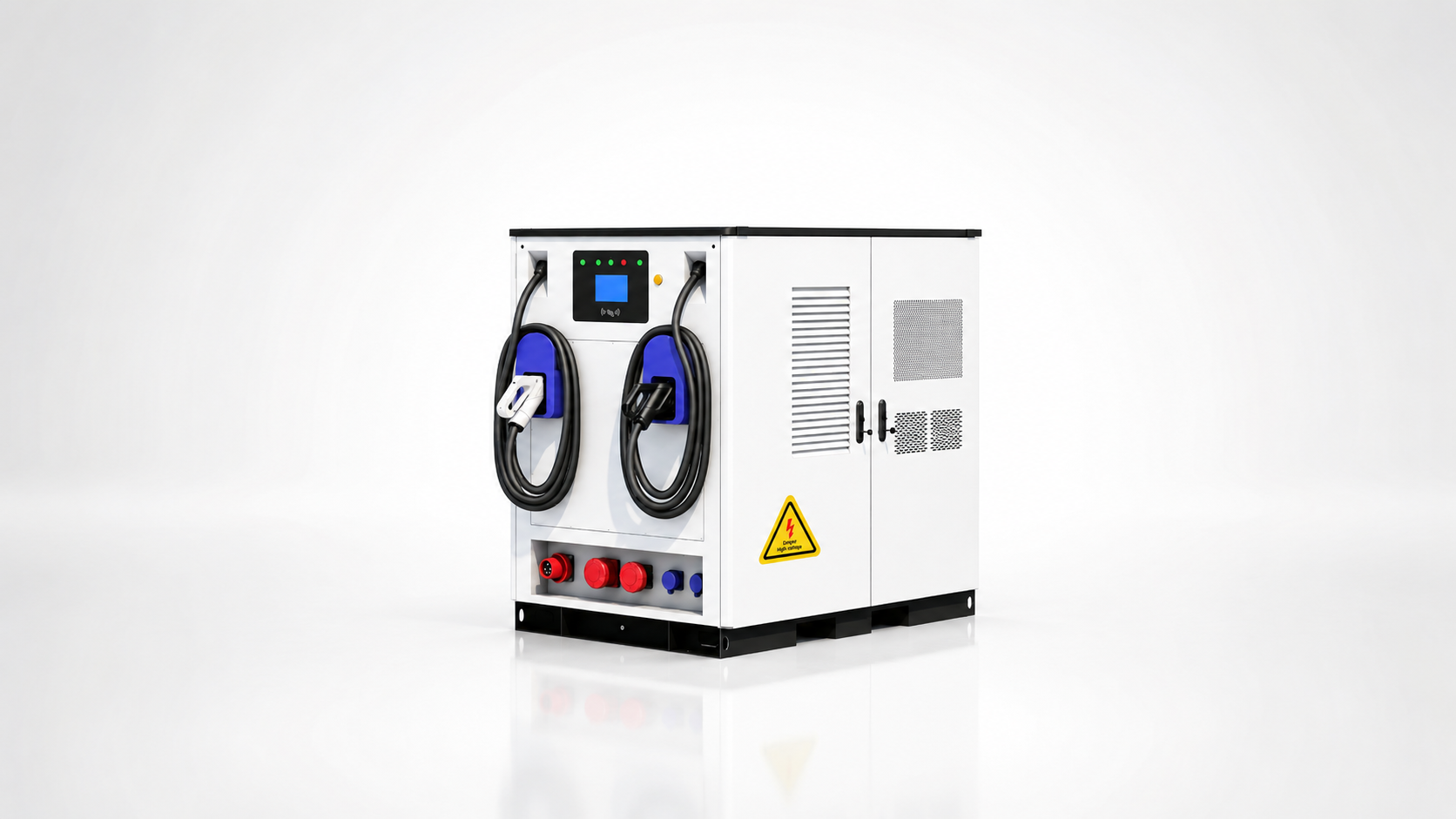
AINEGY 1C DC-coupled PV storage charging cabinet with dual EV charging guns

Battery-Integrated Fast Charging System

80kW/87kWh · 120kW/122kWh · 160kW/162kWh · 240kW/265kWh

1C battery-integrated EV fast charging system with 87–265kWh LiFePO4 storage, 80–240kW DC charging, dual-gun simultaneous charging and integrated EMS.

1C BatteryDual Guns80–240kW DC Fast ChargingIntegrated EMSGBT / CCS / CHAdeMOAir / Liquid Cooling
View Product Details
AINEGY 0.5C DC-coupled PV storage charging cabinet for solar storage EV charging projects

0.5C DC-Coupled PV Storage Charging Cabinet

80kW/160kWh · 120kW/209kWh · 120kW/261kWh

0.5C EV Fast Charger BESS Cabinet for larger battery buffering relative to charging power, designed for solar, storage and charger DC coupling.

0.5C2 GunsDC CouplingLiFePO4 + PV + ChargerAir / Liquid Cooling
View Product Details
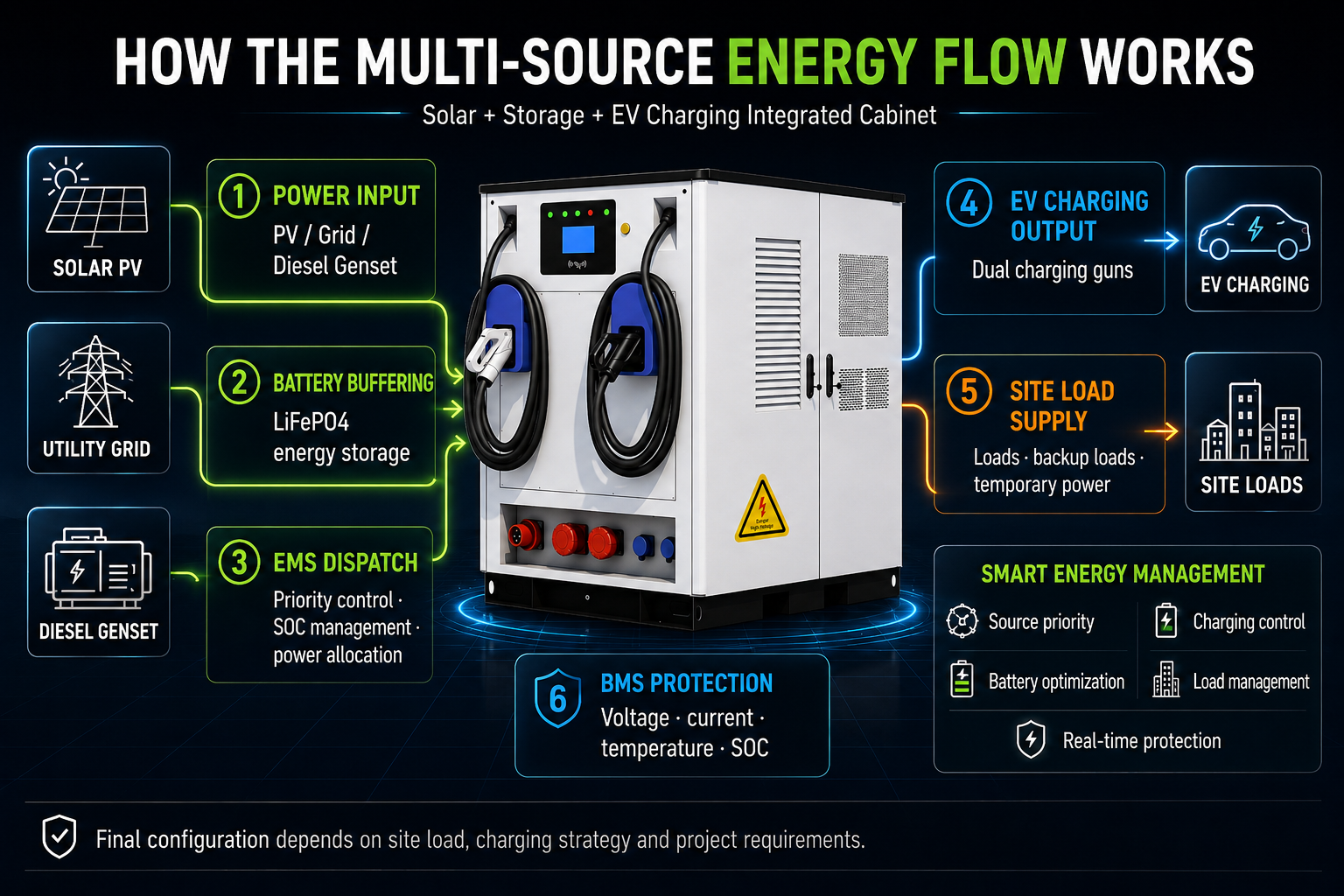
DC-coupled PV storage charging system architecture with PV battery DC bus charger module and EV output

How the DC-Coupled System Works

The system integrates PV input, LiFePO4 battery storage and EV charger modules through a DC-coupled cabinet architecture. This structure is intended for charging stations that need PV access, battery buffering and EV charging output in one cabinet product.

PV InputSupports photovoltaic input for solar-assisted charging and storage operation.
LiFePO4 BatteryIntegrated battery storage provides energy buffering for EV charging demand.
Charger ModuleEV charging output is configured according to selected cabinet model and project requirements.
BMS / EMSBMS and EMS coordinate battery status, charging demand and system operating logic.
2-Gun OutputThe cabinet products are designed around two charging guns for commercial charging use.
Protocol OptionsGBT, CCS1, CCS2 or CHAdeMO options can be reviewed for destination market needs.
Cabin-type PV storage charging products should remain under the Battery-Integrated Fast Charging System category to avoid product and keyword overlap.

1C Cabinet for Higher Power Charging

The 1C cabinet is suitable for projects that need stronger charging and discharging power relative to battery capacity. It is positioned for fast charging sites, commercial charging stations and fleet charging projects where higher power response is required.

Higher Power Ratio1C is selected when charging and discharging power is closer to the battery energy capacity.
Fast Charging DemandDesigned for sites with higher EV charging power requirements and charging turnover.
Commercial ChargingSuitable for public or commercial charging sites requiring compact battery-buffered charging.
Air / Liquid CoolingCooling method depends on cabinet model and site operating condition.

0.5C Cabinet for Larger Energy Buffering

The 0.5C cabinet is suitable for projects that need larger battery energy capacity relative to charging power. It is positioned for PV-assisted charging, weak-grid charging sites and energy-buffered charging station applications.

Larger kWh Buffer0.5C provides more battery capacity relative to charging power for longer buffering support.
PV-Assisted ChargingSuitable for solar, storage and charger projects using DC-coupled architecture.
Limited Grid CapacityCan be reviewed for sites where battery buffering is needed to support charging operation.
2-Gun ChargingDesigned for two-gun charging station cabinet deployment.

Charging Protocol and 2-Gun Configuration

AINEGY DC-coupled PV storage charging cabinets can be configured with different charging interface options according to destination market and vehicle compatibility.

GBTCharging interface option for projects requiring GB/T charging compatibility.Market Interface
CCS1 / CCS2Charging interface options for markets and vehicles using CCS charging standards.Market Interface
CHAdeMOCharging interface option for projects requiring CHAdeMO compatibility.Market Interface
Two Charging GunsBoth cabinet product types are positioned around two-gun EV fast charging operation.Cabinet Output

PV / Battery / Charger Integrated Module

The cabinet integrates LiFePO4 battery storage, PV input and EV charger modules. This structure is designed for charging projects that need solar access, energy buffering and EV charging output in one cabinet product.

LiFePO4 BatteryBattery storage supports charging demand buffering and site energy management.
PV AccessPV input supports solar-assisted charging and battery storage operation.
Charger ModuleEV charging module output is selected according to product model and project requirements.
Cabinet IntegrationBattery, PV and charger modules are integrated in a cabinet form factor.

Cooling, Protection and Safety Design

The cabinet products can use air-cooling or liquid-cooling configurations depending on model and operating condition. Safety configuration should be reviewed according to site environment, charging power, battery capacity and local project requirements.

Air CoolingAvailable for selected cabinet configurations where the model and site condition are suitable.
Liquid CoolingAvailable for selected higher-capacity or higher-power cabinet configurations.
BMS MonitoringBattery status monitoring supports voltage, current, temperature and SOC protection logic.
Safety ReviewFire protection and site safety configuration can be reviewed according to local requirements.

Choose by Project Requirement

Select 1C or 0.5C according to charging power, battery capacity, charging frequency, PV input, grid capacity and destination charging protocol.

Charging PowerChoose 1C when higher charging power and faster charge/discharge response are required.Focus: 1C Cabinet
Energy BufferingChoose 0.5C when larger battery capacity is needed relative to charging power.Focus: 0.5C Cabinet
Charging InterfaceSelect GBT, CCS1, CCS2 or CHAdeMO according to vehicle and regional requirements.Focus: Market Standard
Cooling MethodAir cooling or liquid cooling should be selected according to model and operating environment.Focus: Site Condition

Typical Applications

DC-coupled PV storage charging cabinets are suitable for charging projects where battery storage, PV access and EV charging output need to be integrated in one cabinet product.
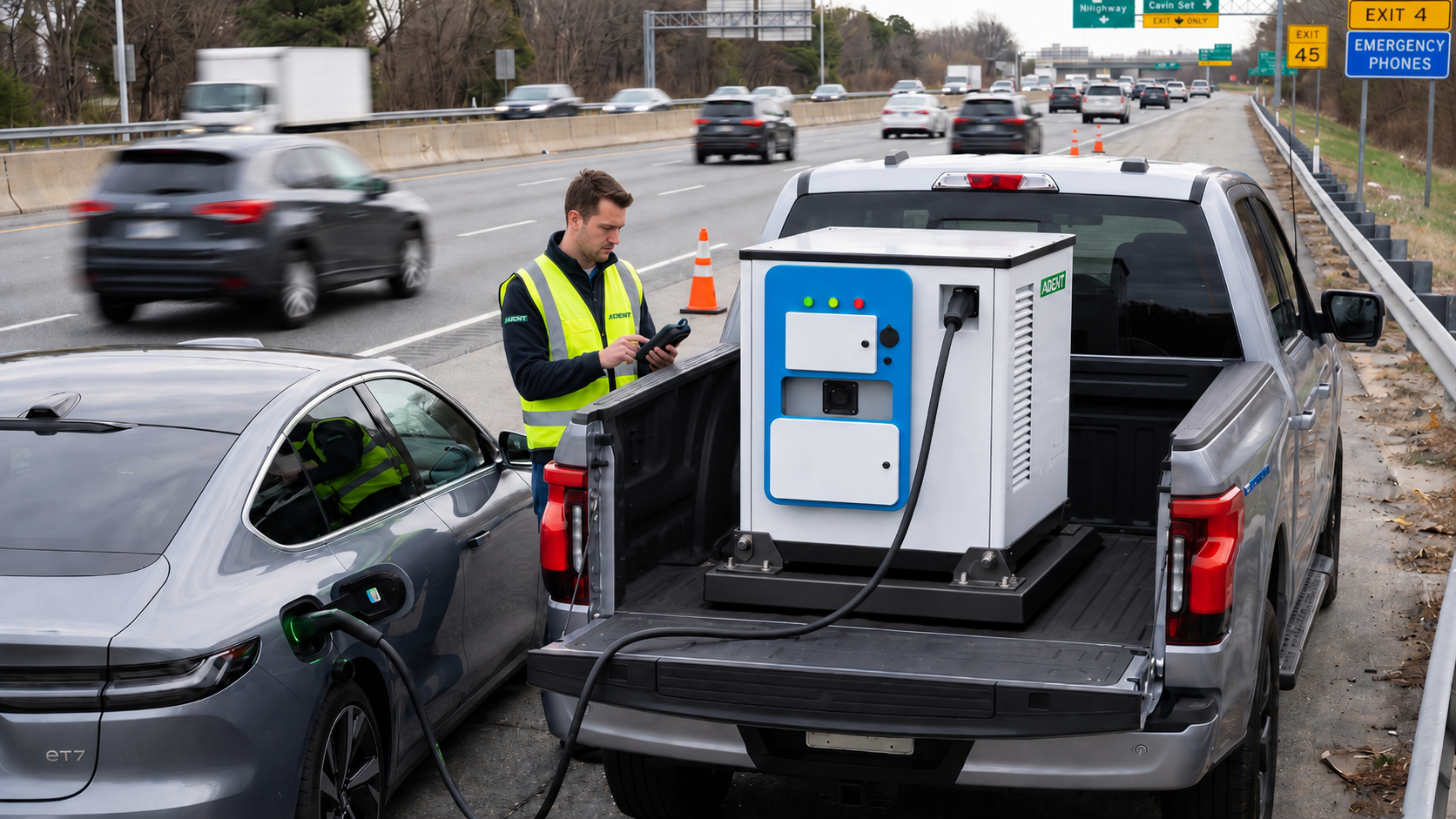
Commercial EV Charging StationsSupports cabinet-level PV storage charging for commercial and public charging sites.
Parking LotsSuitable for parking facilities requiring EV charging with battery energy buffering.
Fleet Charging SitesCan be configured for fleet charging where charging demand and battery capacity must be balanced.
PV-Assisted Charging ProjectsUses PV input and battery storage to support EV charging station operation.
Industrial ParksSupports charging for workplace vehicles, service vehicles or visitor EV charging demand.
Weak-Grid Charging SitesCan be reviewed where grid capacity is limited and battery buffering is required.
DC-coupled EV charger applications for commercial charging stations parking lots industrial parks and fleet charging sites

Configuration Items

To configure a DC-coupled PV storage charging cabinet, provide charging power, battery capacity, C-rate, PV input, charging protocol and site environment.

1C or 0.5CSelect the cabinet type according to required charging power and battery buffering ratio.
Power / CapacityConfirm kW charging power and kWh battery capacity according to site charging demand.
Charging ProtocolSelect GBT, CCS1, CCS2 or CHAdeMO according to destination market and vehicle compatibility.
PV InputConfirm PV access requirement and how solar power should support charging or storage operation.
Grid CapacityReview available grid capacity and whether battery storage is needed to support EV charging demand.
Cooling MethodAir cooling or liquid cooling depends on cabinet model, power level and installation condition.
Number of GunsThe cabinet products are positioned as two-gun EV Fast Charger BESS Cabinets.
Site EnvironmentConfirm installation space, ambient condition, ventilation and local safety requirements.

FAQ

Common questions about AINEGY DC-Coupled PV Storage Charging System and dc coupled EV charger cabinet configuration.

What is a DC-coupled PV storage charging system?It is a cabinet system that integrates PV input, LiFePO4 battery storage and EV charger modules through a DC-coupled architecture.
What products are included on this page?This page includes only 1C and 0.5C EV Fast Charger BESS Cabinet products.
Is the all-in-one charging cabin included?No. The all-in-one charging cabin belongs to the Battery-Integrated Fast Charging System category, not this cabinet category.
What is the difference between 1C and 0.5C?1C is selected for higher charging and discharging power, while 0.5C is selected for larger energy buffering relative to charging power.
Which charging interfaces are supported?The cabinet can be configured with GBT, CCS1, CCS2 or CHAdeMO charging interface options according to destination market requirements.
Does the cabinet support two charging guns?Yes. Both cabinet product types are positioned as two-gun EV Fast Charger BESS Cabinets.
Can PV support EV charging through this system?Yes. PV input can support charging and storage operation according to the selected system configuration.
What information is needed for configuration?Charging power, battery capacity, C-rate, PV input, grid capacity, charging protocol, cooling method and site environment are required.

Need a DC-Coupled EV Charger Cabinet Configuration?

Tell us your charging power, battery capacity target, 1C or 0.5C preference, PV input requirement, grid capacity, charging protocol, number of charging guns, cooling preference, installation environment and destination market. AINEGY will help match the right DC-coupled PV storage charging cabinet configuration.