AINEGY Logo
Modular Residential Solar Battery Stack

Stackable Home Battery System

Modular stackable LiFePO4 battery system for home solar storage, backup power, self-consumption and low-voltage or high-voltage residential energy storage applications.

AINEGY Stackable Home Battery System is a modular stacked LiFePO4 battery solution for residential solar storage and backup power. The system is available in 51.2V low-voltage configurations from 5.12kWh to 20kWh and high-voltage configurations from 10kWh to 20kWh, helping homeowners and installers select the right battery stack according to inverter platform, PV capacity, backup load and installation space.
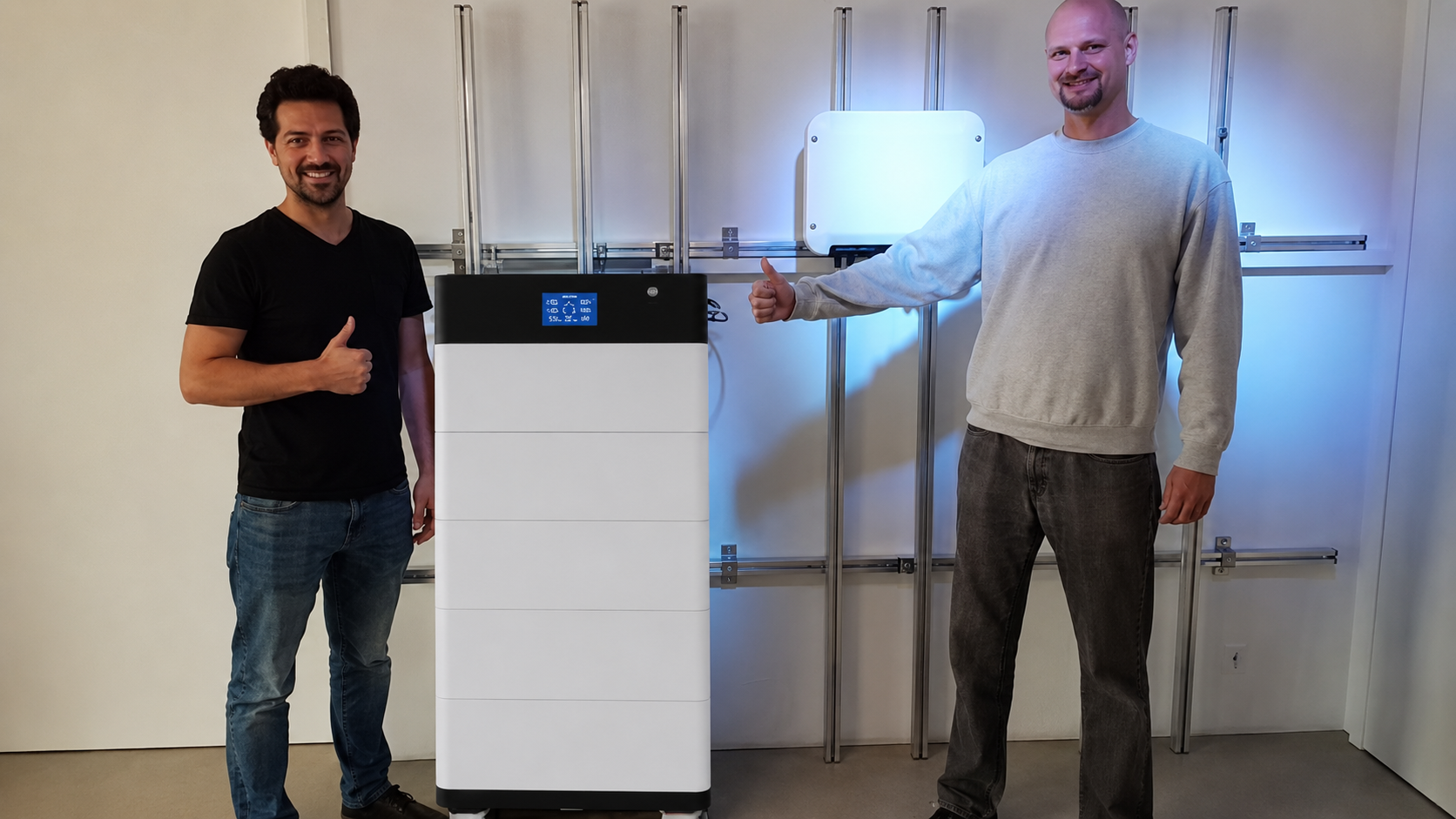
AINEGY Stackable Home Battery System for modular residential solar storage, backup power and inverter-compatible energy storage
LV / HV OptionsLow-voltage and high-voltage battery stacks for different inverter platforms.
5kWh–20kWhCapacity options for home solar storage and backup power planning.
Floor-Stack DesignClean modular battery tower without wall mounting or rack cabinet installation.

Core Advantages of Stackable Home Battery System

Stackable batteries are selected when homeowners and installers need modular capacity expansion, clean floor-standing installation and clear inverter platform matching. This page focuses on low-voltage and high-voltage stackable LiFePO4 systems for residential solar storage and backup power.

Advantage 01

Stackable Modular Design

Battery modules can be stacked vertically to build different system capacities without wall mounting or rack cabinet installation.

Advantage 02

Low-Voltage and High-Voltage Options

Choose 51.2V low-voltage stacks or 204V / 307V / 409V high-voltage systems according to inverter platform.

Advantage 03

5kWh to 20kWh Capacity Range

Available configurations cover 5.12kWh, 10.24kWh, 15kWh and 20kWh low-voltage systems, plus 10kWh, 15kWh and 20kWh high-voltage systems.

Advantage 04

Clean Floor-Stack Installation

The stackable structure creates a clean floor-standing battery tower for homes, villas, garages and utility rooms.

Advantage 05

Inverter Communication Matching

RS485 and CAN communication support inverter matching according to selected voltage platform and project configuration.

Advantage 06

Step-by-Step Capacity Planning

Homeowners and installers can select the battery stack according to backup duration, daily energy use, PV capacity and inverter platform.

Stackable Home Battery System Products

Product entries are separated by inverter voltage platform. Low-voltage stackable batteries are for 51.2V / 48V-class systems, while high-voltage stackable batteries are for compatible high-voltage hybrid inverters.
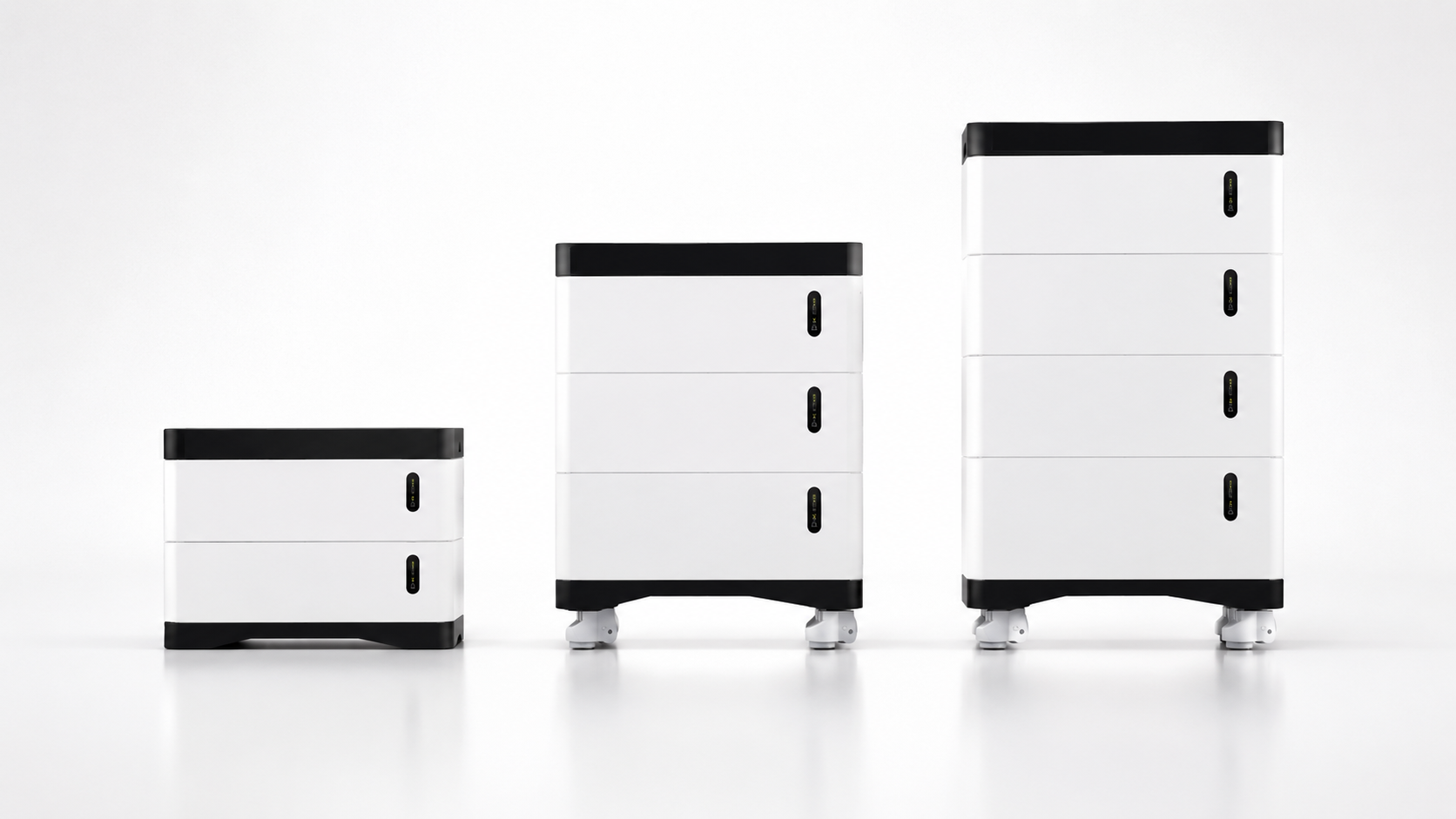
AINEGY 51.2V Low-Voltage Stackable Home Battery System with 5.12kWh, 10.24kWh, 15kWh and 20kWh configurations

51.2V Low-Voltage Stackable Home Battery System

5.12kWh · 10.24kWh · 15kWh · 20kWh

Low-voltage stackable LiFePO4 battery system for 48V-class hybrid inverters, off-grid inverters, home solar battery storage, backup power and modular residential storage projects.

51.2V Platform100Ah / 200Ah / 300Ah / 400AhRS485 / CANQuick Plug Terminal5.12–20kWh
View Product Details
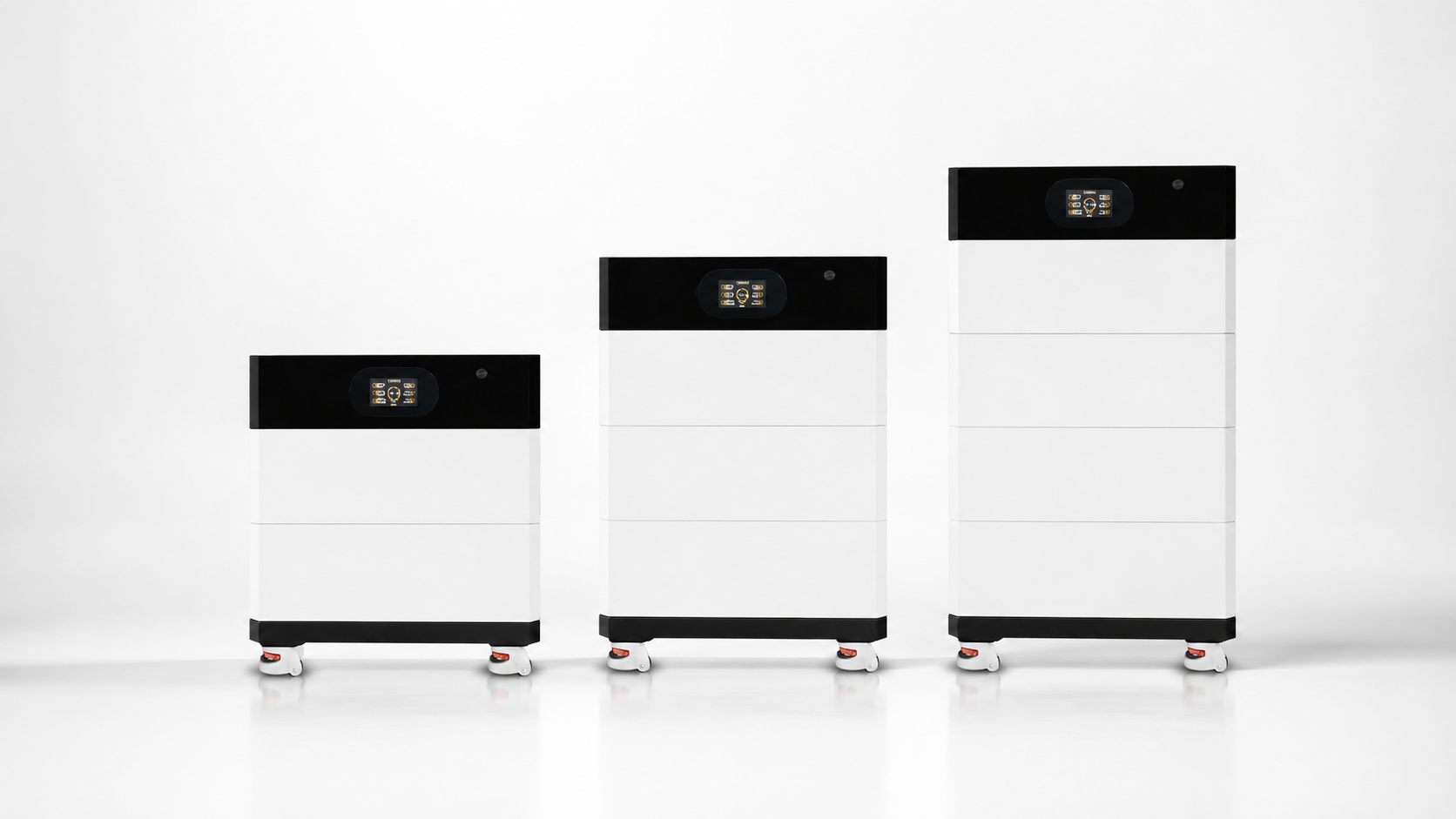
AINEGY High-Voltage Stackable Home Battery System with 204V, 307V and 409V configurations for residential solar storage

High-Voltage Stackable Home Battery System

204V/10kWh · 307V/15kWh · 409V/20kWh

High-voltage stackable LiFePO4 battery system for compatible high-voltage hybrid inverters, residential PV storage, larger home backup projects and lower-current system design.

204V / 307V / 409V50Ah Platform10–20kWhRS485 / CANWiFi / BT Optional
View Product Details
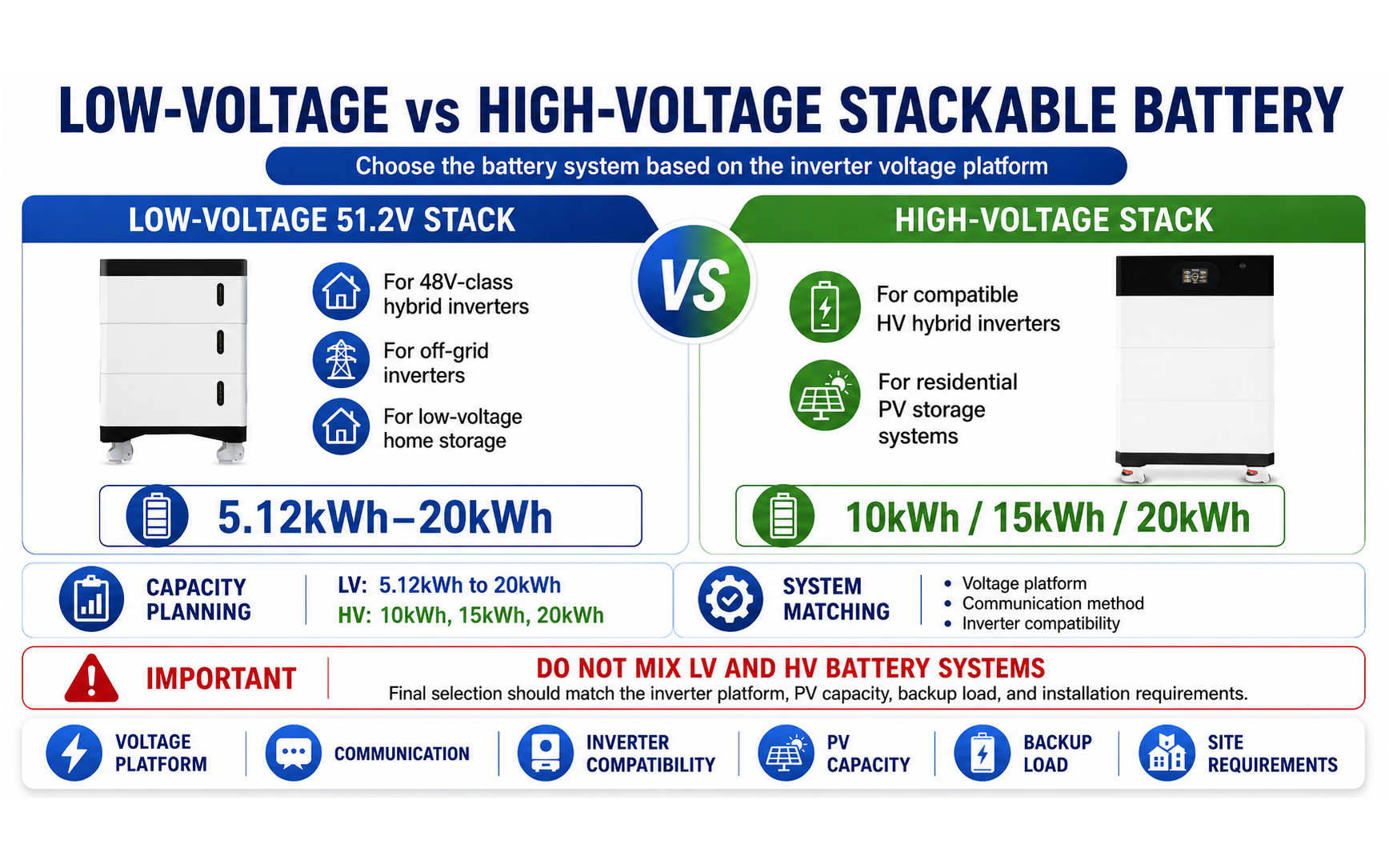
Low-voltage versus high-voltage AINEGY Stackable Home Battery System comparison for inverter platform selection

Low-Voltage vs High-Voltage Stackable Battery

The first selection step is the inverter voltage platform. Low-voltage stackable batteries are matched with 48V-class inverter systems, while high-voltage stackable batteries must be matched with compatible high-voltage hybrid inverters.

Low-Voltage 51.2V StackSuitable for 48V-class hybrid inverters, off-grid inverters and low-voltage residential storage systems.
High-Voltage StackSuitable for compatible high-voltage hybrid inverters and residential PV storage systems.
Capacity PlanningLV systems cover 5.12kWh to 20kWh. HV systems cover 10kWh, 15kWh and 20kWh.
System MatchingVoltage platform, communication method and inverter compatibility must be confirmed before final selection.
Do not mix low-voltage and high-voltage battery systems. Final battery selection should follow the inverter platform, PV capacity, backup load and site installation requirements.

Capacity Selection Guide

Stackable battery capacity should be selected according to daily household energy use, backup load power, expected backup duration, PV capacity, inverter power and available floor space.

5.12kWhEntry low-voltage stack for basic home backup loads, small PV systems and starter residential storage projects.LV Entry Capacity
10kWh / 10.24kWhBalanced capacity for home solar self-consumption, evening energy use and selected backup loads.Common Home Storage
15kWhMid-to-large home storage capacity for longer backup duration and higher daily energy consumption.Extended Backup
20kWhHigher-capacity stackable system for larger homes, villas, stronger backup needs and higher PV storage demand.Large Home System

Stackable Installation and Modular Expansion

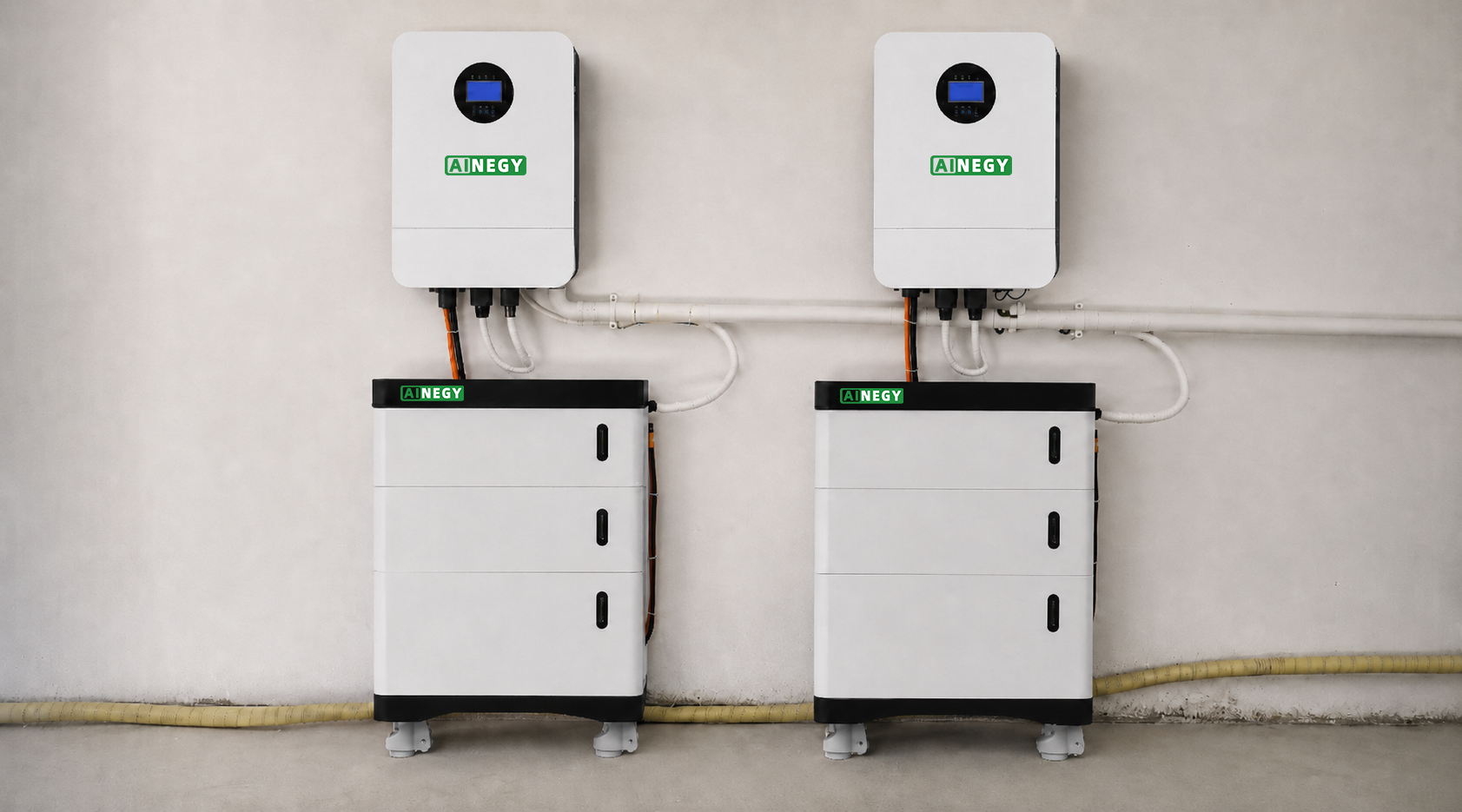
A stackable home battery system is installed as a floor-standing battery tower. It is different from a wall-mounted battery and different from a rack-mounted battery. The stacked structure helps simplify installation, capacity planning and future expansion.

No Wall MountingThe battery stack stands on the floor, making it suitable for garages, utility rooms and equipment areas.
No Rack Cabinet RequiredThe modular stack does not require a server rack or battery cabinet like rack-mounted battery modules.
Layer-by-Layer CapacityBattery stack height and capacity can be selected according to project capacity target.
Clean Residential LayoutCreates a neat battery tower for residential installation environments.

Inverter Matching and Communication

Stackable home battery systems must be matched with the correct inverter platform. Low-voltage systems and high-voltage systems use different matching logic, and final compatibility should be confirmed by inverter brand, model, firmware and communication method.

RS485 / CANCommunication supports inverter matching according to selected voltage platform and project configuration.
WiFi / BT OptionalHigh-voltage stackable systems can be reviewed with optional WiFi or Bluetooth communication where available.
Low-Voltage Inverters51.2V stackable systems are matched with 48V-class compatible inverter platforms.
High-Voltage InvertersHV stackable systems must be matched with compatible high-voltage hybrid inverters.

Home Solar Storage System Connection

A stackable battery system works as part of a residential energy storage system. It stores solar energy, supports home backup power and helps improve self-consumption when configured with the correct inverter, PV array and load strategy.
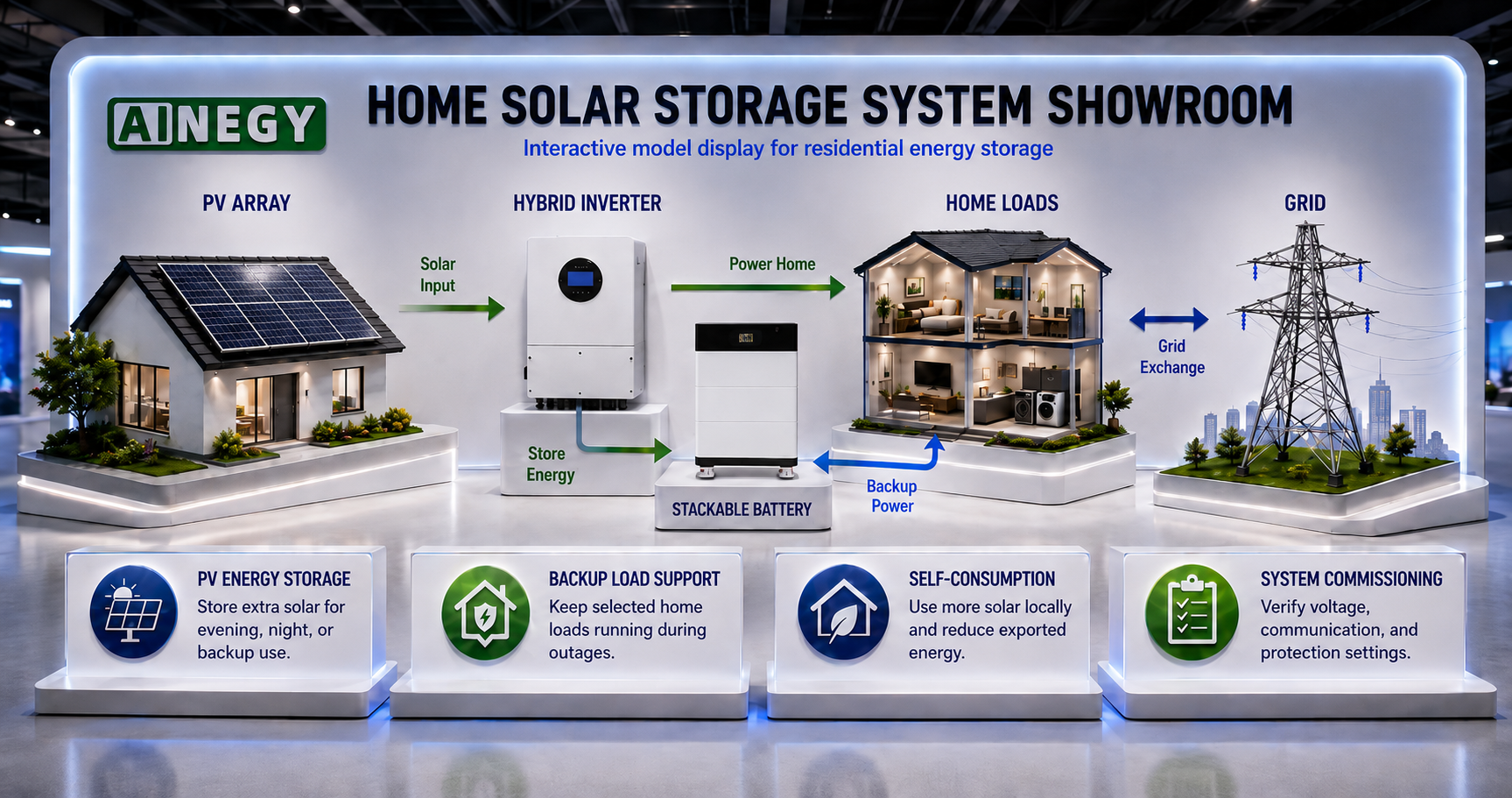
PV Energy StorageStore excess solar generation for evening, night or backup use.
Backup Load SupportSupport selected home loads during grid outages when matched with a suitable inverter system.
Self-ConsumptionUse more solar energy locally instead of exporting unused PV generation.
System CommissioningBattery voltage, communication and protection settings should be verified during installation.
AINEGY Stackable Home Battery System inverter communication with PV solar panels, home loads, RS485 and CAN
AINEGY Stackable Home Battery System applications for home solar storage, villas, garage installation, off-grid homes and backup power

Typical Applications

AINEGY Stackable Home Battery System is suitable for residential solar storage projects where modular capacity, clean installation and inverter platform matching are required.

Home Solar StorageStore daytime solar generation for evening and night household energy use.
Solar Self-ConsumptionImprove household solar energy utilization and reduce unused PV export.
Home Backup PowerSupport selected home loads during grid outages when matched with a suitable inverter.
Villa Energy StorageSuitable for larger homes and villas requiring 10kWh, 15kWh or 20kWh battery capacity.
Garage or Utility Room InstallationFloor-standing battery tower design fits garage, equipment room and utility room installation.
Off-Grid or Hybrid Inverter SystemsCan be configured for off-grid or hybrid residential systems according to inverter platform.

Project Configuration Factors

Before selecting a stackable home battery system, confirm inverter type, voltage platform, required capacity, module quantity, backup load, PV capacity, communication protocol and installation floor space.

Inverter TypeConfirm whether the project uses a low-voltage inverter or high-voltage hybrid inverter.
Voltage PlatformSelect 51.2V low-voltage stack or 204V / 307V / 409V high-voltage stack according to inverter compatibility.
Battery CapacityChoose 5.12kWh, 10kWh, 10.24kWh, 15kWh or 20kWh according to backup and energy storage targets.
Module QuantityConfirm how many battery layers are required and whether the selected stack matches system design.
Backup LoadIdentify selected home loads, load power, backup duration and priority during grid outage.
PV CapacityReview PV array size, expected daily generation and solar self-consumption strategy.
Communication ProtocolConfirm RS485, CAN and optional wireless communication according to inverter and project requirement.
Floor SpaceCheck installation floor space, clearance, ventilation, cable routing and maintenance access.

FAQ

Common questions about stackable home battery systems, low-voltage and high-voltage battery stacks, inverter matching, home solar storage and backup power.

What is a stackable home battery system?It is a modular LiFePO4 battery system installed as a floor-standing battery stack for residential solar storage and backup power.
Is it a wall-mounted battery?No. A stackable battery system is installed as a floor-standing battery stack and does not require wall mounting.
Is it a rack-mounted battery?No. It is not a rack battery. It is designed as a modular stacked battery tower for residential energy storage systems.
Should I choose a low-voltage or high-voltage stackable battery?Choose the 51.2V low-voltage stack for 48V-class inverter systems. Choose the high-voltage stack for compatible high-voltage hybrid inverters.
What capacity options are available?Low-voltage options include 5.12kWh, 10.24kWh, 15kWh and 20kWh. High-voltage options include 10kWh, 15kWh and 20kWh.
Can the battery stack work with my inverter?Compatibility depends on inverter voltage platform, brand, model, firmware, communication method and system configuration.
Can it be used for home solar storage?Yes. It can store solar energy and support residential self-consumption when matched with a suitable inverter and PV system.
Can it provide backup power during grid outages?Yes. When matched with a suitable inverter system, it can support selected home backup loads during grid outages.
How many battery modules should I choose?Module quantity should be selected according to backup load, daily energy use, PV capacity, inverter power and expected backup duration.
What should be confirmed before selection?Confirm inverter type, voltage platform, battery capacity, communication protocol, floor space, backup loads and installation environment.

Need a Stackable Home Battery System Configuration?

Tell us your inverter type, inverter voltage platform, inverter brand and model, PV capacity, required battery capacity, backup load power, expected backup duration, communication protocol and installation floor space. AINEGY will help match the suitable low-voltage or high-voltage stackable home battery system configuration.