Frequent or Long Outages
The household needs defined appliances and circuits to continue operating when the utility source is unavailable.

Store daytime solar energy, manage household grid use and keep defined home loads powered during outages with a system sized around actual appliance power, battery capacity and required backup duration.
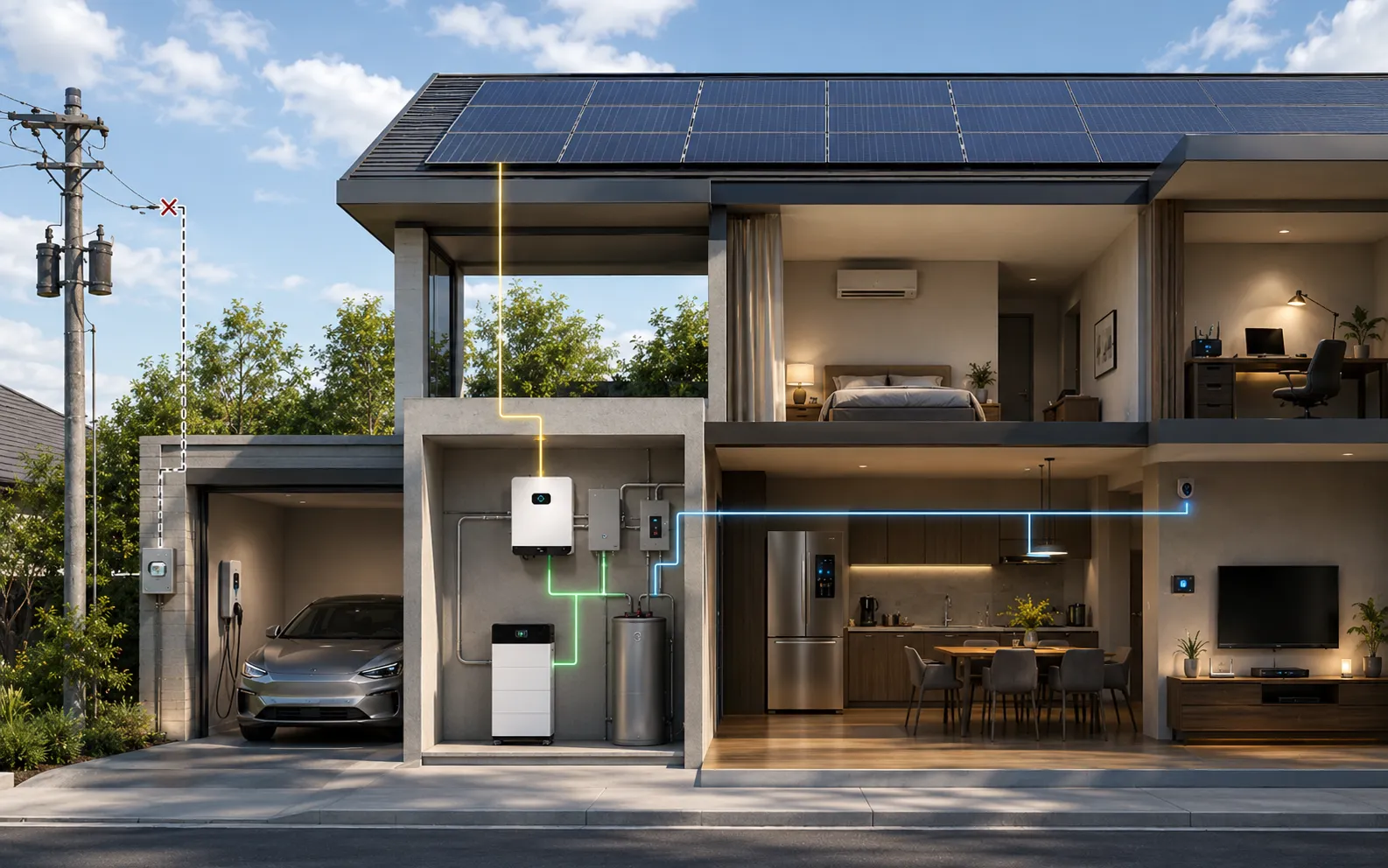 Solar PV + LiFePO4 Battery + Hybrid Inverter + Backup Loads
A residential solar and battery backup system combines solar PV, battery storage, power conversion, grid isolation and household energy control. It stores solar or grid energy for later use and supplies defined household loads when the utility grid is unavailable.
Most grid-connected solar inverters stop exporting power when the utility source is unavailable. Outage supply requires the home to be isolated from the public grid and supported by compatible inverter, battery, switching and control equipment.
| Residential Energy System | Solar During Grid Outage | Battery Storage | Automatic Grid Isolation | Home Backup Capability |
|---|---|---|---|---|
| Ordinary Grid-Tied Solar | Normally Stops | No | No | No |
| Solar + Battery Without Backup Switching | By Design | Yes | Not Necessarily | Not Guaranteed |
| Solar + Battery + Backup Architecture | When Configured | Yes | Yes | Defined Loads |
| Off-Grid Residential System | Independent | Required / Hybrid | No Utility Connection | By System Design |
A home battery is most useful when the household has a measurable mismatch between solar production and electricity use, a clear backup requirement, time-dependent electricity costs or an unreliable grid.
The household needs defined appliances and circuits to continue operating when the utility source is unavailable.
Excess daytime PV can be stored for evening consumption instead of being exported at a low value or curtailed.
The battery may shift energy from lower-cost periods to higher-cost periods where product functions and local rules permit.
Refrigeration, lighting, communications, security, water pumps or selected outlets require a defined backup supply.
Voltage variation, frequent interruptions or limited utility capacity may require a hybrid or off-grid-capable architecture.
Air conditioning, heat pumps, water pumps and EV charging change both the required inverter power and daily energy balance.
Self-consumption may become more valuable when exported solar receives limited compensation or export is restricted.
The homeowner wants to preserve a defined SOC for outages while monitoring solar, battery, grid and household power.
The backup boundary determines which circuits remain connected after the home is isolated from the utility. Whole-home connection does not mean every appliance can operate simultaneously without power management.
| Design Question | Essential-Load Backup | Configured Whole-Home Backup |
|---|---|---|
| Electrical Boundary | Selected circuits in a dedicated essential-load panel | Most or all circuits connected through the backup gateway or main distribution |
| Typical Loads | Refrigerator, lighting, internet, security, selected outlets and controls | Essential loads plus additional household circuits according to system power |
| Inverter Power Requirement | Lower because fewer loads can operate simultaneously | Higher and strongly affected by air conditioning, pumps, cooking and heating |
| Battery Energy Requirement | Lower for the same target duration | Higher because more loads remain available |
| High-Power Appliances | Normally excluded or manually managed | Controlled, sequenced or temporarily disconnected |
| Practical Backup Duration | Usually longer for the same battery | Usually shorter unless battery capacity is increased |
| Installation Complexity | Essential-load subpanel and selected-circuit rewiring | Main-panel integration, grid isolation and load-management design |
The correct architecture depends on whether the project is new or retrofit, which circuits require backup, the home's phase configuration and whether the PV inverter can operate inside the isolated backup system.
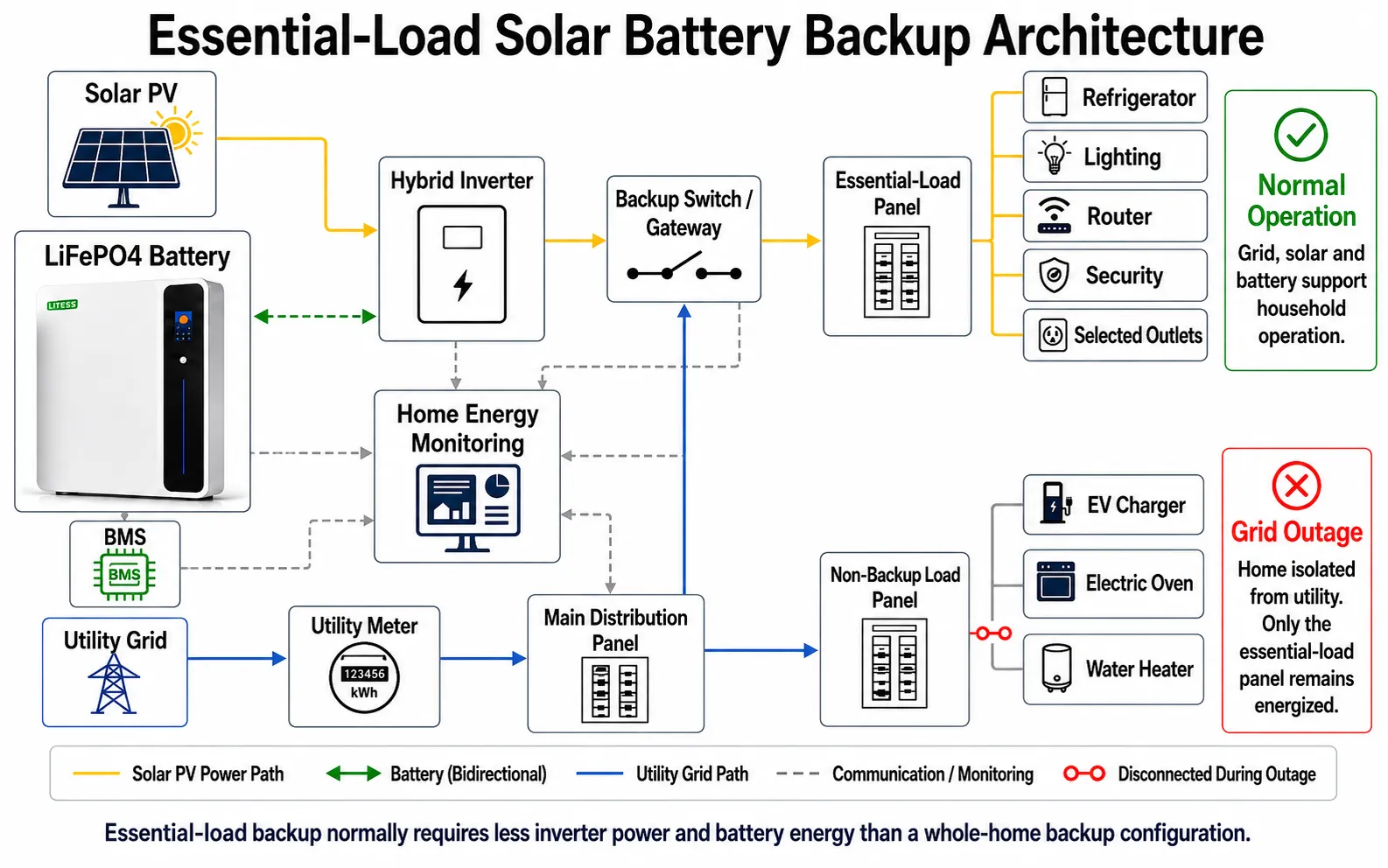
A dedicated essential-load panel keeps selected circuits within a smaller and more predictable backup boundary.
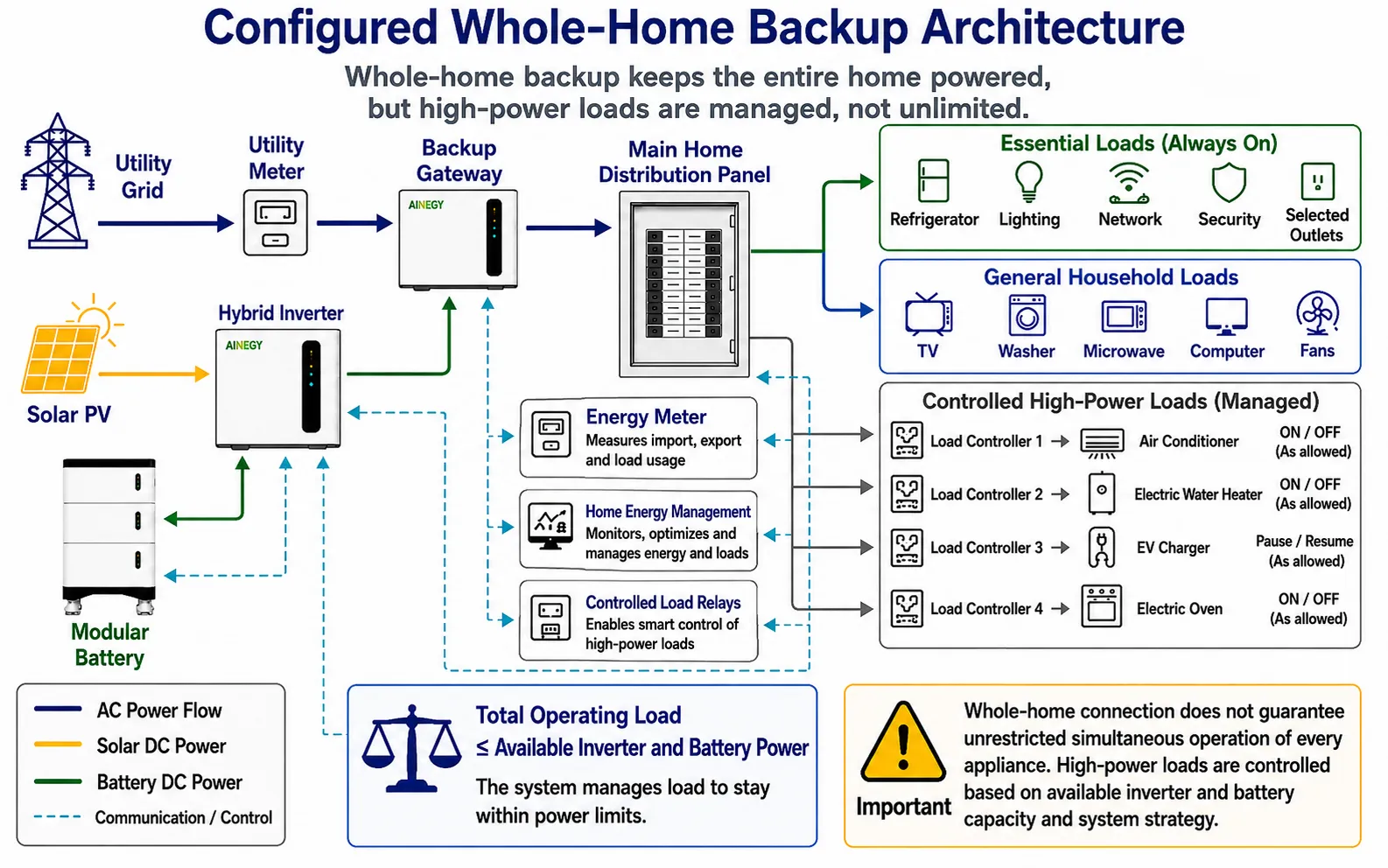
A backup gateway isolates the home and supports a broader distribution boundary while managed loads remain within available system power.
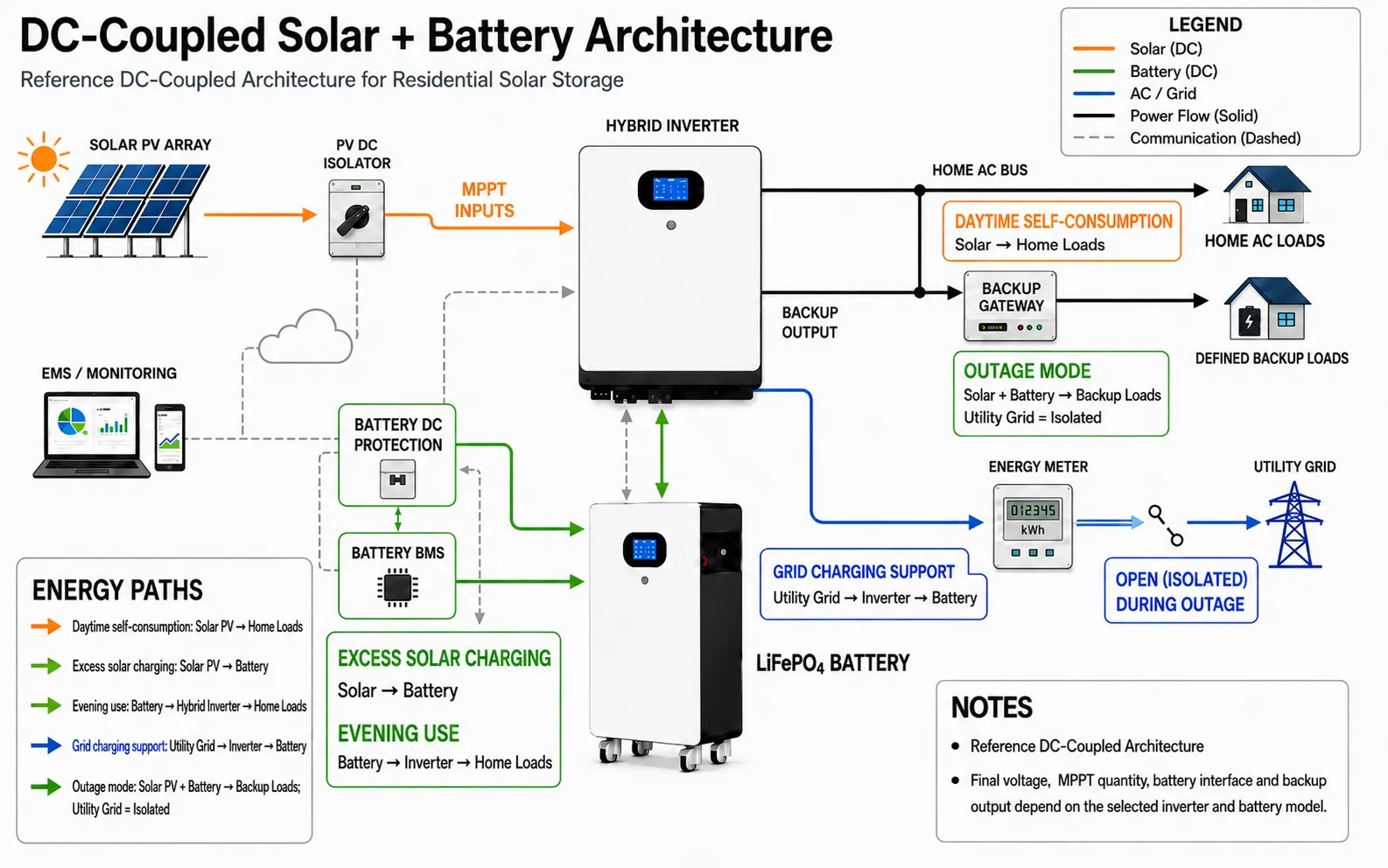
PV and battery are coordinated through a compatible hybrid inverter, making this architecture suitable for new residential solar-storage projects.
An AC-coupled or project-specific retrofit can retain an existing PV inverter when compatibility, metering and outage operation are verified.
Product selection should follow the required backup power, energy capacity, installation location, inverter compatibility and phase configuration. Functions are not applied uniformly across all residential models.
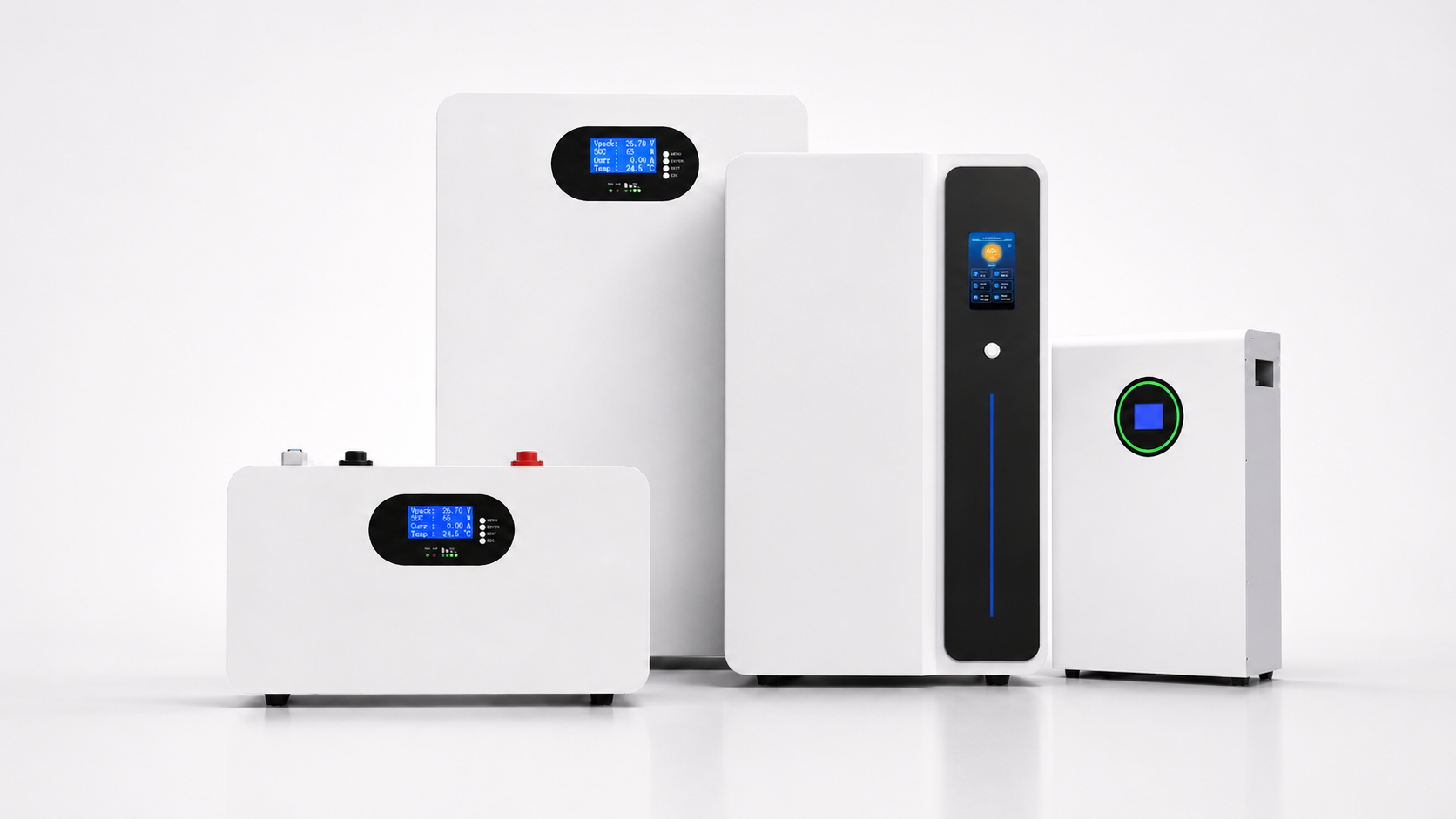
Space-saving residential storage for solar self-consumption, essential-load backup and compatible hybrid inverter systems.
View Product Category →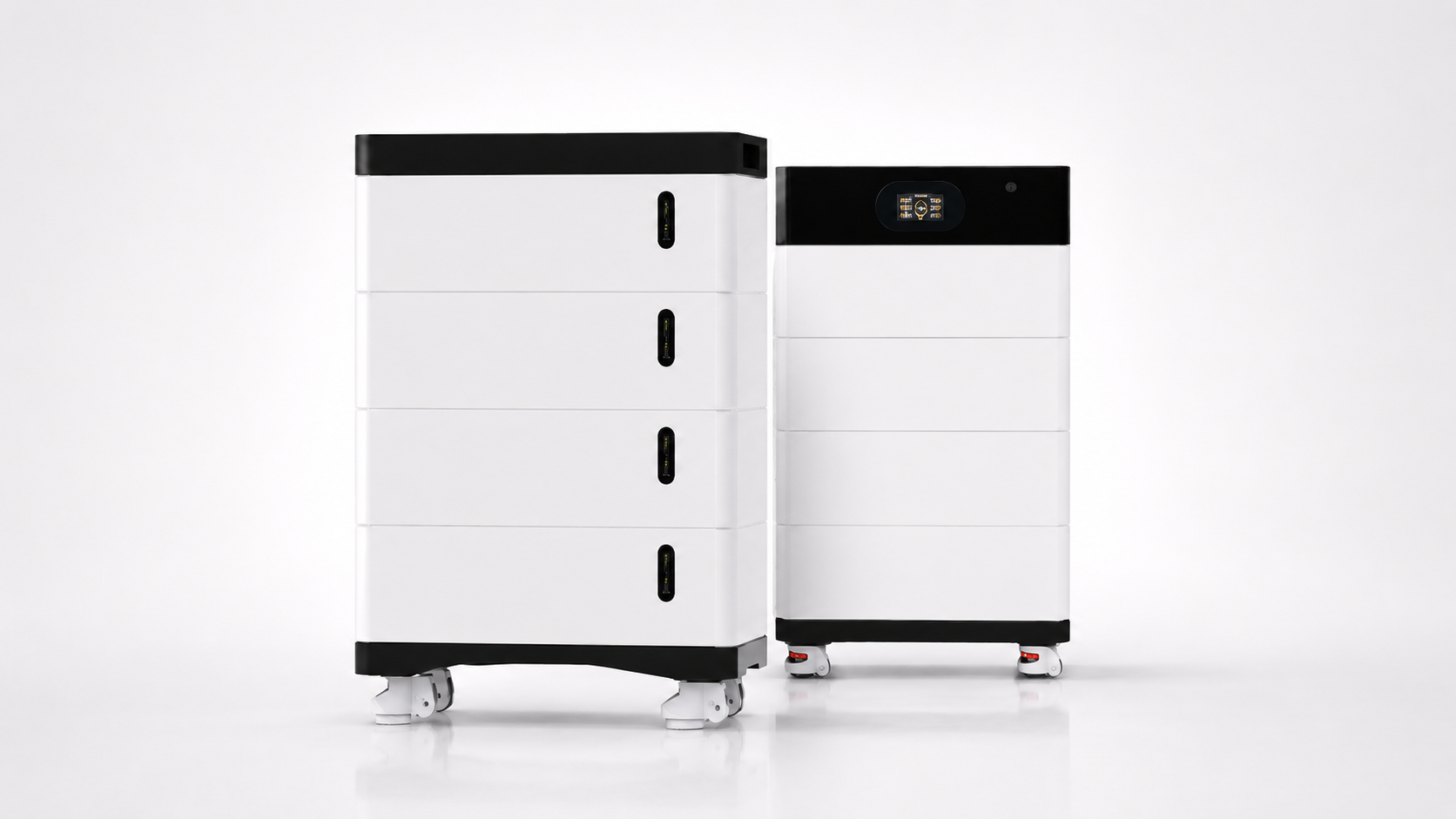
Modular floor-standing storage that allows capacity to be selected and expanded within the approved battery and inverter limits.
View Product Category →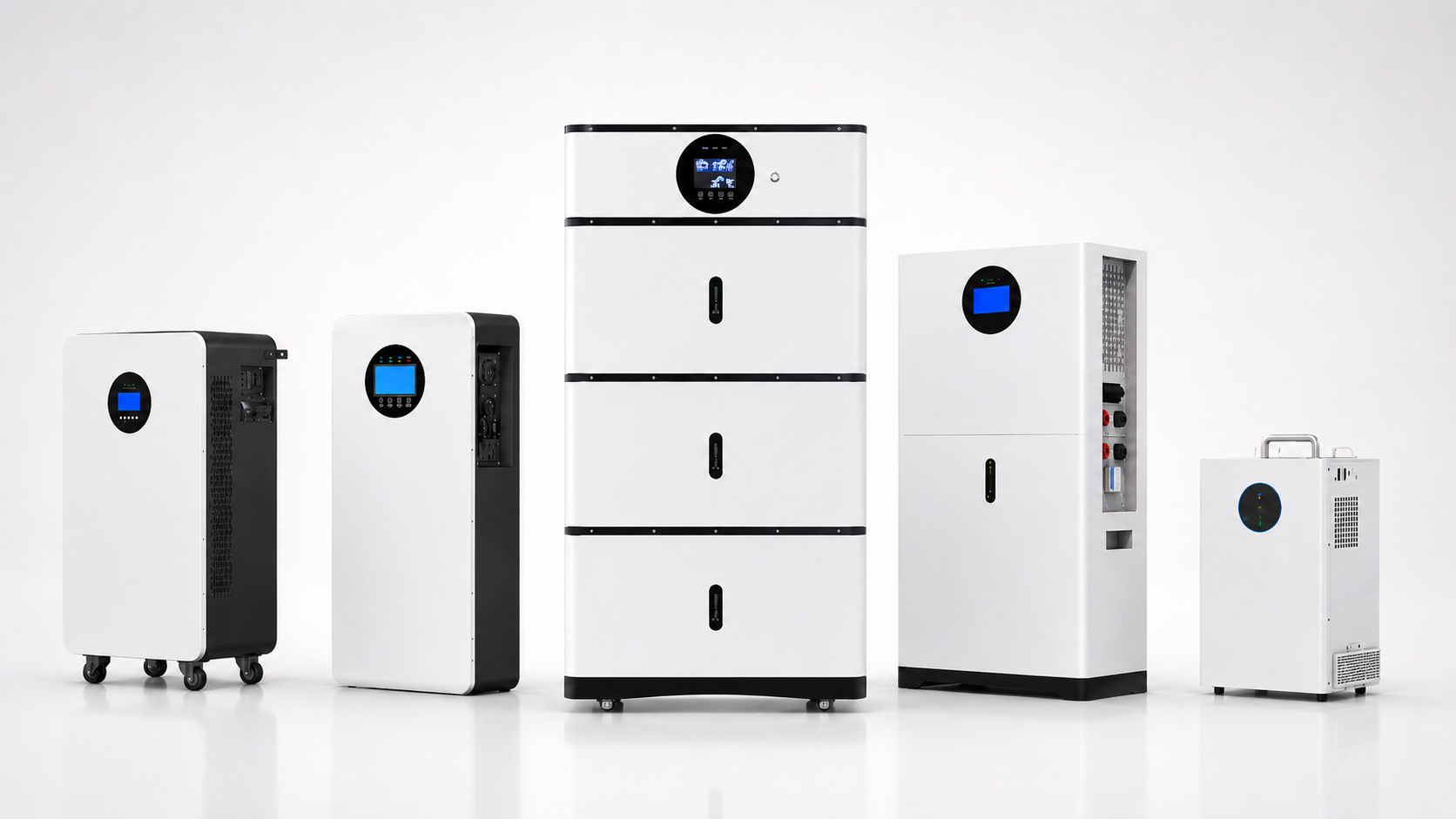
Integrated battery and inverter platform for homes requiring simplified solar charging, grid charging, backup output and monitoring.
View Product Category →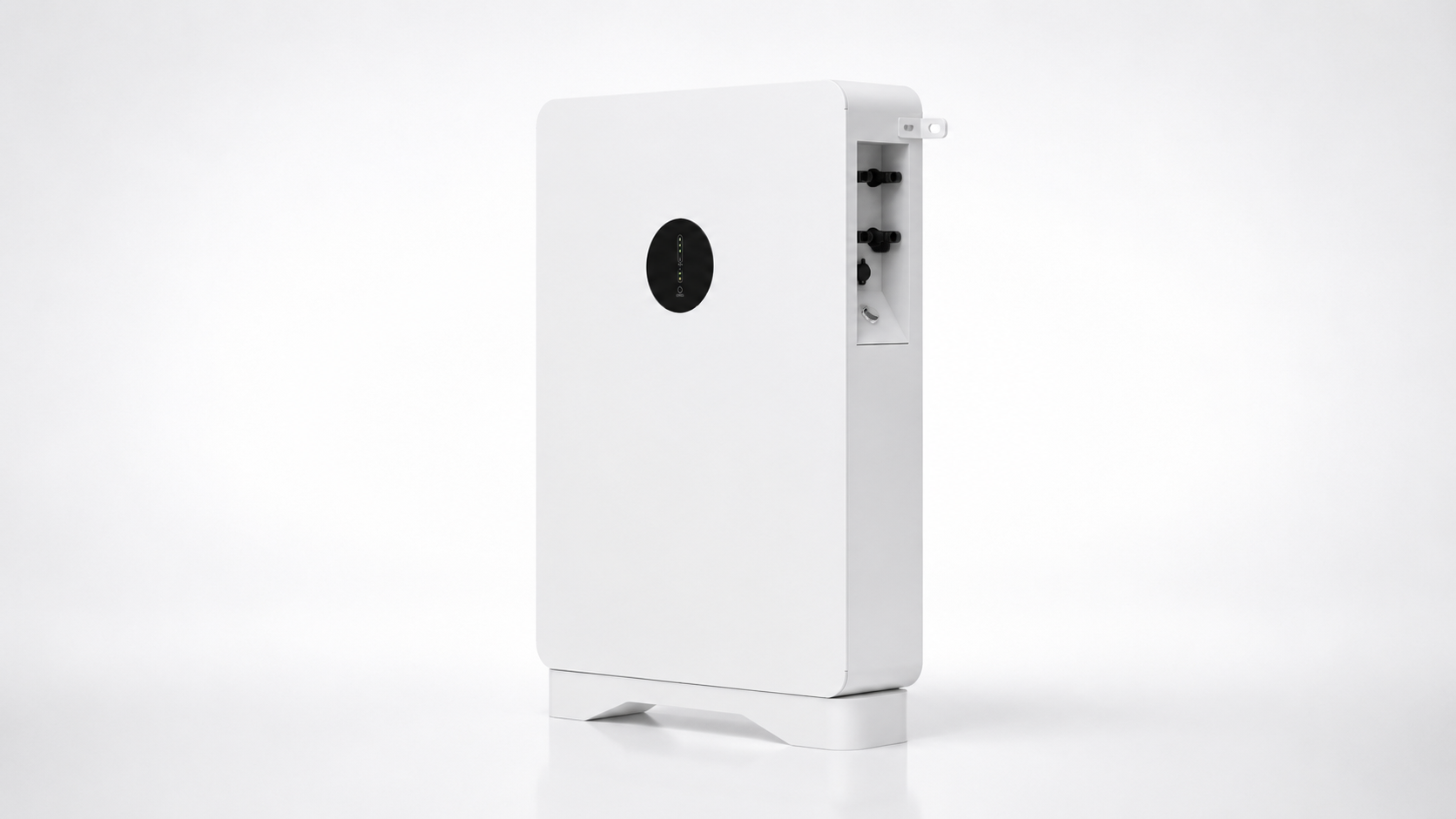
Compact storage for apartments, balconies and small residential energy-management applications where permitted by local electrical rules.
View Product Category →Model-specific values should be taken from the current product datasheet. The matrix deliberately uses conditional wording where power, phase, outdoor rating, expansion or backup capability has not been confirmed for every model.
| Capability | Wall-Mounted Battery | Stackable Battery | All-in-One ESS | Balcony Storage |
|---|---|---|---|---|
| Battery Chemistry | Confirm by Model | Confirm by Model | Confirm by Model | Confirm by Model |
| Nominal Energy | By Model | Modular | By Model | By Model |
| Usable Energy | Confirm | Confirm | Confirm | Confirm |
| Inverter Included | Normally Separate | Normally Separate | Yes / By Model | By Model |
| Solar Charging | Through Compatible Inverter | Through Compatible Inverter | By Model | By Model |
| Grid Charging | Inverter-Dependent | Inverter-Dependent | By Model / Market | By Model / Market |
| Backup Output | By System Design | By System Design | By Model | No Whole-Home Claim |
| Capacity Expansion | By Model | By Approved Modules | By Model | By Model |
| Single / Three Phase | Inverter-Dependent | Inverter-Dependent | By Model | Market-Specific |
| Installation Rating | Confirm IP and Location | Confirm IP and Location | Confirm IP and Location | Confirm Local Rules |
| Best Fit | Compact home storage | Expandable capacity | Integrated installation | Small residential energy use |
Inverter power is determined by the maximum loads expected to operate together and the starting requirements of compressors, pumps and motors. Daily household energy consumption does not determine instantaneous power.
Continuous power must support the selected household loads that can run at the same time during an outage.
Motors and compressors can require substantially more power during starting than during normal operation.
Battery capacity must cover the energy used by each selected appliance over the required operating time, then account for usable SOC, efficiency, aging, auxiliary consumption and reserve.
Calculate each appliance separately instead of multiplying the home's peak load by the full outage duration.
The nameplate battery must be larger than the required delivered energy because not all stored energy is available at the load.
Initial delivered energy: approximately 3.8 kWh before SOC, efficiency, aging and reserve adjustments.
Illustrative load calculation only. Actual appliance consumption must be measured or verified.
A nominal 10 kWh battery does not provide 10 kWh to household loads under every operating condition.
Backup duration depends on usable battery energy and the average power of the appliances operating during the outage. Solar can extend the duration, while heating, cooling, cooking and EV charging can consume the available energy quickly.
| Usable Battery Energy | Average Backup Load | Ideal Energy Duration | Interpretation |
|---|---|---|---|
| 5 kWh | 0.5 kW | 10 hours | Selected low-power essential loads |
| 5 kWh | 2.0 kW | 2.5 hours | Multiple appliances or intermittent larger load |
| 10 kWh | 0.5 kW | 20 hours | Extended essential-load support |
| 10 kWh | 2.0 kW | 5 hours | Broader household load boundary |
| 15 kWh | 1.0 kW | 15 hours | Mixed essential and important loads |
| 15 kWh | 3.0 kW | 5 hours | Higher-power household operation |
Backup operation is a sequence of grid detection, electrical isolation, inverter control, load management, solar coordination and safe reconnection. Battery ownership alone does not create this operating mode.
PV supplies home loads, excess solar charges the battery and the system maintains the configured backup reserve.
The controller detects utility voltage or frequency outside the permitted operating range.
The backup switch or gateway separates the home from the public grid before local backup supply is established.
The inverter supplies the approved essential-load or configured whole-home boundary within its power limits.
Compatible PV supplies household demand and charges the battery when sunlight and system conditions allow.
High-power or non-essential appliances may be disconnected to protect inverter power and preserve battery energy.
The system limits or stops backup output at the configured threshold unless sufficient solar or grid energy becomes available.
The system verifies utility recovery, reconnects according to its approved logic and returns to the selected operating mode.
The battery recharges from solar or the grid according to reserve targets, tariff settings and product limits.
Yes, when the PV array, battery, inverter and backup controller are designed to operate together inside an isolated residential energy system. Solar contribution remains variable and cannot be treated as continuous rated power.
Available PV first reduces the power that must be supplied from the battery, depending on the configured control priority.
Surplus PV can restore SOC after household loads are supplied, within the battery and inverter charge-power limits.
Nighttime, clouds, seasonal resource and high household demand can create an energy deficit even when PV is installed.
DC coupling is commonly suited to new solar-storage systems using a compatible hybrid inverter. AC coupling can be useful when adding storage to an existing PV system, but outage operation and communication compatibility must be verified.
| Design Factor | DC-Coupled Storage | AC-Coupled Storage |
|---|---|---|
| Typical Project | New solar and battery installation | Existing solar retrofit or separate battery inverter |
| Primary Power Conversion | PV and battery coordinated through a hybrid inverter | PV inverter and battery inverter connected through the AC bus |
| Existing PV Retention | May require inverter replacement or redesign | Often allows the existing PV inverter to remain |
| Backup Compatibility | Defined by hybrid inverter and backup switch | Requires verification that PV operates correctly in the battery-created microgrid |
| Energy Conversion | Some PV-to-battery paths may use fewer conversions | Battery charging and discharging may involve additional conversions |
| Control Integration | Often managed by one integrated system | Requires coordination between separate inverter systems |
| Best Selection Basis | New-project efficiency and integration | Retrofit practicality and compatibility |
Residential batteries can serve several objectives, but the same stored energy cannot simultaneously be fully allocated to daily savings and outage reserve. The operating mode must reflect the homeowner's priorities.
Excess daytime solar charges the battery, which then supplies the home after PV output falls.
The battery preserves or shifts energy according to lower- and higher-cost periods where product functions and grid rules permit.
A selected minimum SOC remains available for a possible grid outage instead of being used for daily cost optimization.
Participation requires compatible products, cloud control, utility programs and a homeowner agreement; it is not automatic.
Prioritizing household loads can provide more useful outage protection than connecting every appliance to an uncontrolled backup bus. The following groups are project examples rather than universal classifications.
Loads needed for basic household safety, communication and food preservation.
Loads that improve habitability or support necessary household functions.
Loads that may operate only when battery SOC and available inverter power are sufficient.
Deferrable loads that can rapidly consume backup energy or overload the system.
The answer depends on continuous power, short-duration overload, battery discharge limits, appliance starting current, phase configuration and which other loads are operating at the same time.
An existing PV system can often be retained, but the inverter model, array size, backup requirement, meter arrangement, switchboard, export rules and microgrid compatibility must be reviewed before selecting the retrofit architecture.
A system described only as “10 kW” is incomplete. The project must confirm whether that output is single-phase or total three-phase power and how loads are distributed across phases.
The inverter and backup switch must match the grid voltage, main-breaker rating and selected circuit demand.
The design must verify total power, per-phase limits, unbalanced-load capability and whether three-phase motors require backup.
Economic value depends on local electricity tariffs, solar export compensation, household load timing, outage exposure, installed cost and battery operating strategy. A fixed savings percentage or universal payback period is not credible.
Applicable certifications and installation requirements depend on the selected product, country, utility and authority having jurisdiction. Battery certification, complete-system certification, fire testing and local approval are separate requirements.
Confirm the certifications and test reports that apply to the complete product configuration and target market.
The inverter and backup equipment must comply with the applicable safety and grid-interconnection requirements.
Product rating and local rules determine whether the battery may be installed indoors, outdoors, in a garage or in another approved area.
Backup switching must isolate the home correctly and coordinate with existing breakers, earthing and residual-current protection.
Homeowners require clear operating status, alarm information and safe access without exposing live components.
The installer should verify both normal energy operation and the complete backup sequence before handover.
Home type alone does not determine the system. Grid phase, appliance power, outage duration, solar resource, installation space and local electrical rules remain the primary selection inputs.
Suitable for rooftop PV, modular battery storage and essential-load or configured whole-home backup.
Key inputs: main-panel rating, HVAC, pumps and desired outage duration.Projects require careful review of available space, noise, connection method and building or fire restrictions.
Key inputs: permitted installation location and limited backup boundary.Frequent outages and poor power quality may require larger reserves, off-grid capability or generator coordination.
Key inputs: outage history, solar resource and daily energy balance.Battery retrofit depends on the existing inverter, PV array, meter and backup-controller compatibility.
Key inputs: inverter model, AC/DC coupling and outage operation.Winter energy demand and compressor starting can be substantially higher than basic household loads.
Key inputs: rated power, climate, heating schedule and backup priority.Well pumps and booster pumps require running-energy and starting-power assessment.
Key inputs: motor phase, starting current and required daily runtime.EV charging must be coordinated with household power and is normally limited during outage operation.
Key inputs: charger rating, daily driving energy and backup priority.Communication, computing and transaction equipment may be added to household essential-load planning.
Key inputs: continuity requirement, networking and daily operating hours.These examples show design logic rather than guaranteed product packages. Final sizing requires the household load profile, appliance data, solar resource, electrical system and current product datasheets.
Designed to maximize useful backup duration by separating essential circuits from high-power appliances.
Battery and inverter size remain project-specific.
The operating strategy shifts daytime PV to evening use while preserving the homeowner's selected backup reserve.
Savings depend on tariff, export compensation and actual load timing.
Broader circuit availability is combined with load sequencing so the household remains within inverter and battery limits.
Whole-home connection does not mean unlimited simultaneous appliance operation.
The retrofit architecture is selected after reviewing PV inverter behavior, metering, export controls and backup operation.
Existing solar may still shut down during outages without compatible microgrid control.
The most useful initial assessment combines household electricity data, appliance power, backup priorities, existing solar information, electrical distribution details and the proposed installation environment.
A complete home battery project begins with the household load and electrical system, not with a preferred battery capacity.
Collect bills, interval data and existing solar production.
Separate essential, important and high-power appliances.
Verify voltage, phase, main breaker and meter arrangement.
Select essential-load or configured whole-home backup.
Assess continuous demand, starting power and phase limits.
Model appliance runtime, SOC, losses, aging and reserve.
Choose DC-coupled, retrofit, essential-load or whole-home design.
Verify battery, inverter, switching and communications.
Confirm location, clearances, protection and local requirements.
Complete approved mounting, wiring, protection and labeling.
Set self-consumption, tariffs, reserve and load priorities.
Verify isolation, backup loads, solar charging and low-SOC behavior.
Test safe return to grid operation and battery recovery.
Explain monitoring, reserve settings, limits and emergency isolation.
Provide settings, diagrams, test results and maintenance guidance.
A useful residential case must show the electrical configuration, load boundary and measured operating result rather than only the installed battery nameplate.
These questions focus on system selection, outage operation, appliance limits, retrofit compatibility and installation requirements.
Most grid-tied solar inverters stop operating when the utility source is unavailable so they do not create an uncontrolled electrical island. Outage operation requires compatible battery and inverter equipment, a grid-isolation device and a defined backup-load architecture.
Essential-load backup supplies selected circuits such as refrigeration, lighting, internet, security and chosen outlets. Configured whole-home backup connects a larger portion of the home distribution, but high-power appliances may still be limited, sequenced or disconnected according to available inverter and battery power.
Add the maximum loads expected to operate at the same time, then verify the starting requirement of compressors, pumps and motors. The inverter continuous rating must support the simultaneous load, while its short-duration capability and the battery discharge limit must support the largest starting event.
Estimate the energy required by each backup appliance by multiplying its average power by the required operating time. Adjust the total for usable SOC, conversion efficiency, battery aging, auxiliary consumption and the reserve that must remain in the battery.
Duration depends on usable battery energy and average outage load. A 10 kWh usable battery could theoretically support a 1 kW average load for about ten hours, but actual duration is lower after reserve, system losses, temperature limits and auxiliary consumption are considered.
Household loads change over time, motor loads cycle, battery power limits vary with SOC and temperature, and part of the nameplate energy may be reserved or unavailable. Solar production during the outage may extend duration, while air conditioning, heating or cooking loads can shorten it rapidly.
Yes, when the PV array, inverter, battery and backup controller are designed to operate together after the home is isolated from the grid. Solar output still depends on sunlight, weather, inverter limits, household demand and the battery charge-power limit.
It can when the inverter continuous and surge ratings, battery discharge limit and phase configuration support the air conditioner's running and starting requirements. Compressor type, locked-rotor current and other simultaneous household loads must be checked.
A water pump can be included when its running power, starting current, phase and control method are compatible with the inverter and battery. Fixed-speed well pumps may require substantially more starting power than their normal operating demand.
An EV charger may operate only when it is included in the backup electrical boundary and sufficient power and energy are available. High-power EV charging is normally limited or disabled during an outage to preserve energy for essential household loads.
The system follows the configured low-SOC strategy. Non-essential loads may be disconnected, output power may be limited and the inverter will stop backup supply at its protection threshold unless solar or another approved source restores sufficient energy.
Backup reserve is the minimum battery SOC preserved for a possible grid outage. A higher reserve provides more outage energy but leaves less capacity available for daily self-consumption or time-of-use optimization.
Grid charging is possible when the selected inverter, product model, tariff and local grid rules allow it. The schedule should also preserve the required outage reserve and respect battery charge-power and SOC limits.
A DC-coupled system typically connects PV and battery through a hybrid inverter on the DC side. An AC-coupled system uses separate PV and battery inverters connected through the home's AC bus, which can be useful when retaining an existing solar inverter.
Often yes, but the existing PV inverter, array size, backup objective, metering, export rules and switchboard must be reviewed. An existing grid-tied PV system may still shut down during outages unless it can operate correctly with the new battery and backup controller.
Only according to the approved system design. A single-phase backup output may serve selected circuits on one phase, while three-phase loads and phase balancing require a compatible three-phase inverter or a project-specific backup arrangement.
Capacity expansion is possible only within the selected battery and inverter model's approved parallel or modular limits. The design must confirm communication, current sharing, protection, cable sizing, firmware compatibility and installation clearances.
Not by default. Balcony storage is generally intended for compact solar-energy management where local rules permit. Its connection method, output power, export control and backup capability depend on the product and the permitted installation architecture.
The approved location depends on the product's indoor or outdoor rating, ambient temperature, ventilation, fire separation, flood exposure, wall or floor strength, access, emergency isolation and local electrical, building and fire requirements.
Provide the country, grid voltage and phase, electricity use, appliance list, peak load, required backup circuits and duration, existing or planned PV information, main-panel details, installation location and photographs or diagrams of the electrical distribution.
The following official and industry sources support the system boundaries, safety considerations and residential backup concepts used on this page.
Overview of solar-plus-storage operation, battery use and AC- versus DC-coupled configurations.
Open Technical Source →Residential solar fundamentals, homeowner considerations and system planning context.
Open Technical Source →Technical discussion of residential and community backup concepts, load reduction and storage planning.
Open Technical Source →System certification and fire-safety test context for battery energy storage equipment.
Open Technical Source →Interconnection and interoperability requirements for distributed energy resources connected to electric power systems.
Open Technical Source →Test procedure for utility-interconnected photovoltaic inverters and unintentional islanding prevention.
Open Technical Source →Industry description of home backup, load management and integrated residential energy operation.
Open Industry Source →Industry description of solar self-consumption, time-based control, backup reserve and outage operation.
Open Industry Source →Current AINEGY residential battery and integrated home energy storage product category.
View AINEGY Products →Send your electricity bill, home phase configuration, appliance list, existing or planned solar capacity, required backup loads and target backup duration. AINEGY will evaluate the required inverter power, battery capacity, backup architecture and applicable residential product platform.