
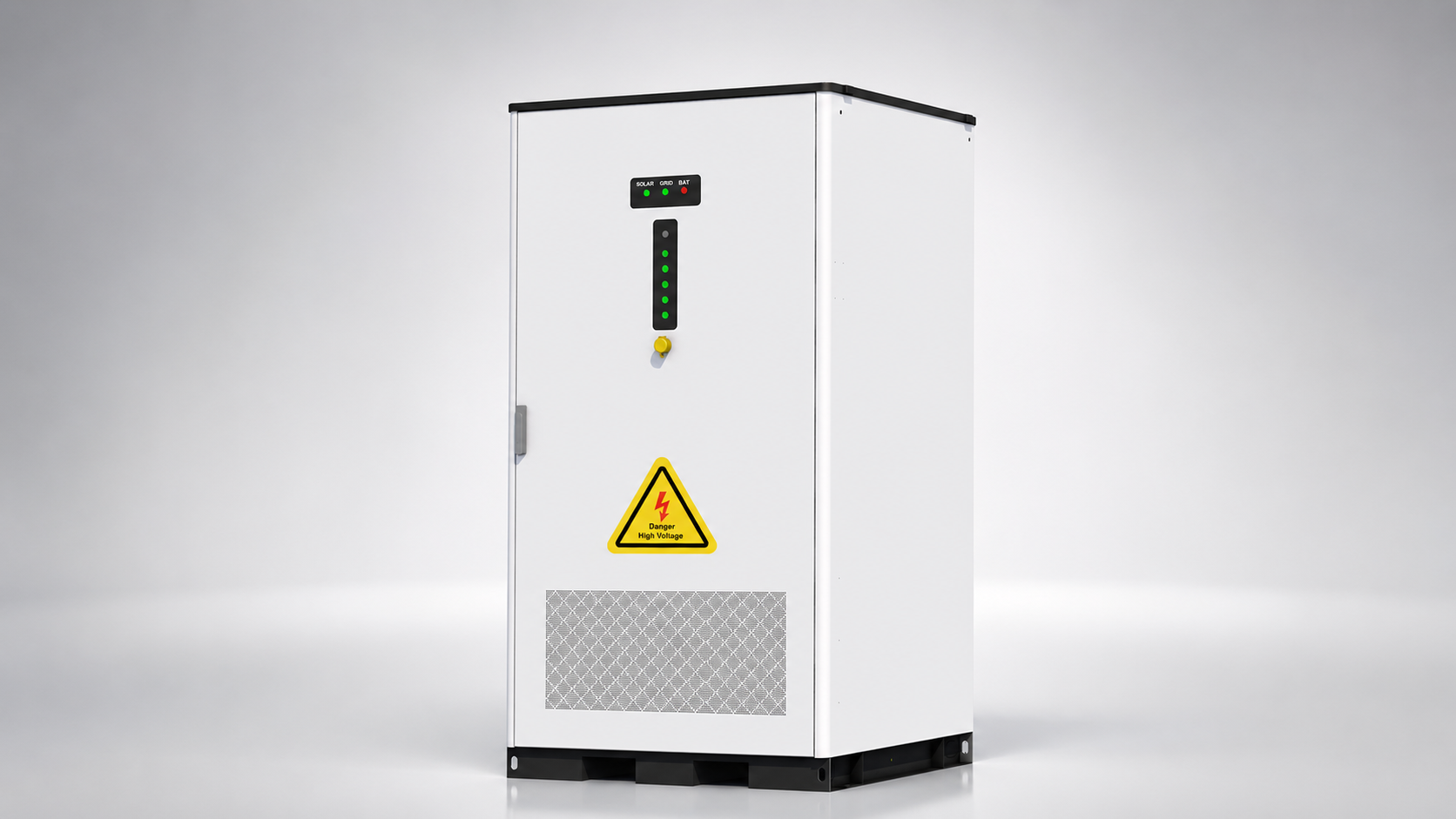
AINEGY Off-grid Solar BESS Cabinet / Air Cooling
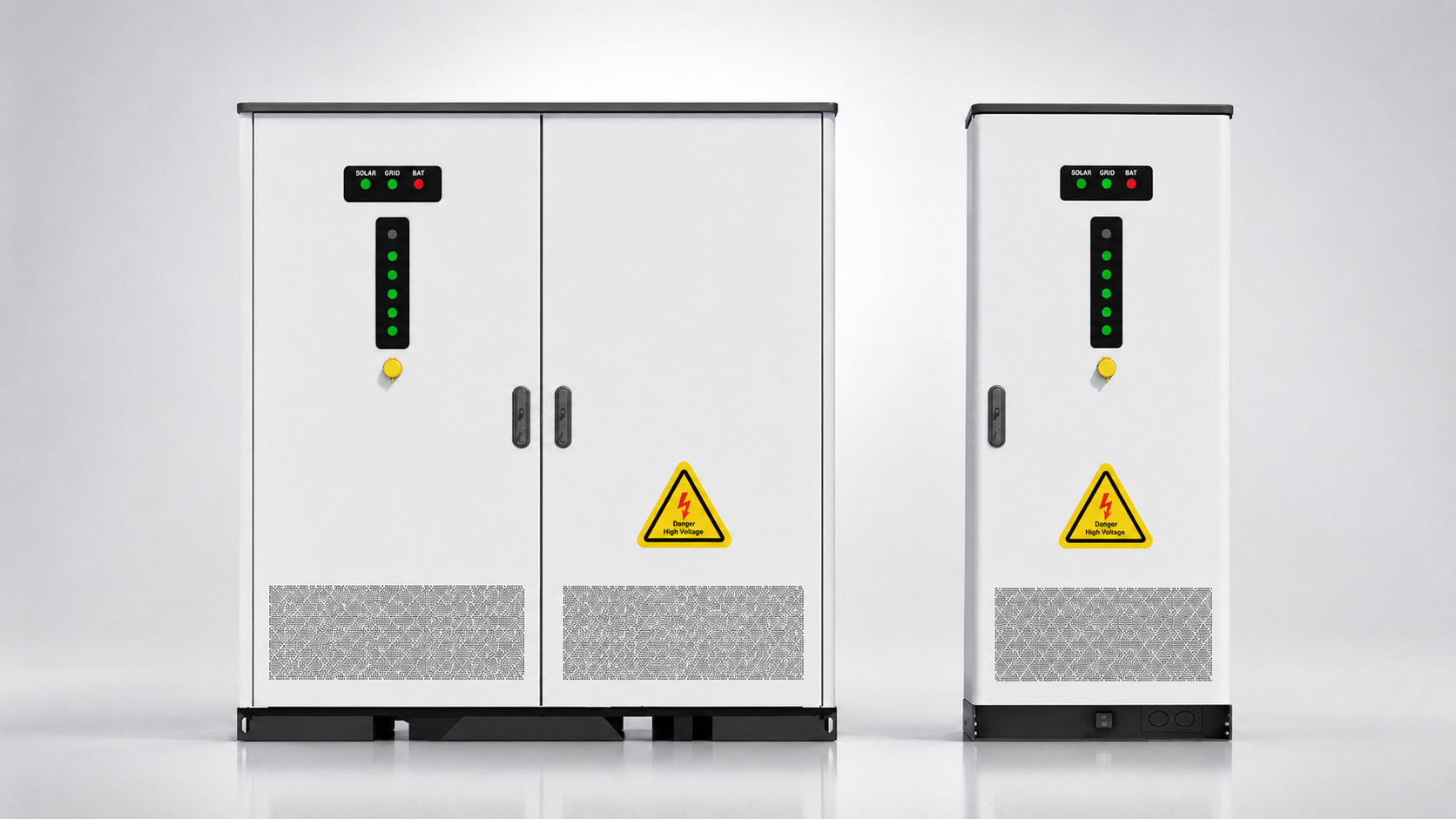
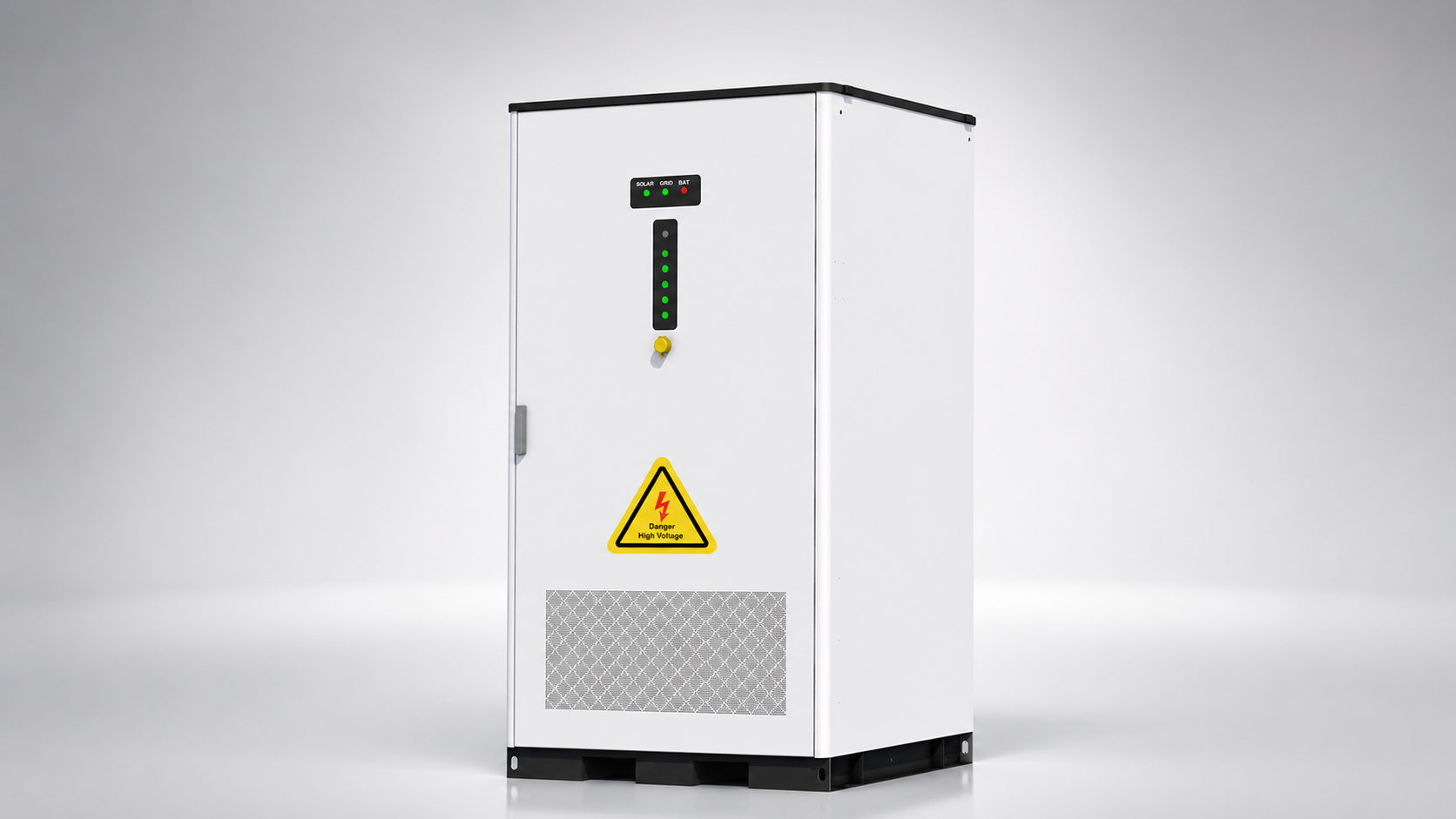
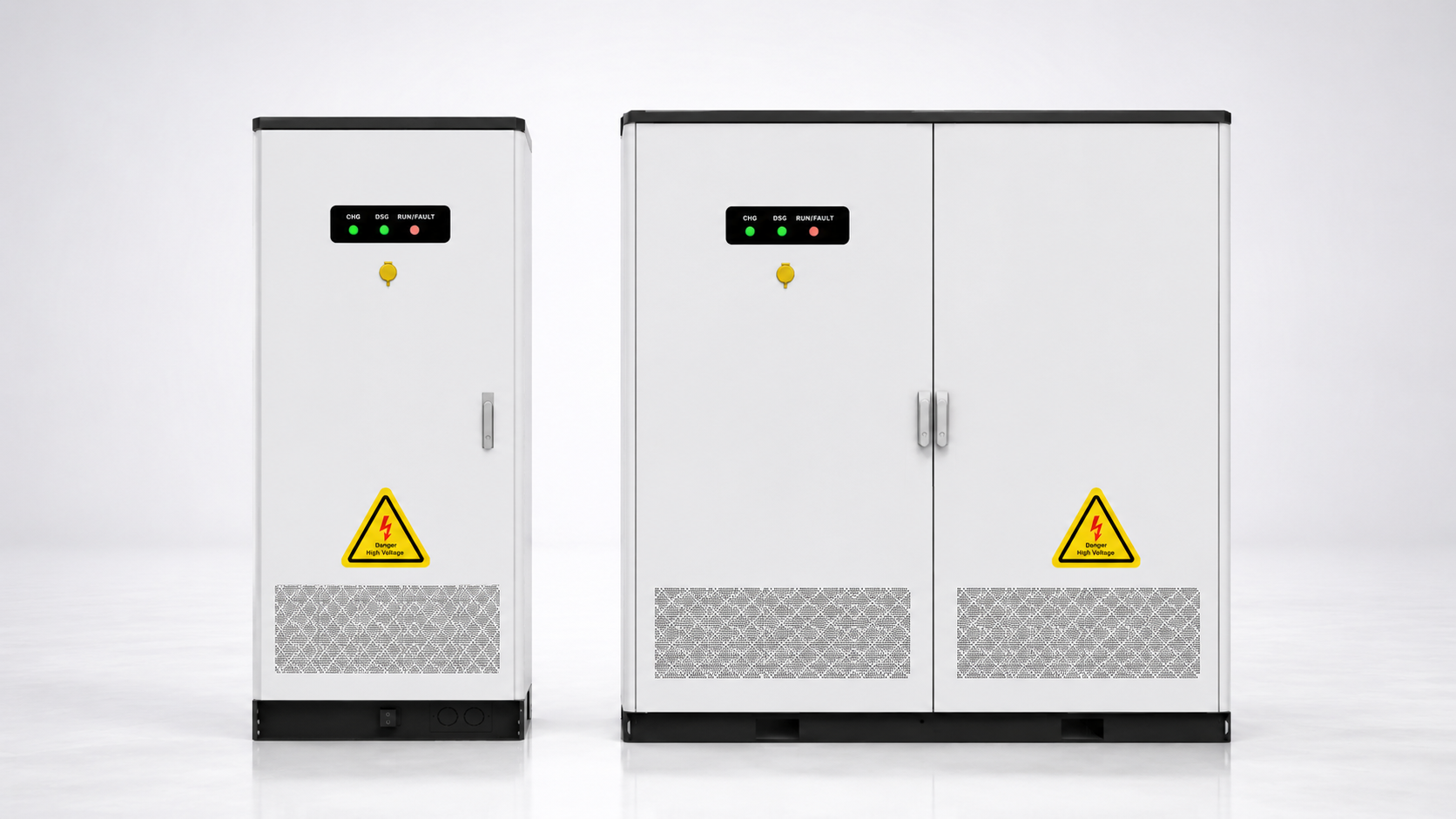
The AINEGY Off-grid Solar BESS Cabinet / Air Cooling is a 125kW/241kWh air-conditioned solar battery energy storage cabinet with PV MPPT input, LiFePO4 battery system, PCS, BMS and EMS. It can be configured as PV + BESS, diesel generator + BESS, or PV + diesel generator + BESS for standalone off-grid power supply.
This AINEGY product page focuses only on off-grid applications. The cabinet is designed for sites without utility grid dependence, where solar generation, battery storage, diesel generator support and local loads need to be coordinated through off-grid system design. Diesel generator interface, generator start/stop logic, switching, protection and black-start behavior should be confirmed according to project requirements.
About AINEGY Off-grid Solar BESS Cabinet / Air Cooling
AINEGY provides commercial and industrial lithium battery energy storage solutions for solar storage, off-grid power supply and hybrid energy projects. The AINEGY Off-grid Solar BESS Cabinet / Air Cooling is designed for standalone sites where PV generation, battery storage, diesel generator support and local loads must be evaluated together.
This product belongs to the AINEGY C&I solar energy storage cabinet portfolio. It is suitable for project teams that need a 125kW/241kWh cabinet-level platform with PV MPPT input, integrated PCS/BMS/EMS, air-conditioner battery cooling and clear off-grid system design requirements before quotation.
What Is an Off-grid Solar BESS Cabinet?
An off-grid solar BESS cabinet is a cabinet-level power storage platform for standalone energy systems. This product integrates PV MPPT input, LiFePO4 battery, BMS, PCS and EMS, while using air-conditioner thermal management for the battery system.
Three Off-grid Project Configurations
The cabinet can be used in different standalone energy architectures. The selected configuration should be confirmed before system design, because each mode requires different generator, protection, switching and control logic.
Solar-only Off-grid Storage
Suitable for sites with enough PV generation and predictable daily loads. Solar energy charges the battery during the day, and the battery supplies loads when PV generation is low or unavailable.
Generator Support and Load Buffering
Suitable for projects without PV or sites where PV will be added later. The BESS supports short peak loads, stores generator energy and reduces unnecessary generator cycling when properly controlled.
PV-diesel-battery Off-grid System
Suitable for remote facilities, islands, mines, oilfields and long-duration standalone power projects. PV supplies renewable energy, the battery smooths and stores energy, and diesel provides backup energy for low-solar or high-load periods.
What Problems It Solves
This off-grid solar BESS cabinet is intended for sites that need local standalone power, solar energy storage, diesel generator support or PV-diesel-battery off-grid operation.
Standalone Power Supply
Supports local power supply where the project is designed without utility grid dependence. System sizing should be based on load type, daily energy demand and required autonomy time.
Solar Energy Storage
Stores solar energy during PV generation periods and releases it when PV output is low, at night or during short high-load periods.
Diesel Runtime Reduction
In diesel-supported projects, the battery can reduce unnecessary generator cycling and support load peaks when generator dispatch is properly designed.
Critical Load Support
Helps support selected loads such as pumps, lighting, refrigeration, communication equipment, controls and emergency circuits.
PV-diesel Coordination
In PV-diesel-battery off-grid systems, EMS logic can prioritize solar energy, preserve battery reserve and start the generator only when needed.
Modular Expansion
Up to 12 units can be configured in parallel for larger standalone projects, subject to communication, protection and project-level system design.
Model Selection
This page focuses on the 125kW/241kWh air-conditioned off-grid solar BESS cabinet. Selection should be based on PV input design, diesel generator configuration, load profile, critical-load priority and installation environment.
125kW / 241kWh
Choose this model for C&I standalone off-grid projects, remote facilities, gas stations, supermarkets, small factories and PV-diesel-battery energy storage systems requiring 120kW PV input and 125kW AC power.
Technical Specifications
| Parameter | 125kW / 241kWh |
|---|---|
| Model | IYP-B241-125G3-120M1-HX1 |
| Product Type | Off-grid Solar BESS Cabinet / Air Cooling |
| Integrated Platform | PV MPPT / BMS / PCS / EMS |
| Battery | |
| Battery Type | LiFePO4 Battery |
| Rated Energy | 241kWh |
| PV | |
| Max. Power | 120kW (1 channel) |
| Max. PV Voltage | 950Vdc |
| MPPT Voltage Range | 250–850Vdc |
| Max. PV Input Current | 200A |
| MPPT Channels | 1 |
| AC Input | |
| Rated Power | 125kW |
| AC Voltage | 400Vac/230Vac (L1/L2/L3/N/PE) |
| Rated Frequency | 50Hz/60Hz |
| Max. AC Current | 189A |
| AC Output | |
| Rated Power | 125kW |
| AC Voltage | 400Vac/230Vac (L1/L2/L3/N/PE) |
| Rated Frequency | 50Hz/60Hz |
| Max. AC Current | 189A |
| Parallel Number | 12 |
| General Parameter | |
| Communication Type | RS485 / WiFi |
| IP Grade | IP54 |
| Fire Protection System | Yes |
| Operating Temperature | -10°C–55°C |
| Humidity Range | 5%–95% |
| Altitude | <2000m |
| Battery Cooling Method | Air-Conditioner |
| PCS Cooling Method | Intelligent cooling |
| Size | 1200 × 1250 × 2260mm |
| Weight | About 2500kg |
PV Design Checks
- PV open-circuit voltage must stay below 950Vdc.
- PV operating voltage should match the 250–850Vdc MPPT range.
- PV input current must stay within the 200A channel limit.
- Confirm whether the project is PV-only or PV-diesel-battery off-grid configuration.
Diesel Generator Checks
- Confirm generator rated power and overload capacity.
- Define generator start/stop conditions.
- Confirm when generator should recharge the battery.
- Review generator interface and protection requirements.
Load Checks
- Separate critical and non-critical loads.
- Check motor, pump and compressor starting current.
- Confirm power factor and three-phase balance.
- Define required backup duration and reserve SOC.
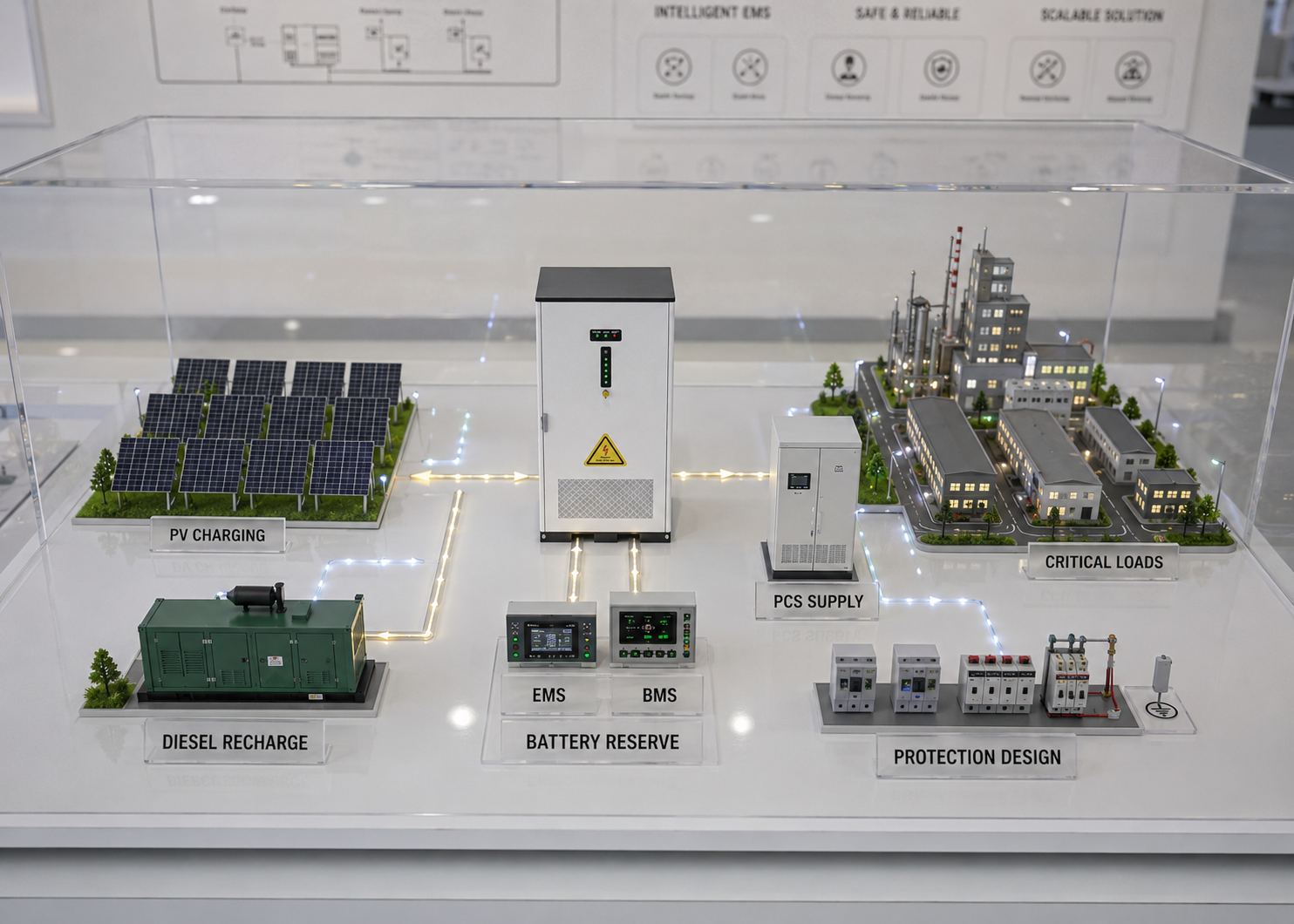
How the Off-grid System Works
The cabinet works as the core power storage and conversion unit in a standalone off-grid energy system. Solar energy enters through the PV MPPT input and charges the LiFePO4 battery system. The PCS converts stored energy into AC power for the off-grid load bus, while the BMS monitors battery operation and the EMS manages charging, discharging, SOC reserve and source priority.
Air-Conditioner Thermal Management
This product uses Air-Conditioner battery thermal management, not liquid cooling and not passive air cooling. It is suitable for C&I off-grid solar storage projects where simpler thermal architecture, service convenience and integrated cabinet design are important.
Integrated Air Conditioning
Battery thermal management is handled by an air-conditioning system inside the cabinet architecture.
Simple Service Logic
Compared with liquid cooling, air-conditioner thermal management avoids coolant loop maintenance.
Off-grid Daily Cycling
PV charging, battery discharge and generator recharge can create repeated daily operation cycles.
Cabinet Spacing
Installation should reserve airflow, heat rejection and maintenance clearance for the air-conditioning system.
IP54 Planning
Site design should consider weather exposure, dust, drainage, cable entry and local environmental conditions.
PCS Intelligent Cooling
The PCS uses intelligent cooling according to the product specification.
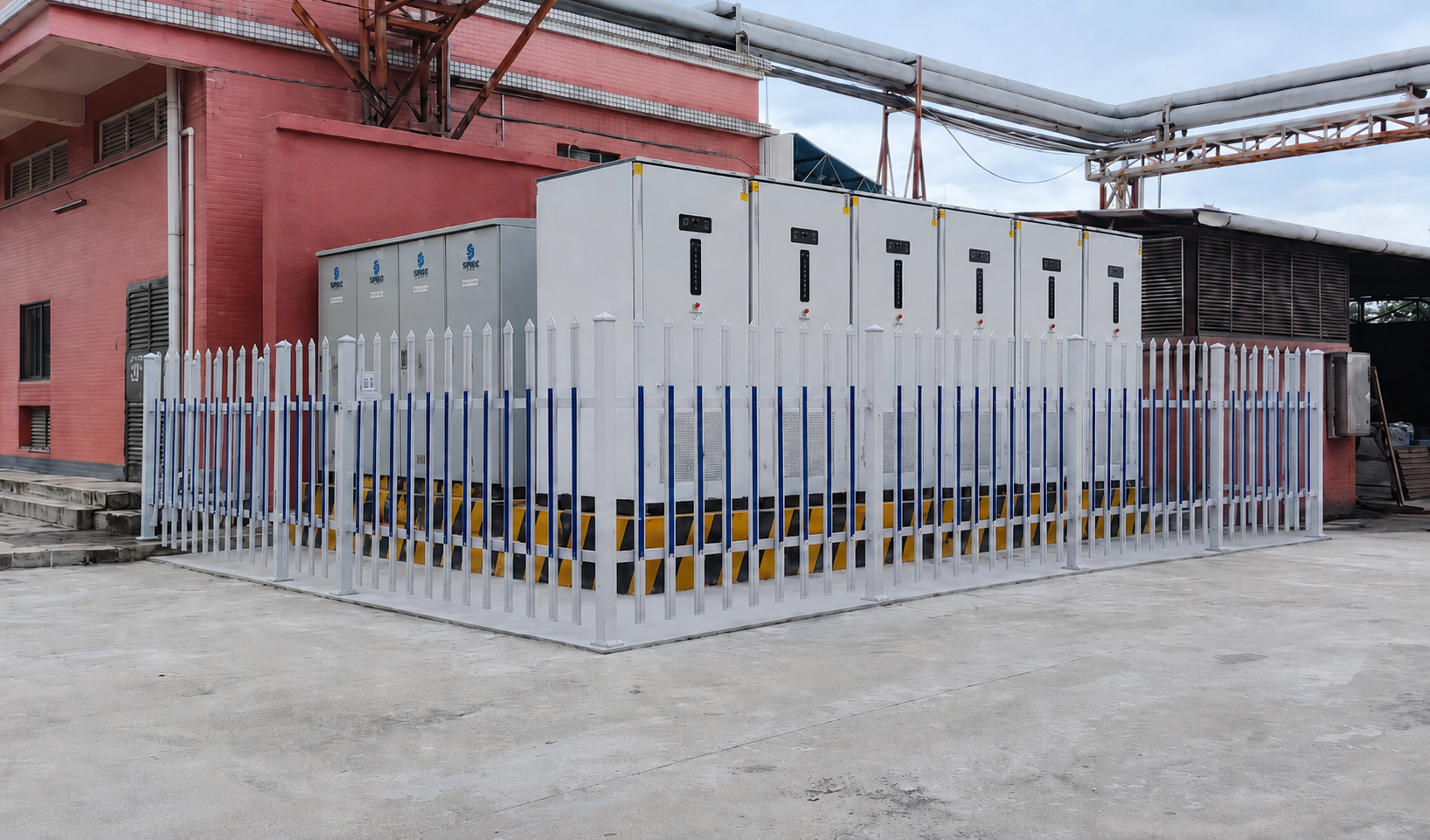
Typical Applications
This cabinet is suitable for standalone off-grid projects where PV generation, battery storage and optional diesel generator support are used to supply local loads.
FAQ
Certification and Documentation Support
Documentation support can be provided for applicable models and project requirements, including battery transport, material safety, electrical compliance, grid connection and fire-safety-related documentation. Final document scope depends on the selected configuration, target market and certificate availability for the exact model.












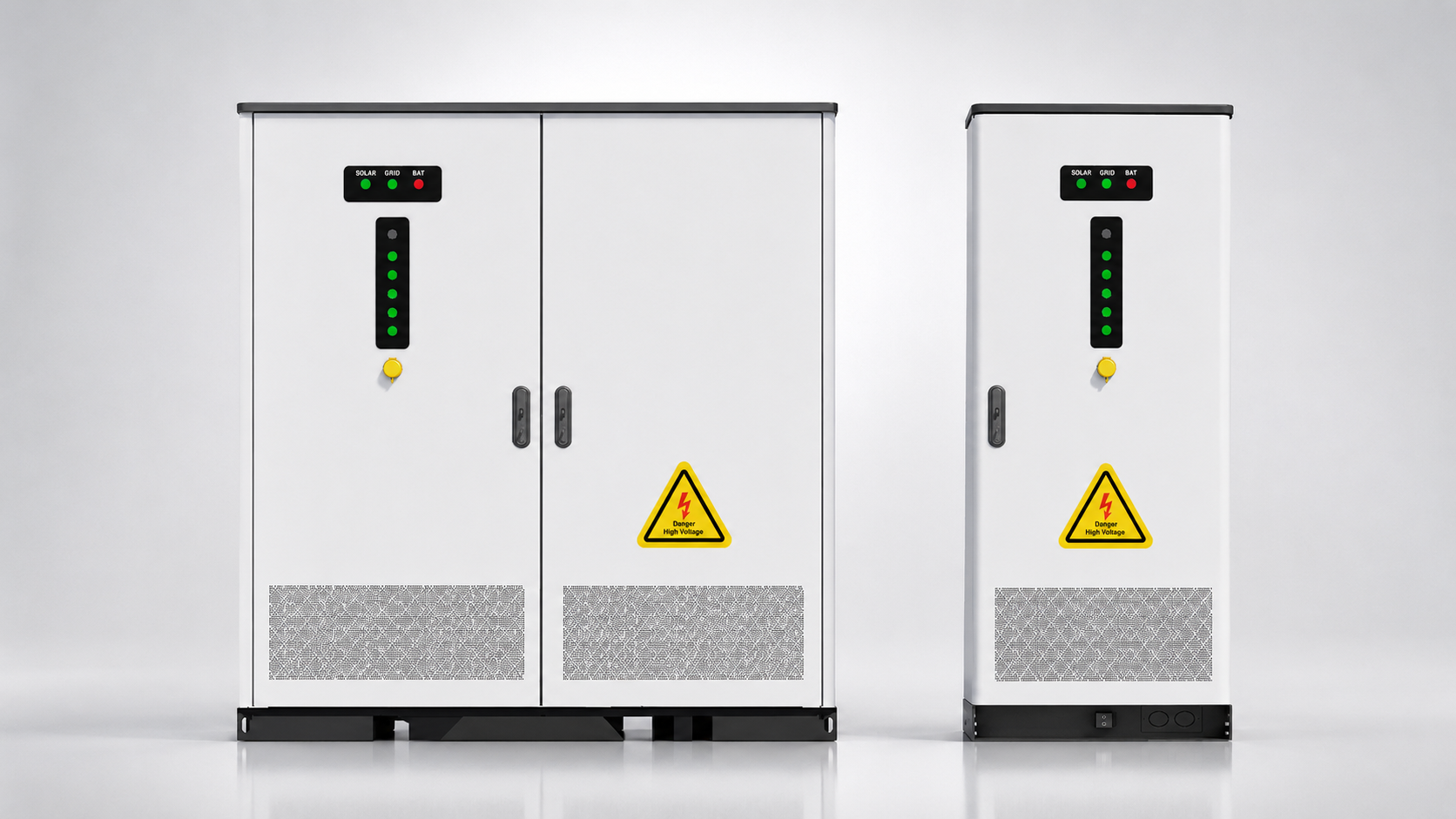
Send Your Off-grid Solar Storage Project Requirements to AINEGY
Share your PV capacity, PV string design, diesel generator capacity, load curve, motor starting current, critical-load list, required autonomy time, site location and selected configuration. AINEGY can help match the correct off-grid solar BESS cabinet configuration for PV-only, diesel-only or PV-diesel-battery standalone projects.